 EN
EN
Biological treatment systems depend on consistent feed quality to maintain stable performance and maximize treatment efficiency. When suspended solids, oils, and contaminants enter a bioreactor without proper removal, they can inhibit microbial activity, reduce oxygen transfer, and shorten equipment lifespan. DAF pretreatment offers a proven solution to address these challenges by removing particulate matter before it reaches your biological treatment process. By integrating DAF pretreatment into your wastewater handling workflow, you can significantly improve bioreactor efficiency while reducing operational stress on downstream treatment units.
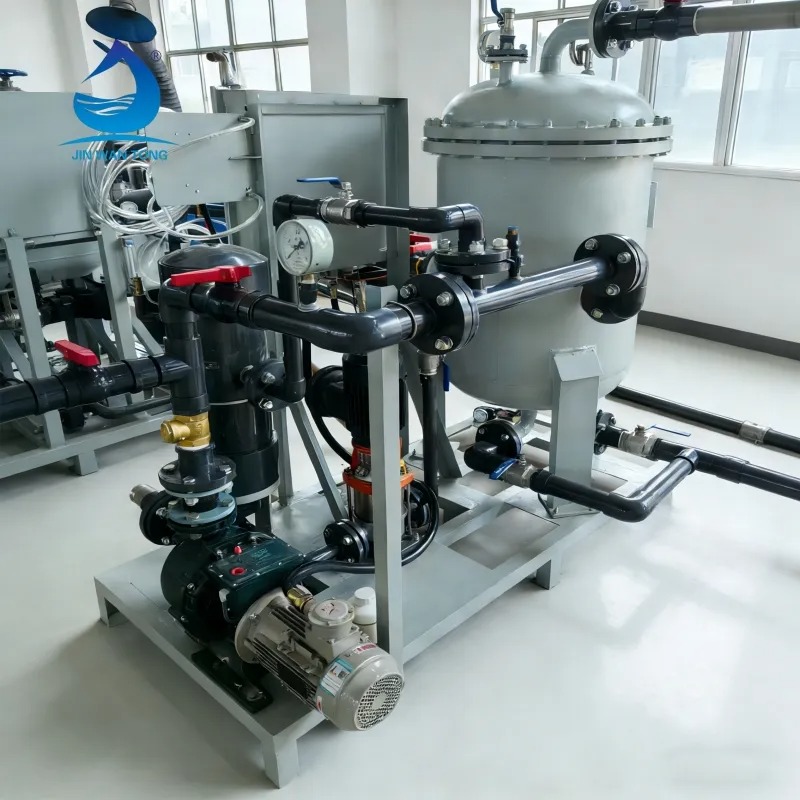
Wastewater streams entering biological reactors often contain colloidal particles, emulsified oils, and dissolved organics that traditional settling cannot remove effectively. DAF pretreatment uses dissolved air flotation technology to inject fine microbubbles into the liquid, causing low-density contaminants to float to the surface where they are mechanically skimmed away. This pretreatment step ensures that only clarified, particle-reduced influent reaches your bioreactor, creating optimal conditions for microbial treatment and extending the biological system's overall lifespan and treatment capability.
How DAF Pretreatment Enhances Bioreactor Performance
Removing Interfering Suspended Solids
DAF pretreatment eliminates fine suspended solids that primary settling tanks cannot capture efficiently. These particles, ranging from 5 to 100 microns, often remain in suspension and can accumulate in bioreactor sludge, increasing sludge volume and reducing mixed liquor suspended solids (MLSS) control. By applying DAF pretreatment upstream, you reduce the suspended solids load reaching the biological basin, allowing operators to maintain optimal MLSS concentrations without excessive wasting. This cleaner influent improves microbial settling characteristics, enhances clarifier performance, and reduces overall sludge disposal costs.
Improving Oxygen Transfer and Mass Balance
DAF pretreatment removes oils and grease that coat aeration basin surfaces and reduce bubble diffusion efficiency. When lipophilic compounds form thin films on air diffusers and water surfaces, oxygen transfer rates (OUR) decline significantly, forcing operators to increase blower runtime and energy consumption. By eliminating these interfering substances through DAF pretreatment, your aeration equipment delivers oxygen more effectively to the biomass, reducing energy demands and improving biodegradation kinetics. Enhanced oxygen availability allows microorganisms to process organic matter more rapidly, resulting in shorter hydraulic retention times and higher volumetric treatment rates.
Integration of DAF Pretreatment into Treatment Trains
Optimal Sequencing and Unit Operations
DAF pretreatment typically follows preliminary screening and grit removal but precedes biological treatment to capture the maximum benefit. This positioning allows DAF pretreatment to handle the combined influent load from primary clarifiers or act as primary treatment itself in some designs. Chemical coagulation with aluminum or iron salts is often used to enhance DAF pretreatment performance by destabilizing colloidal particles and promoting flotation efficiency. The clarified effluent from DAF pretreatment then enters the bioreactor at consistently reduced suspended solids, turbidity, and oil concentrations, ensuring stable operating conditions.
Monitoring and Control Strategies
Effective DAF pretreatment requires monitoring inlet suspended solids, flotation tank pressure, air-to-solids ratio, and polymer demand to maintain optimal removal performance. Operators should establish baseline removal targets—typically 60–80% suspended solids reduction through DAF pretreatment—and adjust chemical and air dosing to achieve these benchmarks. Regular inspections of flotation tank internals, bubble dispersion systems, and skimming mechanisms ensure that DAF pretreatment continues delivering consistent clarification. Automated feedback loops that adjust coagulant dose based on inlet turbidity help maximize DAF pretreatment efficiency and minimize chemical costs while protecting downstream bioreactor stability.
Industrial Benefits and Performance Outcomes
Extended Bioreactor Operational Life
Cleaner influent achieved through DAF pretreatment reduces biological solids accumulation, easing sludge management and preventing deflector wear in secondary clarifiers. Microorganisms in pretreated systems experience less fouling stress, resulting in more stable kinetics and predictable effluent quality. Many facilities applying DAF pretreatment report 20–30% reductions in sludge production, lowering treatment costs and extending the interval between tank cleanings. By protecting your bioreactor from suspended solids and interfering compounds, DAF pretreatment fundamentally improves process reliability and reduces unplanned downtime.
Achieving Regulatory Compliance
DAF pretreatment improves effluent quality metrics by removing turbidity and suspended solids before biological treatment, directly supporting final effluent polishing. Enhanced removal through DAF pretreatment allows biological systems to focus entirely on BOD and nitrogen removal rather than managing residual particulate. Many discharge permits now recognize systems with DAF pretreatment as lower risk for upset conditions, resulting in favorable compliance records. When combined with post-biological tertiary filtration, DAF pretreatment creates a robust treatment train capable of meeting stringent suspended solids and turbidity limits consistently.
FAQ
What is the typical removal efficiency achieved by DAF pretreatment for suspended solids?
DAF pretreatment typically removes 60–80% of suspended solids from wastewater influent, depending on particle size distribution, coagulation chemistry, and bubble generation efficiency. Fine colloidal particles smaller than 5 microns require chemical coagulation enhancement to achieve higher removal rates through DAF pretreatment. Removal efficiency can exceed 80% when operating parameters are optimized and influent characteristics remain consistent.
How does DAF pretreatment reduce bioreactor sludge production?
By removing suspended solids before entry into the bioreactor, DAF pretreatment prevents the accumulation of inert and slowly biodegradable particles that increase total sludge yield. This reduction in influent solids load means the biological process generates only biologically active sludge rather than a mix of settleable and colloidal debris. The cleaner biomass from DAF pretreatment-fed systems often exhibits better settling properties, further improving clarification performance and reducing wasting requirements.
Can DAF pretreatment replace primary clarification entirely?
DAF pretreatment can serve as primary treatment in some applications, particularly for industrial wastewaters with high colloidal loads and oils. However, in traditional municipal plants with significant grit and grease, combining preliminary screening, grit removal, and DAF pretreatment often provides better overall performance than relying on DAF pretreatment alone. Design requirements should be evaluated based on influent characteristics to determine whether DAF pretreatment functions as primary or secondary pretreatment.