 EN
EN
Wastewater treatment facilities face constant pressure to improve separation efficiency while reducing operational costs and environmental impact. Among the most significant decisions treatment engineers make is selecting between DAF over sedimentation in wastewater treatment processes. Understanding the advantages of DAF over sedimentation in wastewater treatment is critical for optimizing treatment performance and achieving regulatory compliance. DAF over sedimentation in wastewater treatment has become increasingly recognized as a superior approach in many industrial and municipal applications.
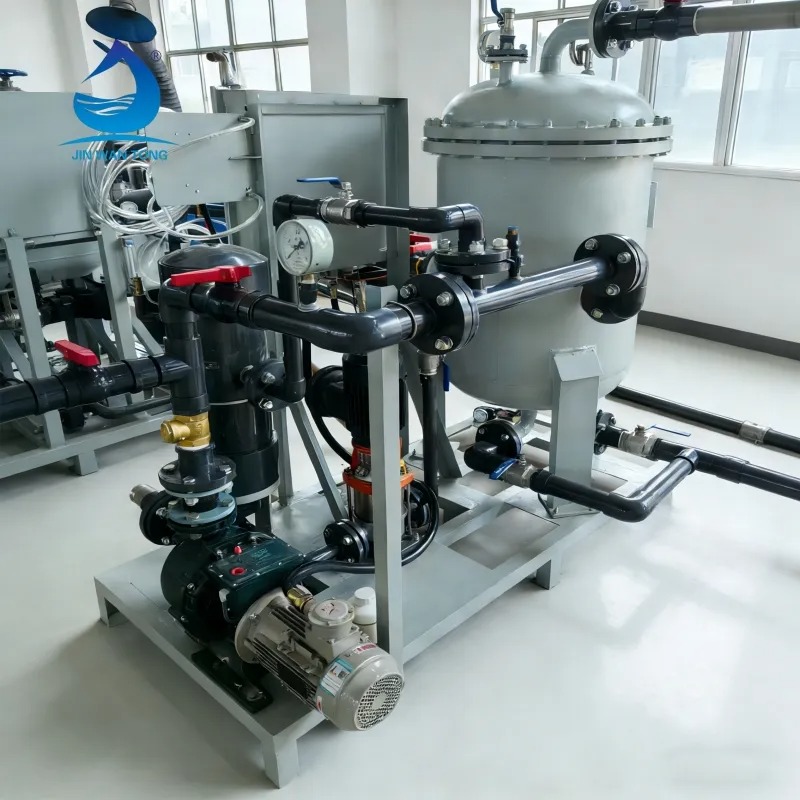
Dissolved air flotation represents a paradigm shift in how facilities approach solid-liquid separation. While traditional sedimentation relies on gravity to settle suspended solids, DAF over sedimentation in wastewater treatment introduces microbubbles that attach to particles and carry them to the surface for removal. This fundamental difference in separation mechanism creates substantial advantages that impact treatment speed, footprint requirements, and overall treatment quality. The growing adoption of DAF over sedimentation in wastewater treatment reflects real performance improvements that directly benefit treatment outcomes.
Superior Separation Speed and Efficiency
Rapid Clarification in Compact Timeframes
Traditional sedimentation basins require extensive detention times, typically ranging from two to six hours, allowing particles to gradually settle through the water column. DAF over sedimentation in wastewater treatment accelerates this process dramatically, achieving clarification in as little as thirty to sixty minutes. The efficiency gains stem from the active flotation mechanism inherent in dissolved air flotation systems. Microbubbles generated through controlled air injection attach to suspended particles, algae, and colloids, causing them to float upward rather than sink downward. This counter-intuitive approach to separation proves remarkably effective, particularly for light particles and gelatinous materials that resist conventional settling.
Enhanced Particle Recovery and Removal
Sedimentation struggles with particles that exhibit slow settling velocities or possess low density relative to water. These problematic particles often remain suspended or redistribute within the basin, reducing overall treatment efficiency. DAF over sedimentation in wastewater treatment overcomes these limitations by mechanically attaching bubbles to virtually any suspended particle, regardless of settling characteristics. This universal applicability makes dissolved air flotation exceptionally valuable in treating challenging wastewaters containing algae, dyes, fats, and oils. The concentrated sludge layer that forms at the tank surface is substantially denser and easier to remove than sludge generated through sedimentation, further improving operational efficiency.
Reduced Footprint and Space Requirements
Smaller Physical Installation Footprint
Facility space constraints represent a major challenge in wastewater treatment expansion and retrofit projects. Sedimentation basins demand substantial surface area to achieve adequate detention time, making them physically demanding installations. DAF over sedimentation in wastewater treatment delivers superior performance within dramatically smaller tank volumes. The rapid separation achieved through dissolved air flotation typically requires basin volumes roughly one-third to one-half that of equivalent sedimentation basins. This dimensional advantage becomes critical in urban facilities where land availability is severely limited and expansion space commands premium real estate costs. The compact footprint of DAF over sedimentation in wastewater treatment makes it ideally suited for both new construction and retrofit applications where space represents a genuine constraint.
Operational Flexibility and Scalability
Sedimentation basins exhibit fixed operational limitations once constructed, with performance rigidly tied to basin depth, surface area, and detention time. DAF over sedimentation in wastewater treatment provides substantially greater operational flexibility by allowing treatment professionals to adjust air injection rates, bubble size, and contact time to match incoming wastewater characteristics. This adaptability proves invaluable when treating variable influent streams or when facility demands shift unexpectedly. Treatment capacity can be effectively expanded without major infrastructure modifications, simply by increasing bubble generation or operating frequency. The scalability advantages of DAF over sedimentation in wastewater treatment make it particularly attractive for facilities experiencing growth or fluctuating treatment demands.
Superior Treatment Quality and Regulatory Compliance
Improved Clarification Quality and Effluent Standards
Modern environmental regulations demand increasingly stringent effluent quality standards, particularly for suspended solids, turbidity, and specific contaminant removal. Sedimentation alone frequently fails to achieve required discharge standards without supplementary polishing steps. DAF over sedimentation in wastewater treatment consistently produces significantly clearer effluent, often reducing suspended solids below one hundred milligrams per liter through a DAF over sedimentation in wastewater treatment system. The removal efficiency for problematic materials like algae, humic substances, and colloidal particles consistently exceeds that achievable through conventional sedimentation. These performance advantages translate directly into reliable regulatory compliance and reduced risk of permit violations or enforcement actions.
Reduced Sludge Volume and Handling Requirements
Sludge management represents one of the largest operational cost components in wastewater treatment, encompassing thickening, dewatering, disposal, and potentially incineration. Sedimentation generates diffuse sludge layers that require extended settling periods and aggressive removal protocols. DAF over sedimentation in wastewater treatment produces concentrated sludge at the tank surface with higher solids concentration and reduced volume. This characteristic fundamentally reduces downstream sludge handling requirements and associated disposal costs. The denser sludge cake generated through dissolved air flotation dewatering requires less processing before final disposal, reducing dewatering equipment demand and chemical consumption. Facilities implementing DAF over sedimentation in wastewater treatment typically report substantial reductions in total sludge volume requiring final disposal, generating immediate cost savings that compound over the facility lifecycle.
FAQ
What specific wastewater types benefit most from DAF over sedimentation in wastewater treatment?
DAF over sedimentation in wastewater treatment excels in treating wastewaters containing light, gelatinous, or poorly-settling particles. Industrial applications including food processing, beverage production, pulp and paper mills, and chemical manufacturing particularly benefit from dissolved air flotation. Municipal wastewater containing algae blooms and algae-laden streams show exceptional performance improvement when switched from sedimentation to DAF over sedimentation in wastewater treatment. Oily and grease-laden streams also respond exceptionally well, as microbubbles efficiently capture hydrophobic particles that resist gravity settling.
How does the operating cost of DAF over sedimentation in wastewater treatment compare?
While initial capital investment for DAF over sedimentation in wastewater treatment typically exceeds sedimentation basin costs, operational advantages generate compelling return-on-investment. Reduced sludge handling, smaller footprint, faster treatment, and fewer supplementary treatment steps offset energy consumption required for bubble generation. Most facilities implementing DAF over sedimentation in wastewater treatment recover their investment within three to five years through reduced disposal costs and improved treatment reliability. Energy-efficient bubble generation systems further improve the economic case for DAF over sedimentation in wastewater treatment selection.
Can DAF over sedimentation in wastewater treatment handle shock loads or variable influent characteristics?
Yes, DAF over sedimentation in wastewater treatment demonstrates superior resilience to operational upsets compared to sedimentation basins. The adjustable nature of bubble generation and contact time allows rapid response to changing influent conditions without performance collapse. Sedimentation basins exhibit significant lag time in responding to shock loads and often require basin scour or restart to recover. This operational advantage makes DAF over sedimentation in wastewater treatment particularly valuable for facilities experiencing variable or unpredictable influent streams.