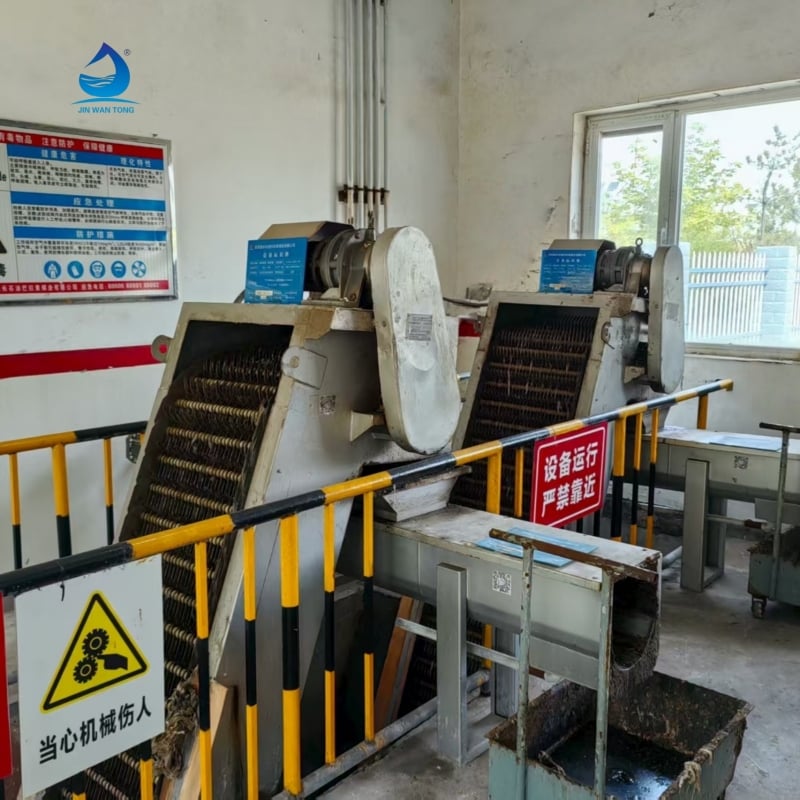
A compact WWTP helps factories meet discharge limits in limited space while reducing civil works, installation time, and total project cost. This guide explains how industrial users can choose industrial wastewater treatment, space-saving wastewater treatment, and cost-effective wastewater treatment solutions without sacrificing process stability.
Why Industries Choose Compact WWTP Designs
Industrial plants often need treatment capacity inside an already crowded production site. A traditional civil-built treatment station may require large basins, long pipe runs, separate equipment rooms, and wide maintenance areas. For a factory that is expanding production, that space may simply not exist.
An industrial WWTP must also fit the reality of production: variable flow, changing wastewater quality, limited shutdown windows, and strict environmental inspection schedules. A compact wastewater treatment plant solves these problems by integrating key treatment steps into a smaller layout.
Instead of building every unit as a separate concrete structure, a package wastewater treatment plant may combine equalization, chemical dosing, biological treatment, clarification, filtration, disinfection, and sludge handling into prefabricated or modular units. This reduces site work and makes installation faster.
Good wastewater treatment equipment does not only occupy less space. It should also be easier to install, easier to operate, and flexible enough for future process changes. That is the real value of compact design for industrial users.
How a Compact WWTP Saves Space
A compact WWTP saves space by increasing treatment efficiency per square meter. It is not just a smaller version of a conventional plant; it uses more integrated layouts and higher-efficiency process units to reduce the total footprint.
For small footprint wastewater treatment, engineers may replace large settling tanks with high-rate clarification, use attached-growth biological media, or install membrane separation instead of secondary clarifiers. These choices allow the system to handle more load within a smaller area.
For example, an MBR system can remove suspended solids through membranes, often eliminating the need for a large secondary clarifier. An MBBR system increases biomass by allowing microorganisms to grow on carriers, improving organic and ammonia removal without greatly increasing tank volume. A DAF system can quickly remove oil, grease, and light suspended solids from food, petrochemical, or surface treatment wastewater. A
lamella clarifier increases effective settling area by using inclined plates, making clarification more compact.
A compact wastewater treatment plant also saves space through layout optimization. Pumps, tanks, blowers, dosing systems, control panels, and access platforms can be arranged as one coordinated process train. For projects where land is expensive or restricted, space-saving wastewater treatment can protect valuable production space.
How Compact WWTP Reduces Total Cost
The financial value of compact design is not limited to lower land use. A properly designed compact WWTP can reduce the total lifecycle cost of an industrial wastewater project.
A cost-effective wastewater treatment project usually saves money in several areas:
1. Lower civil construction cost
Prefabricated steel tanks, skid-mounted units, and integrated modules reduce excavation, concrete work, waterproofing, and long pipe trenches.
2. Shorter installation period
Factory-prefabricated equipment can be delivered ready for connection, which reduces on-site labor and project management time.
3. Less production disruption
For retrofit projects, faster installation reduces the risk of stopping production or delaying environmental approval.
4. Flexible investment
A modular wastewater treatment plant allows the owner to start with the required capacity and add modules when production grows.
5. Simpler maintenance planning
Compact layouts can centralize valves, pumps, instruments, and control systems, reducing operator walking time and inspection complexity.
A containerized wastewater treatment plant is especially useful where weather, remote location, or limited construction resources make civil work difficult. A package wastewater treatment plant can also reduce engineering uncertainty because much of the system is assembled before it arrives on site.
However, lower cost should not mean under-design. A compact WWTP must still provide enough hydraulic retention time, oxygen transfer, sludge separation, chemical reaction time, and maintenance access.
Process Options for Industrial Wastewater Treatment
Choosing the right process depends on wastewater quality, discharge standard, available area, and operator capability. There is no single best solution for all factories.
For industrial wastewater treatment, food and beverage plants may need oil removal, organic load reduction, and biological polishing. Chemical plants may need pH adjustment, oxidation, coagulation, and advanced treatment. Textile factories may require color removal and stable COD reduction. Metal finishing plants may need heavy metal precipitation, filtration, and sludge dewatering.
A compact system may combine:
Equalization to smooth flow and pollutant peaks;
pH adjustment for chemical stability;
Coagulation and flocculation for suspended solids and phosphorus;
Biological treatment for COD, BOD, ammonia, or nitrogen;
Clarification or membrane separation for solids removal;
Filtration, activated carbon, or disinfection for final polishing;
Sludge thickening and dewatering for easier disposal.
A compact WWTP should be customized around real test data, not only a nominal flow rate. If wastewater contains high salinity, toxic solvents, heavy metals, oil, or non-biodegradable organics, pretreatment may be essential before biological units.
A compact wastewater treatment plant performs best when process selection matches the actual wastewater source. This is why pilot testing, wastewater analysis, and clear discharge targets are important before final design.
When a Modular Wastewater Treatment Plant Fits Best
A modular wastewater treatment plant is suitable when the factory needs phased investment, fast delivery, or future expansion. Instead of building one large permanent facility at the beginning, the owner can install modules according to current production demand.
This approach is practical for industrial parks, new factories, temporary production sites, overseas projects, mining camps, food processing plants, and factory expansions. If flow increases later, another treatment line can be added with less disruption.
A modular wastewater treatment plant also helps when the final production scale is uncertain. Many manufacturers expand in phases, and wastewater volume may change year by year. A fixed civil plant may be oversized at first and still become insufficient later. Modular design reduces that risk.
A containerized wastewater treatment plant is another strong option for remote sites or projects that require fast relocation. It can house pumps, dosing systems, blowers, tanks, membranes, instruments, and control panels inside transportable containers, depending on process requirements.
What to Check Before Buying Wastewater Treatment Equipment
Before purchasing wastewater treatment equipment, industrial users should confirm technical, financial, and operational details. A low initial price may become expensive if the system cannot meet standards or is difficult to maintain.
Key items to check include:
1. Average flow, peak flow, and daily discharge pattern;
2. COD, BOD, SS, NH₄-N, TN, TP, oil, heavy metals, salinity, pH, and temperature;
3. Required outlet standard: sewer discharge, direct discharge, reuse, or local regulation;
4. Available footprint, height limit, foundation condition, and access for maintenance;
5. Power supply, chemical storage, sludge disposal route, and operator skill level;
6. Automation needs, remote monitoring, alarms, and spare parts availability;
7. Future production expansion and possible stricter standards.
For an industrial WWTP, sludge handling is often underestimated. More pollutant removal means more sludge, and the project should include thickening, dewatering, storage, and disposal planning. Even small footprint wastewater treatment needs safe access for cleaning, sampling, pump maintenance, and chemical handling.
Qingdao
Jinwantong supports industrial users with process selection, equipment integration, and layout planning for compact projects. Its experience in prefabricated treatment units, clarification systems, biological processes, and sludge handling helps customers avoid mismatched designs.
Limits and Risks of Compact Designs
Compact systems are powerful, but they are not magic. If influent quality changes sharply, equalization may still be required. If wastewater is toxic to microorganisms, biological treatment may fail without pretreatment. If operators ignore sludge discharge, even a well-designed system can lose performance.
Another risk is reducing tank size too aggressively. Short retention time can weaken reaction performance, and crowded layouts may make maintenance difficult. Membranes, blowers, pumps, dosing systems, and sensors all need routine inspection.
The best compact design balances size reduction with process safety. It should leave enough buffer capacity for peak flow, shock loading, sludge accumulation, and future compliance requirements.
Final Advice for Compact WWTP Projects
A compact WWTP can help industries save land, reduce civil works, shorten installation, and control total treatment cost when it is designed around real wastewater data. The safest approach is to match process units, automation, sludge handling, and expansion planning to the factory’s actual operating conditions.
If your site needs a smaller and faster treatment solution, contact Qingdao Jinwantong with your wastewater analysis, flow data, site layout, and discharge target. Our team can help evaluate a practical compact design and recommend a solution that fits both compliance and budget goals.
 EN