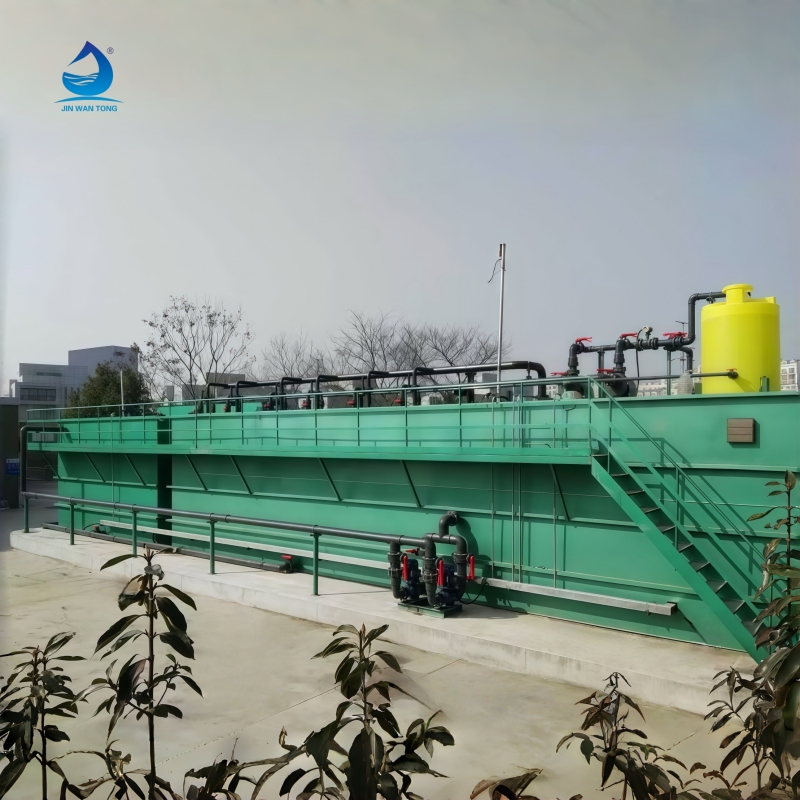
A wastewater treatment plant upgrade should start with bottleneck diagnosis, not equipment shopping. This guide shows how to achieve increased capacity, meet stricter discharge standards, compare process options, and plan a staged WWTP upgrade with lower shutdown risk.
Wastewater Treatment Plant Upgrade Starts with Diagnosis
A wastewater treatment plant can only be upgraded correctly after the real limitation is identified. Many owners first assume they need new tanks, but the bottleneck may be aeration, sludge settling, chemical dosing, tertiary polishing, hydraulic distribution, or sludge handling.
A successful plant retrofit begins with operating data. Check average flow, peak flow, influent COD, BOD, NH₄-N, TN, TP, SS, oil, pH, temperature, and seasonal variation. Then compare these values with the original design basis. If the current load is already above design, capacity expansion is necessary. If the load is normal but effluent still fails, the problem may be process control or aging wastewater treatment equipment.
The second step is compliance mapping. New stricter discharge standards may require lower ammonia, nitrogen, phosphorus, suspended solids, or bacteria. Each target pollutant points to a different solution. Therefore, the best WWTP upgrade is not one universal technology; it is a matched system plan.
Before investing, operators should ask: is the wastewater treatment plant limited by biological reaction capacity, clarification capacity, final filtration, disinfection, or sludge disposal? This question prevents expensive but ineffective upgrades.
Audit the Existing Wastewater Treatment Plant Before Design
The key point is simple: measure first, modify second. An existing wastewater treatment plant often contains hidden spare capacity, but only if operating data confirms it.
A practical audit should include:
1. Hydraulic review
Confirm average flow, peak flow, pump cycles, pipe restrictions, bypass events, and equalization tank performance.
2. Pollutant loading review
Compare current organic load, nitrogen load, phosphorus load, and suspended solids with original design assumptions.
3. Biological system review
Check DO, MLSS, SRT, F/M ratio, nitrification, denitrification, sludge settleability, and aeration efficiency.
4. Clarifier review
Inspect sludge blanket level, RAS/WAS control, surface overflow rate, weir condition, and possible need for secondary clarifier upgrade.
5. Tertiary and disinfection review
Review filters, dosing systems, UV/chlorination, and any tertiary treatment units.
6. Sludge line review
Confirm thickening, storage, dewatering, polymer dosing, and the actual capacity of the sludge treatment system.
7. Automation and maintenance review
Check online instruments, PLC control, alarms, spare parts, and operator workload.
This audit shows whether the project needs operational optimization, a biological treatment upgrade, new polishing units, or complete capacity expansion.
Choose WWTP Upgrade Options by Target Pollutant
The best WWTP upgrade should be selected according to the pollutant that prevents compliance. A plant failing ammonia needs a different solution from a plant failing phosphorus or suspended solids.
For COD and BOD, the common issue is insufficient biological capacity or poor oxygen transfer. Possible solutions include better aeration, additional reactors, MBBR upgrade, IFAS upgrade, or improved pretreatment. If industrial wastewater contains toxic or high-strength waste, source control and equalization may be just as important as new equipment.
For ammonia, the bottleneck is usually nitrification. Nitrifying bacteria grow slowly and need adequate DO, alkalinity, temperature, and sludge age. A biological treatment upgrade using carriers can increase nitrifier inventory without large civil expansion. This is why an MBBR upgrade or IFAS upgrade is often considered for an overloaded wastewater treatment plant.
For TN, denitrification must be reviewed. The plant may need more anoxic volume, better internal recycle, carbon source dosing, or process zone modification. For TP, chemical phosphorus removal, improved biological phosphorus removal, or advanced filtration may be required.
For SS and turbidity, look at the clarifier and final polishing system. A secondary clarifier upgrade, tube settlers, lamella clarification, sand filters, disc filters, or membrane separation may be needed. If very low SS and reuse-quality effluent are required, an MBR system can be considered, but energy use, membrane cleaning, and operator skill must be evaluated.
Biological Treatment Upgrade for Increased Capacity
A biological treatment upgrade is often the core of increased capacity because the biological reactor removes most organic matter and nitrogen. If hydraulic flow has increased but tank volume cannot be expanded, the solution is usually to increase active biomass inside the existing footprint.
An MBBR upgrade adds moving carriers into an aeration or anoxic tank. Biofilm grows on the carriers, increasing biomass concentration without relying only on suspended sludge. This option is useful when the wastewater treatment plant needs more nitrification or organic removal but has limited land.
An IFAS upgrade combines suspended activated sludge and attached biofilm. It is suitable when the original activated sludge system still works but needs stronger nitrification, better shock resistance, or more treatment capacity. Compared with building a new basin, this plant retrofit can reduce civil work.
An MBR system replaces secondary clarification with membrane separation. It provides very low suspended solids and compact layout, making it attractive for strict reuse or high-standard discharge. However, it usually requires higher investment, membrane maintenance, and more careful operation.
The practical selection should balance footprint, effluent target, operator capability, energy cost, and future flow growth. For many owners, the right WWTP upgrade is a combination of aeration improvement, carrier addition, better controls, and final polishing—not one single machine.
Clarifier, Tertiary Treatment and Sludge System Upgrades
A wastewater treatment plant will still fail if downstream units cannot handle the higher load. After biological improvement, more solids may reach clarifiers, filters, and the sludge line.
A secondary clarifier upgrade may include inlet distribution correction, scraper repair, RAS/WAS optimization, weir leveling, tube settlers, or additional clarification capacity. If solids escape from the clarifier, effluent TP, COD, and disinfection performance can also suffer because pollutants attach to suspended particles.
For final compliance, tertiary treatment may be required. Options include coagulation, flocculation, high-rate clarification, sand filtration, fiber filtration, disc filtration, activated carbon, UV, chlorination, or advanced oxidation. The selection depends on whether the target is SS, TP, color, pathogens, trace organics, or reuse water quality.
The sludge treatment system must not be ignored. More pollutant removal usually creates more sludge. If thickening or dewatering capacity is too small, sludge accumulates and returns problems to the biological tanks and clarifiers. Upgrading pumps, storage tanks, polymer dosing, screw presses, belt presses, or filter presses may be necessary.
Tenghong supports project owners by reviewing process bottlenecks and matching wastewater treatment equipment with actual site conditions. Instead of focusing only on one unit, the company helps evaluate the full route from influent to sludge discharge.
Plan a Phased Wastewater Treatment Plant Retrofit
The safest plant retrofit is usually staged. Most existing facilities cannot stop operation completely, so construction, installation, and commissioning must be planned around continuous treatment.
A practical phased plan includes:
1. Baseline confirmation
Collect at least several weeks of flow, water quality, energy, chemical, and sludge data.
2. Temporary operation plan
Prepare bypass, temporary tanks, rental equipment, or divided-line operation if needed.
3. Low-risk optimization first
Adjust aeration, RAS, WAS, chemical dosing, online monitoring, and maintenance before civil modification.
4. Install new modules by process priority
Add biological carriers, blower upgrades, clarifier improvements, or filters in a sequence that protects effluent quality.
5. Commission gradually
Bring each unit online step by step, then tune DO, recycle ratios, dosing rates, and sludge wasting.
6. Verify compliance under peak load
Test the upgraded wastewater treatment plant during high flow and high pollution periods before final acceptance.
This staged approach reduces compliance risk and avoids sudden process shock. It also gives operators time to learn new equipment and control logic.
Final Recommendation for Wastewater Treatment Plant Capacity Expansion
A wastewater treatment plant upgrade should diagnose the real bottleneck, select targeted process improvements, and include sludge, clarification, automation, and polishing systems in one plan. The most reliable WWTP upgrade is not the most complex option, but the one that meets stricter discharge standards with manageable cost and stable operation.
If you are planning capacity expansion or a compliance-driven plant retrofit, share your flow data, effluent limits, site layout, and current process with Qingdao
Jinwantong. Our team can help assess suitable wastewater treatment equipment and develop a practical upgrade path for your facility.
 EN