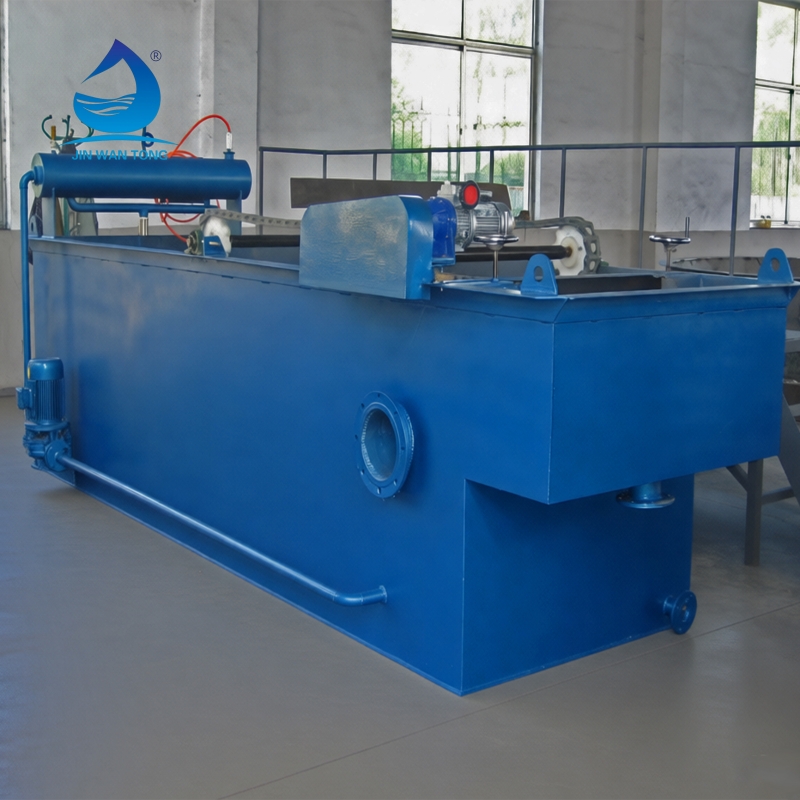
A clarifier tank with a sludge scraper mechanism separates solids by gravity, then continuously moves settled sludge to a discharge point. This article explains the full solid-liquid separation process, why scraper design matters, and what buyers should check to prevent sludge buildup, floating sludge, and unstable effluent.
How a Clarifier Tank Achieves Solid-Liquid Separation
A clarifier tank works by slowing the wastewater flow so suspended solids can settle while clarified water exits from the top. The tank itself provides the hydraulic space for separation, but stable performance depends on how well flow distribution, settling area, sludge collection, and discharge are coordinated.
In a typical wastewater clarifier, influent enters through a center well, inlet channel, or distribution zone. The purpose is to reduce turbulence before water reaches the settling zone. If the inlet flow is too fast, flocs can break apart and solids may be carried toward the outlet before they settle.
After the flow slows down, heavier particles settle to the bottom. In a sedimentation tank, this settling process may involve biological sludge, chemically precipitated solids, coagulated flocs, or industrial suspended matter. Clear water then moves upward or horizontally toward the outlet weirs.
The key point is that settling alone is not enough. Once sludge reaches the bottom of the clarifier tank, it must be collected and removed. Without a reliable sludge removal system, settled solids accumulate, become septic, release gas, float back to the surface, and cause high suspended solids in the effluent.
What the Sludge Scraper Mechanism Does
The sludge scraper mechanism moves settled sludge from the tank floor to a sludge hopper or collection trough for removal. It does not directly improve coagulation or biological settling, but it prevents settled solids from staying too long in the basin.
A scraper normally runs at low speed because the goal is gentle movement, not mixing. If it moves too fast, it may disturb the sludge layer and push solids back into the water. If it moves too slowly or stops, sludge may accumulate on the floor and create dead zones.
A complete sludge collection system usually includes scraper arms or scraper flights, a drive unit, bottom blades, a sludge hopper, discharge pipes, valves, and sometimes surface scum removal devices. In larger plants, torque protection and automatic alarms are important because a jammed scraper can damage the drive system.
The scraper is especially important in continuous operation. Many industrial and municipal plants cannot stop the clarifier tank for manual cleaning every few days. A well-designed sludge scraper mechanism keeps sludge moving steadily, supports consistent underflow concentration, and helps maintain clear effluent.
Step-by-Step Working Process in a Clarifier Tank
A clarifier tank with a scraper works as an integrated hydraulic and mechanical unit. Each stage affects the next one, so poor inlet distribution or poor sludge discharge can reduce the benefit of good scraper design.
1. Influent enters the tank
Wastewater enters the wastewater clarifier through an inlet structure designed to reduce velocity and distribute flow evenly.
2. Suspended solids settle by gravity
In the settling zone, solids move downward while clarified water moves toward the outlet. In some projects, tube settlers or lamella plates may be added to improve settling efficiency.
3. Sludge accumulates on the tank floor
Settled solids form a bottom layer. If this layer becomes too thick, it can reduce effective tank volume and cause sludge blanket problems.
4. The sludge scraper mechanism moves solids
The scraper slowly pushes sludge toward the sludge hopper or end collection zone.
5. Sludge is discharged
Sludge leaves through a pump, gravity line, valve, or timed drain. This stage is the practical core of clarifier sludge removal.
6. Clarified water exits
Treated water flows over outlet weirs. Stable outlet flow reduces solids carryover.
7. Floating materials are removed if needed
Surface skimmers may collect grease, foam, or floating solids before they reach the effluent area.
This process shows why a clarifier tank should be viewed as a complete separation system, not just a concrete or steel basin.
Circular Clarifier and Rectangular Clarifier Designs
A circular clarifier and a rectangular clarifier both use gravity settling, but their sludge scraping methods are different. Selecting the right design depends on tank geometry, flow rate, sludge properties, installation space, and maintenance preference.
In a circular clarifier, water often enters near the center and exits around the perimeter. The scraper arms rotate slowly around the center, pushing settled sludge inward to a central sludge hopper. The drive may be center-driven or peripheral-driven. For larger diameters, torque protection is important because heavy sludge can increase resistance.
In a rectangular clarifier, sludge is usually moved along the tank floor toward one end or toward multiple collection troughs. The scraper may use chain-and-flight systems, a traveling scraper bridge, or a reciprocating mechanism. This design is common where rectangular civil structures are easier to arrange or where multiple tanks are built side by side.
Both layouts can work well, but the sludge scraper mechanism must match the floor slope, sludge characteristics, and discharge method. A mismatch can lead to uneven sludge collection, localized accumulation, and poor clarifier sludge removal.
Why Scraper Design Affects Effluent Stability
A good scraper helps stabilize effluent because it keeps settled sludge from re-entering the water column. When sludge remains too long at the bottom of a clarifier tank, it can ferment, release gas, float upward, or be disturbed by incoming flow.
Common problems caused by poor sludge collection include rising sludge blanket, floating sludge, odor, uneven underflow concentration, and cloudy outlet water. These issues are often blamed on treatment chemistry, but the real cause may be mechanical or hydraulic.
A reliable sludge removal system reduces the retention time of settled solids. It also helps maintain a predictable sludge blanket level. This is important for biological systems because excessive sludge accumulation in a wastewater clarifier can affect return sludge concentration and overall process control.
For industrial systems, scraper design is also linked to maintenance cost. Sticky sludge, chemical sludge, oily solids, or high-density mineral sludge may require stronger blades, better corrosion protection, and more robust drive components. Tenghong considers these operating details when helping customers select wastewater treatment equipment for new-build and retrofit projects.
Common Sludge Scraper Mechanism Problems
Most scraper failures are not sudden; they develop from overload, corrosion, poor maintenance, or sludge accumulation. Operators should investigate early warning signs before the clarifier tank loses performance.
1. High torque alarm
This may indicate heavy sludge buildup, scraper obstruction, gearbox problems, or excessive solids loading.
2. Scraper arms move but sludge remains
Blades may be worn, incorrectly adjusted, or unable to contact the floor properly.
3. Poor sludge discharge
Pumps, valves, or pipes may be blocked even if the scraper is working.
4. Floating sludge appears
Sludge may be staying too long in the sludge hopper, creating gas and rising to the surface.
5. Uneven effluent quality
Short-circuiting, damaged baffles, uneven weirs, or weak scraping can cause solids carryover.
6. Corrosion or mechanical wear
Industrial wastewater may damage metal components if material selection is wrong.
Good maintenance includes checking the drive unit, reducer, scraper blades, chain tension if applicable, bearings, fasteners, underwater components, and the complete sludge collection system.
What Buyers Should Check Before Ordering
A clarifier tank with scraper should be selected according to actual process data, not only tank volume. The buyer should confirm whether the equipment can handle the expected hydraulic load, solids load, sludge type, and site layout.
Before placing an order, review these points:
1. Tank type: steel, concrete, packaged, round, or rectangular.
2. Design flow, peak flow, and surface loading rate.
3. Sludge type: biological, chemical, oily, mineral, or mixed.
4. Expected sludge concentration and discharge frequency.
5. Required underflow method: pump discharge, gravity discharge, or automatic valve.
6. Material requirements for corrosion resistance.
7. Need for scum removal and surface skimming.
8. Motor power, drive type, overload protection, and control logic.
9. Maintenance access, walkway, guardrail, and safe inspection points.
10. Compatibility with tube settlers, lamella modules, or other process upgrades.
Tenghong can assist with tank layout review, scraper selection, and retrofit recommendations when customers provide flow data, tank drawings, sludge characteristics, and target effluent quality. This helps avoid oversizing, undersizing, or selecting a scraper that does not match the real sludge behavior.
Final Recommendation for Clarifier Tank Projects
A clarifier tank separates solids by gravity, while the sludge scraper mechanism completes the job by moving settled sludge to the discharge point. For stable operation, the scraper, inlet hydraulics, outlet weirs, sludge removal system, and sludge collection system must work together.
If your project needs a new clarifier tank or wants to improve an existing sedimentation tank, contact Qingdao
Jinwantong with your flow rate, tank size, sludge type, and discharge requirements. Our team can help evaluate the right sludge scraper mechanism and provide a practical solution for long-term clarifier sludge removal.

 EN
EN