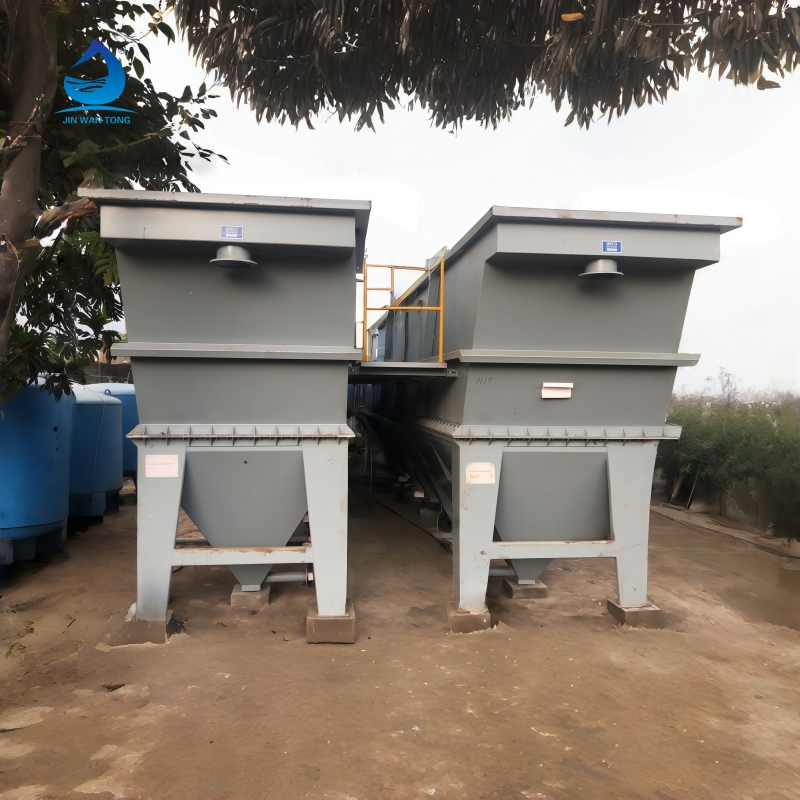
A clarifier tank with an unstable sludge blanket can quickly cause cloudy effluent, high suspended solids, and downstream equipment overload. This guide explains how operators can diagnose rising sludge, floating sludge, poor settling, RAS/WAS imbalance, hydraulic shocks, and mechanical failures before they become discharge problems in a wastewater clarifier.
Clarifier Tank Sludge Blanket Problems: What to Control First
The first priority in a clarifier tank is to keep solids entering, settling, and leaving the basin in balance. When solids enter faster than they are removed, the sludge blanket rises; when solids do not settle well, they remain in the water column; when flow is unstable, settled sludge can be carried toward the outlet.
In normal clarifier operation, the basin should separate mixed liquor or coagulated solids into clarified water and concentrated sludge. If the secondary clarifier is connected to an activated sludge process, operators must also coordinate return activated sludge and waste activated sludge rates. These flows affect MLSS, sludge age, solids inventory, and the solids loading entering the unit.
A common mistake is to treat every problem as a simple “remove more sludge” issue. In reality, sludge settling, hydraulic loading, biological condition, scraper performance, inlet distribution, and the sludge removal system all need to be checked together. A practical troubleshooting method should start with visible symptoms, then move to measurements, then adjust operation.
Key Symptoms in a Wastewater Clarifier
The quickest way to narrow the cause is to classify the symptom correctly. A wastewater clarifier can fail in several different ways, and each pattern points to different causes.
1. Rising sludge blanket
The sludge blanket gradually moves upward and approaches the effluent zone. This usually indicates solids loading is too high, sludge withdrawal is too low, or the sludge removal system is not moving solids effectively.
2. Floating sludge
Dark sludge pieces float to the surface, sometimes with bubbles. This may indicate denitrification, septic sludge, excessive sludge retention in the hopper, or poor RAS control.
3. Cloudy effluent without obvious blanket rise
This often points to weak floc formation, poor sludge settling, hydraulic short-circuiting, or floc breakup before the outlet.
4. Sudden sludge washout
A rapid increase in suspended solids may be caused by storm inflow, pump surges, high surface overflow rate, damaged baffles, or uneven weirs.
5. Thick sludge accumulation in one zone
This may indicate a scraper, pump, valve, or pipe blockage rather than a biological process problem.
Visual inspection is useful, but it should not replace measurement. Operators should measure blanket depth, effluent clarity, MLSS, SVI, RAS concentration, and sludge withdrawal flow to understand the real condition inside the clarifier tank.
Causes of Sludge Blanket Rising in a Secondary Clarifier
A rising sludge blanket in a secondary clarifier usually means the solids mass balance is wrong. More solids are being loaded into the basin than the system can settle and remove.
The most direct cause is insufficient sludge withdrawal. If return activated sludge flow is too low, solids remain in the bottom of the tank for too long. If waste activated sludge wasting is too low, the biological system carries excessive solids inventory, and the clarifier receives a heavier load. Both conditions can lead to poor separation.
Another cause is poor settling quality. If filamentous bacteria, toxic shock, low DO, nutrient imbalance, high oil content, or pH fluctuation damages floc quality, sludge becomes light and fluffy. Even a well-sized clarifier tank may then show high effluent suspended solids because particles do not compact properly.
Hydraulic shock is also common. Small plants and industrial sites may receive batch discharge, pump surges, or rainwater intrusion. These peaks can disturb the settled layer and carry solids upward. In this case, increasing sludge withdrawal alone may not solve the problem; equalization, inlet energy control, or flow distribution should be reviewed.
Sludge Blanket Control: Daily Operating Checks
Effective sludge blanket control depends on routine data, not emergency reaction. Operators should create a simple daily record that links blanket level with flow, MLSS, RAS, WAS, effluent quality, and weather or production changes.
A practical daily checklist includes:
1. Measure the sludge blanket at the same locations and time each day.
2. Record influent flow, peak flow, and unusual wastewater discharge.
3. Check effluent suspended solids or turbidity trend.
4. Test MLSS, SVI, and settleability in a graduated cylinder.
5. Verify actual return activated sludge pump flow, not only panel settings.
6. Confirm waste activated sludge wasting time and daily volume.
7. Inspect scraper bridge, sludge hopper, valves, and discharge pipes.
8. Observe surface scum, bubbles, odor, and signs of floating sludge.
9. Compare results with previous days before making large adjustments.
The goal is to find trend changes early. If the blanket height rises for several days, the system is giving a warning before visible washout occurs. A stable clarifier tank usually has predictable blanket depth, clear supernatant, consistent sludge concentration, and no sudden sludge movement near the outlet.
Preventing Floating Sludge and Denitrification
Floating sludge is often caused by gas attaching to sludge flocs and lifting them to the surface. In activated sludge systems, denitrification inside the clarifier tank is a common reason. When nitrate-rich sludge stays too long in an anoxic sludge layer, nitrogen gas forms and carries solids upward.
To prevent this problem, operators should reduce unnecessary sludge detention time. Increasing return activated sludge within a reasonable range can help move solids out of the bottom faster, but excessive RAS may increase hydraulic loading and disturb settling. Balance is important.
Timely waste activated sludge withdrawal also matters. If sludge age becomes too long, sludge may become less active, less compact, and more likely to release gas. In some cases, improving upstream process control—such as DO, nitrification rate, internal recycle, and anoxic zone performance—can reduce nitrate-related problems in the secondary clarifier.
Mechanical cleaning is equally important. If the hopper contains old sludge, or the sludge removal system leaves dead zones, denitrification may occur even when the main process looks acceptable. Sludge that remains too long at the bottom becomes septic, releases gas, and creates surface solids.
Hydraulic and Mechanical Clarifier Troubleshooting
Good clarifier troubleshooting must include hydraulic and mechanical inspection. A clarifier tank is not just a storage basin; it is a controlled separation device. Poor inlet distribution, uneven outlet weirs, damaged baffles, or excessive surface overflow can move solids into the effluent even when sludge quality is normal.
Check the inlet first. If flow enters with too much velocity, it may break flocs or create short-circuiting. Center wells, energy dissipation zones, and distribution structures should reduce turbulence. In rectangular basins, uneven inlet flow may overload one side and leave another side underused.
Then inspect outlet conditions. Uneven weirs can pull more water from one area, increasing local velocity and dragging solids upward. Scum baffles should prevent floating material from entering the effluent. If the outlet zone has visible sludge streaks, the problem may be hydraulic rather than only biological.
Mechanical faults are often overlooked. A scraper may rotate but still fail to move sludge properly if blades are worn, misaligned, or damaged. Pumps may show running status while actual flow is low because of blockage, air binding, valve position, or pipe restriction. Tenghong has seen many wastewater projects where solving a simple sludge withdrawal or scraper issue restored stable clarifier operation without replacing the whole unit.
When Equipment Upgrade May Be Needed
Operational adjustment should come first, but equipment upgrades may be justified when the clarifier tank is consistently overloaded. If the plant flow has increased beyond original design, or if peak solids loading is too high, operators may need process or hardware improvements.
Potential upgrades include better inlet distribution, upgraded sludge pumps, improved scraper mechanisms, more reliable automation, tube settlers, lamella modules, or a redesigned sludge removal system. For compact or industrial projects, selecting proper wastewater treatment equipment can reduce repeated maintenance and improve long-term stability.
Before buying new equipment, confirm the root cause. If the real issue is filamentous bulking, poor wasting, or toxic shock, new hardware alone may not solve the problem. If the limitation is hydraulic capacity or sludge withdrawal failure, upgrading the wastewater treatment equipment may provide clear benefits.
Final Recommendation for Stable Clarifier Operation
A stable clarifier tank depends on balanced solids loading, good sludge blanket control, reliable return activated sludge, timely waste activated sludge, and a working sludge removal system. The best prevention strategy is routine monitoring plus quick action when blanket height, SVI, effluent suspended solids, or surface conditions change.
If your plant is struggling with floating sludge, rising blanket levels, or repeated effluent washout, contact Qingdao
Jinwantong with your flow data, MLSS, SVI, tank dimensions, and sludge withdrawal method. Our team can help review the clarifier tank operation and recommend practical improvements for your site.
 EN
EN