 EN
EN
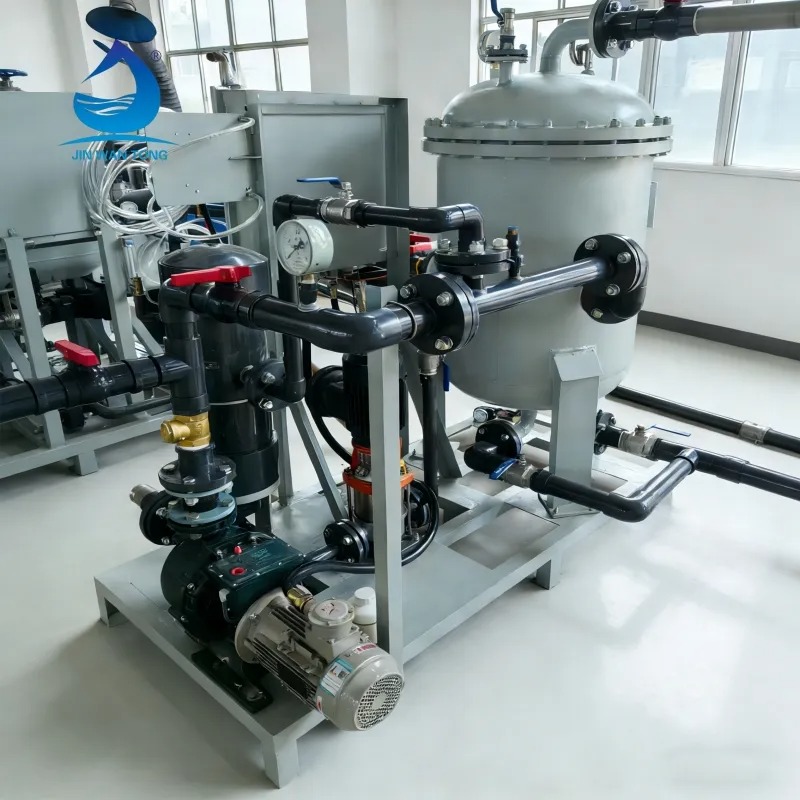
Dissolved air flotation, commonly known as DAF wastewater treatment, has emerged as a powerful solution for industries struggling with complex effluent challenges. Textile mills and pulp & paper facilities generate enormous volumes of wastewater laden with suspended solids, dyes, fibers, and organic compounds that standard treatment methods often fail to address efficiently. DAF wastewater treatment works by introducing microscopic air bubbles into wastewater, allowing these bubbles to attach to contaminants and float them to the surface for removal. This mechanism makes DAF wastewater treatment particularly attractive for sectors where conventional settling tanks prove inadequate or where regulatory limits demand superior removal rates.
The question of whether DAF wastewater treatment suits textile or pulp & paper operations requires careful examination of both technology capabilities and industry-specific wastewater characteristics. These sectors generate distinct contamination profiles that demand tailored treatment approaches. Understanding how DAF wastewater treatment aligns with these industrial realities helps facility managers make informed investments in their treatment infrastructure and ensure compliance with increasingly stringent environmental regulations.
How DAF Wastewater Treatment Addresses Textile Industry Challenges
Removing Color and Suspended Solids from Textile Effluent
Textile manufacturing produces wastewater rich in dyes, fibers, and chemical residues from dyeing, washing, and finishing processes. DAF wastewater treatment excels at removing these visible contaminants because dyes and fiber particles readily attach to air bubbles in the flotation chamber. Unlike gravity-based settling, which requires extended retention time, DAF wastewater treatment achieves rapid separation through controlled air injection. This speed matters significantly for textile mills processing high volumes, as reduced treatment time translates to smaller facility footprints and lower operating costs. The treated water emerging from DAF wastewater treatment units typically shows dramatic reductions in color and turbidity, meeting discharge standards that traditional methods cannot reliably achieve.
Chemical Coagulation Integration with DAF Wastewater Treatment
DAF wastewater treatment becomes even more effective when paired with chemical coagulation, a standard practice in textile wastewater management. Coagulation breaks down colloidal particles that refuse to settle naturally, and DAF wastewater treatment subsequently floats these destabilized particles to the surface. This combination handles the full spectrum of textile contamination, from soluble dyes to suspended fibers to emulsified oils. Textile facilities already familiar with chemical treatment processes find DAF wastewater treatment straightforward to implement because the chemical pre-treatment stage remains unchanged; only the final separation mechanism shifts from settling to flotation. This integration capability makes DAF wastewater treatment a practical retrofit solution for existing textile treatment plants seeking performance improvements without complete facility redesign.
DAF Wastewater Treatment in Pulp & Paper Operations
Handling Fiber Recovery and Pitch Control
Pulp & paper mills generate wastewater containing dissolved and suspended fibers, pitch, and chemical additives from the pulping and bleaching processes. DAF wastewater treatment proves particularly valuable in pitch control, where accumulated pitch can foul equipment and reduce treatment efficiency. The flotation mechanism in DAF wastewater treatment naturally separates low-density pitch particles and fiber fragments, recovering materials that mills can recycle or burn for energy recovery. This recovery capability gives DAF wastewater treatment an economic advantage beyond simple treatment: recovered fibers and pitch reduce raw material costs and waste disposal expenses. Pulp & paper facilities increasingly view DAF wastewater treatment as a resource recovery tool rather than merely a compliance mechanism, fundamentally changing the economics of wastewater management.
Managing Organic Load and BOD Reduction
Pulp & paper wastewater carries substantial biochemical oxygen demand, BOD, from dissolving wood components and processing chemicals. While DAF wastewater treatment does not eliminate BOD directly, it removes suspended solids and colloidal matter that consume oxygen during biological degradation. By clarifying effluent before biological treatment stages, DAF wastewater treatment reduces the organic load that downstream processes must handle. This preliminary removal improves the efficiency of activated sludge systems or lagoon treatment. Many mills find that DAF wastewater treatment serves as an essential pre-treatment step that enables their biological systems to operate more reliably and within design capacity, preventing operational upsets that result in permit violations.
Technical Suitability Factors for DAF Wastewater Treatment Installation
Wastewater Characteristics That Favor DAF Wastewater Treatment
DAF wastewater treatment performs optimally when treating effluent containing suspended solids, oily materials, fibers, and colloidal particles. Both textile and pulp & paper wastewaters possess these characteristics in abundance, making them ideal candidates for DAF wastewater treatment technology. The chemistry of textile dyes and pulp processing residues allows them to coagulate and attach to air bubbles readily. Temperature stability of these industrial wastewaters sits comfortably within operational ranges for DAF wastewater treatment systems. Flow rates from these facilities typically exceed 100 cubic meters daily, a volume range where DAF wastewater treatment's economies of scale emerge clearly. Industries producing continuous wastewater streams benefit from DAF wastewater treatment's ability to operate reliably across eight-hour to 24-hour daily processing schedules.
System Design and Implementation Considerations
Successful DAF wastewater treatment installations require proper system sizing, chemical selection, and operator training. Textile mills must select coagulants compatible with the specific dye chemistry in their effluent; DAF wastewater treatment efficacy depends entirely on upstream chemical pre-treatment. Pulp & paper facilities need sizing calculations that account for seasonal variations in fiber content and waste streams. Both industries benefit from pilot testing before full-scale DAF wastewater treatment system deployment, ensuring that selected chemicals and air saturation parameters deliver target removal rates for their unique wastewater. Design engineers must also consider sludge handling, as DAF wastewater treatment generates concentrated solids that require appropriate disposal or recovery pathways. Operators need training on pH adjustment, chemical dosing, air pressure management, and sludge skimming protocols to maintain consistent DAF wastewater treatment performance.
FAQ
Can DAF wastewater treatment replace gravity settling tanks completely?
DAF wastewater treatment can replace or significantly reduce reliance on gravity settling in most textile and pulp & paper applications. The flotation mechanism works much faster than settling, reducing required tank volume and improving removal rates for certain contaminants. However, some facilities use DAF wastewater treatment in parallel with settling tanks as part of a redundant system for regulatory compliance. The decision depends on space availability, regulatory requirements, and the specific contaminant profile of your effluent. A DAF wastewater treatment system designed by experienced engineers can often eliminate separate settling needs entirely, though proper pilot testing should confirm this for your specific waste stream.
What is the typical operating cost for DAF wastewater treatment systems?
DAF wastewater treatment operating costs include electricity for air saturation pumps, chemical coagulant expenses, and labor for operator oversight. Electricity typically represents 40–60 percent of total operating costs, with chemical treatment accounting for 30–50 percent depending on wastewater characteristics. Textile mills report DAF wastewater treatment costs ranging from 0.5 to 2 dollars per cubic meter of treated water, while pulp & paper facilities may experience slightly higher costs due to chemical diversity. Offsetting these expenses, DAF wastewater treatment often enables resource recovery, reduces sludge disposal costs, and prevents regulatory penalties from inadequate treatment. Many facilities justify DAF wastewater treatment investment based on improved permitting, operational reliability, and reduced downstream biological treatment burden rather than direct cost savings alone.
How long does a DAF wastewater treatment unit last before major upgrades?
A well-maintained DAF wastewater treatment system typically operates 10–15 years before major component replacement becomes necessary. Regular maintenance of air compressors, pump seals, and flotation tank surfaces extends equipment life considerably. DAF wastewater treatment systems handling abrasive textile fibers or pulp mill effluent with high solids may require more frequent maintenance than facilities processing milder wastewater. Upgrading to higher-capacity DAF wastewater treatment equipment often occurs not because existing units fail, but because industries expand production or strengthen environmental standards. Modern DAF wastewater treatment designs feature modular construction, allowing operators to expand treatment capacity incrementally as needed without replacing core infrastructure.