
 EN
EN
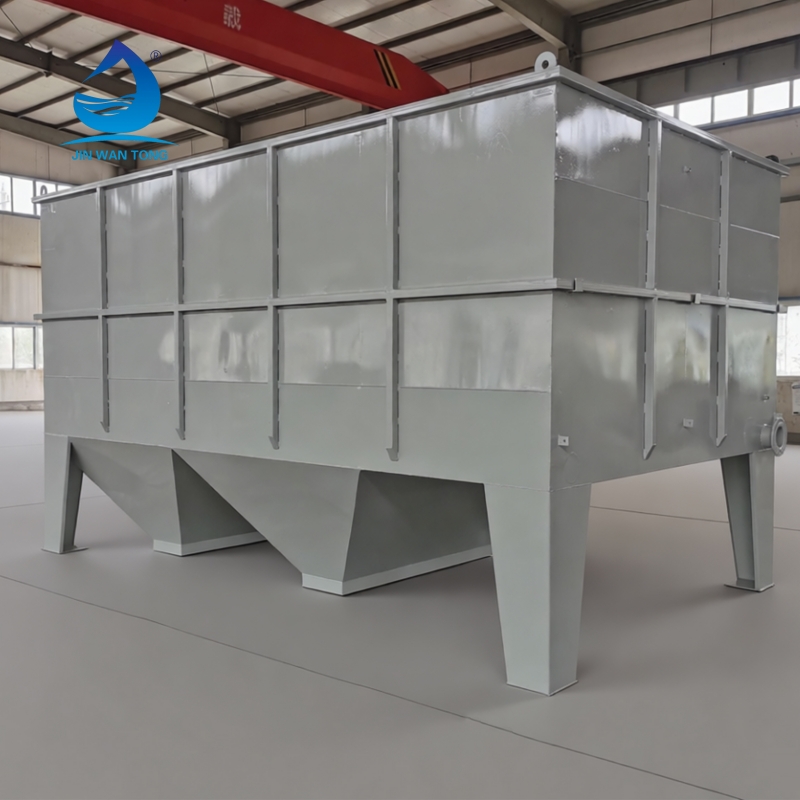
A lamella clarifier represents a transformative approach to wastewater treatment, particularly in municipal sewage plants where space constraints pose persistent operational challenges. This innovative equipment combines high-performance settling with a remarkably compact footprint, allowing treatment facilities to achieve superior water quality while occupying a fraction of the space required by traditional clarification methods. Understanding how a lamella clarifier works and why it has become essential for modern wastewater treatment plants requires examining both its mechanical design and the practical advantages it delivers to facility operators.
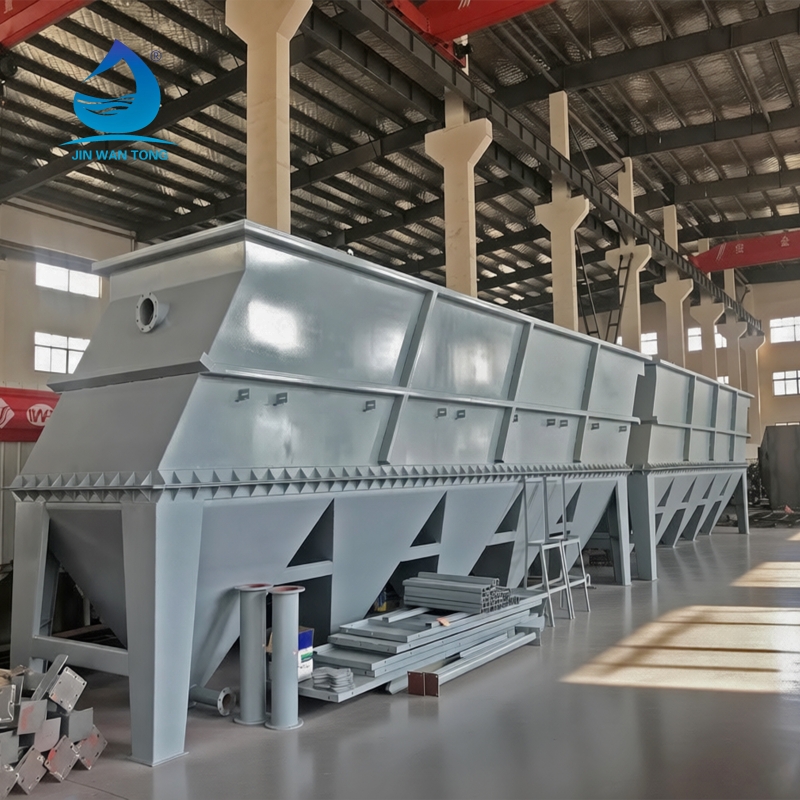
The adoption of lamella clarifier technology has accelerated across the wastewater management industry because municipal plants face intensifying pressure to treat growing volumes of sewage without expanding their physical infrastructure. A lamella clarifier achieves this by utilizing inclined plate or tube technology that dramatically increases the effective settling area within a minimal horizontal footprint. This fundamental principle makes lamella clarifier systems ideal for retrofit applications, densely populated urban environments, and any facility where real estate costs or site constraints limit expansion possibilities.
How Lamella Clarifier Technology Improves Settling Efficiency
The Inclined Plate Mechanism in a Lamella Clarifier
The core innovation behind a lamella clarifier lies in its use of parallel inclined plates or tubular elements that divide the settling tank into numerous thin layers. Rather than relying on a single large settling chamber, a lamella clarifier creates multiple settling zones stacked vertically, with each zone operating independently. As wastewater flows through these inclined passages, solids settle onto the plate surfaces while clarified water continues upward and exits through collection channels. This geometry reduces the distance particles must travel to reach a settling surface, dramatically decreasing the settling time required compared to conventional clarifiers.
Particle Settling and Sludge Collection Within a Lamella Clarifier
Settled solids in a lamella clarifier slide down the inclined plates due to gravity, accumulating at the bottom where they are continuously removed via underflow mechanisms. The angle of inclination—typically between 45 and 60 degrees—is engineered to optimize both settling rates and solids transport without requiring mechanical scrapers in many designs. A lamella clarifier configuration allows settled sludge to be discharged efficiently while maintaining steady-state operation, preventing the bridging and accumulation problems that can plague traditional rectangular clarifiers. This self-cleaning characteristic makes lamella clarifier maintenance less intensive and reduces downtime for routine sludge removal operations.
Space Efficiency and Installation Advantages of Lamella Clarifiers
Reducing Horizontal Footprint Without Sacrificing Capacity
The most compelling reason municipal treatment facilities choose a lamella clarifier is its extraordinary space efficiency. By stacking settling zones vertically, a lamella clarifier achieves throughput equivalent to clarifiers occupying three to five times the horizontal area. A facility constrained by site boundaries can implement a lamella clarifier retrofit to increase treatment capacity by 30 to 50 percent using only existing tank space or minimal additional land. This vertical integration makes lamella clarifier technology especially valuable in urban watersheds, industrial parks, and regions where property acquisition would be prohibitively expensive or simply unavailable.
Retrofit Integration and Operational Flexibility
Existing wastewater treatment plants often operate with aging clarification equipment that no longer meets regulatory standards or population growth demands. A lamella clarifier can frequently be installed inside or adjacent to existing concrete basins, eliminating the need for extensive excavation or site preparation. The modular design of many lamella clarifier units allows operators to scale treatment capacity by adding parallel modules without shutting down the entire facility. This retrofit capability and operational flexibility have made lamella clarifier adoption a standard best practice for plant upgrades across North America, Europe, and Asia.
Performance Benefits and Regulatory Compliance Through Lamella Clarifier Systems
Turbidity Reduction and Water Quality Improvement
Wastewater entering a lamella clarifier typically contains suspended solids concentrations ranging from 200 to 400 milligrams per liter, depending on collection system characteristics. The high settling efficiency of a lamella clarifier reduces these concentrations to 20 to 50 milligrams per liter in the effluent stream, meeting or exceeding discharge standards established by environmental agencies. Superior turbidity reduction in a lamella clarifier results in clearer treated water, which reduces the oxidant demand in subsequent disinfection stages and improves overall system performance. Many facilities report that lamella clarifier installation directly contributes to achieving stricter phosphorus and nitrogen limits without requiring additional chemical treatment or separate polishing units.
Capital and Operational Cost Implications
While the per-unit cost of a lamella clarifier may be higher than a conventional settling tank, the total installed cost per unit treatment volume is substantially lower due to space savings. A lamella clarifier reduces real estate requirements, foundation and structural costs, and site development expenses that would be necessary to construct an equivalent conventional clarifier. Operating a lamella clarifier typically consumes less electricity than conventional systems because gravity-driven settling requires no mechanical energy for solids separation, and the increased efficiency reduces the residence time needed. Sludge production from a lamella clarifier is generally comparable to or slightly lower than conventional units, minimizing downstream dewatering costs. These cumulative savings—capital, operational, and maintenance—make the lamella clarifier lifecycle cost significantly more attractive than traditional alternatives.
FAQ
What is the typical settling time inside a lamella clarifier compared to conventional clarifiers?
A lamella clarifier typically achieves the same level of solids removal as a conventional clarifier in one-third to one-half the retention time. While conventional settling tanks may require 2 to 4 hours of retention, a lamella clarifier accomplishes equivalent results in 30 to 90 minutes because particles travel a much shorter distance to reach a settling surface. This shorter residence time directly translates to smaller tank volumes and lower capital expenses, reinforcing why municipalities specify lamella clarifier systems for space-constrained sites.
Can a lamella clarifier handle peak flow conditions during storm events?
Most lamella clarifier designs are engineered to handle peak flows 1.5 to 2 times the average design flow without significant performance degradation. During temporary flow surges, lamella clarifier efficiency may decrease slightly, but the parallel plate design provides sufficient hydraulic capacity to prevent bypassing untreated wastewater. Many facilities equipped with a lamella clarifier system maintain side-by-side conventional clarifiers or supplement lamella clarifier capacity with additional modular units to ensure compliance during extreme weather events.
How frequently requires maintenance on a lamella clarifier system?
Routine maintenance of a lamella clarifier is relatively minimal compared to mechanical clarifiers because gravity-driven solids transport eliminates many moving parts. Operators should inspect plate surfaces quarterly to detect fouling or blockages, clean collection channels monthly to prevent solids accumulation, and monitor sludge discharge lines to ensure proper drainage. Most modern lamella clarifier installations require full cleaning or plate replacement only every 3 to 5 years depending on influent characteristics and operational intensity, making the system reliable and cost-effective over its 15 to 20 year design life.