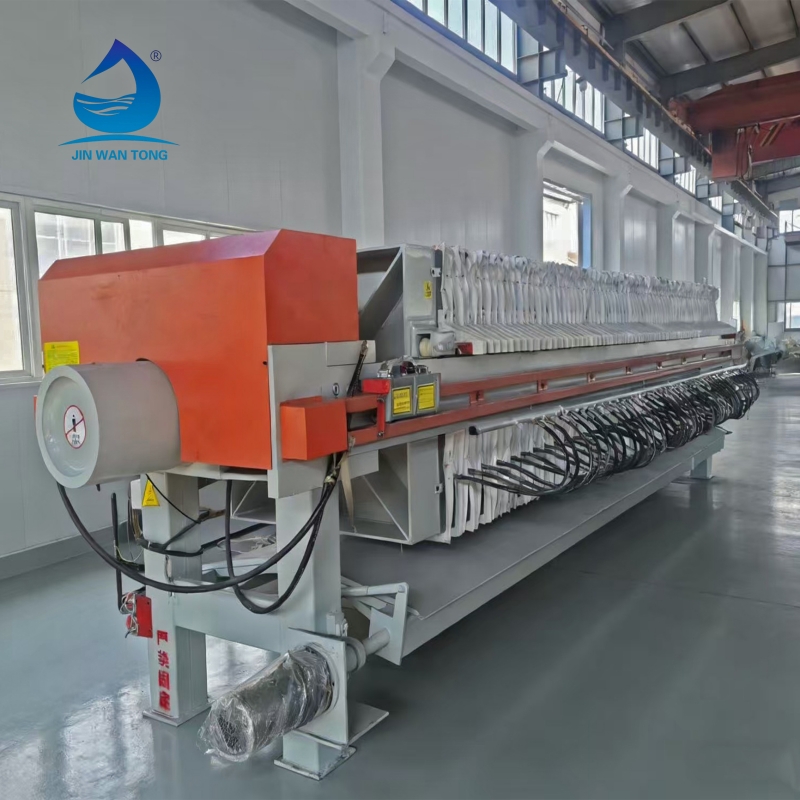
A filter press separates sludge or slurry into dry cake and clear filtrate, helping buyers reduce sludge volume, lower disposal cost, and improve solid-liquid separation performance. This guide explains how a filter press works, where it is used, and what B2B buyers should check before purchasing sludge dewatering equipment.
What Is a Filter Press?
A filter press is a pressure-based solid-liquid separation machine used to remove water from sludge, slurry, or suspended solids. Its main job is simple: push liquid through filter cloth while retaining solids inside filter chambers.
In practical terms, a filter press machine converts pumpable sludge into two outputs: filter cake and filtrate. The filter cake is the concentrated solid material left between the plates, while the filtrate is the separated liquid that passes through the cloth. This makes the filter press valuable for wastewater treatment plants, industrial factories, mining sites, chemical plants, food processing facilities, and other projects where liquid and solids must be separated efficiently.
A typical filter press includes a frame, filter plates, filter cloth, hydraulic system, feeding pump, control cabinet, and discharge area. Some systems are manual, while an automatic filter press may include automatic plate shifting, cloth washing, drip trays, and PLC control.
For B2B buyers, the key point is that a filter press is not just a mechanical filter. It is a complete solid liquid separation equipment solution that affects sludge moisture, labor demand, site cleanliness, downstream disposal cost, and overall wastewater system performance.
How Does a Filter Press Work in Solid-Liquid Separation?
A filter press works by feeding sludge into closed chambers and using pressure to separate liquid from solids. The process is batch-based, but it can be highly efficient when the machine is correctly sized and operated.
The basic working process is:
1. Feeding: Sludge or slurry is pumped into the closed chambers of the filter press.
2. Pressure filtration: Liquid passes through the filter cloth, while solids are trapped.
3. Cake formation: Solids accumulate between the plates and form a compact cake.
4. Filtrate discharge: Separated liquid flows out through the drainage channels.
5. Plate opening: The machine opens after the cycle is complete.
6. Cake discharge: The solid cake falls or is removed for transport, storage, landfill, reuse, or incineration.
The performance of a filter press machine depends on sludge properties, feed pressure, filter cloth selection, cycle time, chemical conditioning, and operator control. If the sludge contains fine particles, oil, or colloids, chemical conditioning may be needed before feeding. Without proper conditioning, even a good dewatering filter press may produce wet cake, slow filtration, or cloudy filtrate.
Why Use a Filter Press Instead of Simple Settling?
A filter press is used when settling alone cannot produce dry enough solids or clear enough liquid. Many industrial and municipal wastewater projects face high sludge volumes because most untreated sludge is water.
If sludge is transported without dewatering, buyers pay to move water instead of solids. This creates high hauling cost, large storage demand, odor issues, and difficult disposal. A sludge filter press reduces the water content and turns loose sludge into a more manageable cake.
|
|
|
| Buyer Pain Point |
How a Filter Press Helps |
Practical Result |
| Sludge contains too much water |
Removes liquid by pressure filtration |
Lower sludge weight |
| Disposal cost is high |
Reduces cake volume |
Fewer transport trips |
| Filtrate is unclear |
Captures solids with filter cloth |
Better liquid separation |
| Site storage is limited |
Produces compact cake |
Cleaner sludge handling |
| Downstream incineration is costly |
Reduces moisture before burning |
Lower auxiliary fuel demand |
Compared with drying beds, a filter press is faster and less dependent on weather. Compared with only using a sedimentation tank, it produces a more concentrated solid cake. Compared with some other sludge dewatering equipment, it is often selected when higher cake dryness and clearer filtrate are important.
Where Is a Filter Press Commonly Used?
A filter press is widely used where wastewater, slurry, or process liquid contains recoverable or disposable solids. The exact configuration depends on industry, sludge behavior, and the required dryness of the final cake.
Common applications include municipal wastewater sludge, chemical sludge, food processing sludge, textile wastewater sludge, electroplating sludge, mining tailings, stone cutting wastewater, paper mill sludge, ceramic slurry, and pharmaceutical wastewater residues. An industrial filter press is especially useful when sludge has high solids content, difficult particles, or strict disposal requirements.
|
|
|
| Industry |
Common Material |
Main Purpose |
| Municipal WWTP |
Biological sludge |
Reduce sludge volume before disposal |
| Chemical plants |
Chemical precipitate sludge |
Lower hazardous waste handling cost |
| Mining |
Tailings slurry |
Recover water and concentrate solids |
| Stone processing |
Fine mineral sludge |
Separate cutting water and powder |
| Food processing |
Organic sludge |
Reduce odor and wet waste volume |
| Textile dyeing |
Colored sludge |
Improve solid-liquid separation |
| Electroplating |
Heavy metal sludge |
Produce manageable filter cake |
A sludge filter press is often chosen when disposal cost is high or when sludge must be prepared for landfill, drying, composting, or incineration. In industrial wastewater projects, the industrial filter press may also help recover process water and reduce the load on downstream treatment units.
Qingdao
Jinwantong Environmental Science And Technology Co., Ltd. provides wastewater treatment and sludge dewatering equipment for different project conditions. Its team can help match a filter press with dosing systems, DAF units, clarifiers, and other treatment equipment according to sludge type and site layout.
What Problems Can a Filter Press Solve for B2B Buyers?
A filter press solves practical operating problems, not only technical separation problems. For most buyers, the value appears in lower transport cost, cleaner operation, more predictable sludge handling, and better downstream treatment.
The first major problem is high moisture. Wet sludge is expensive to store and move. A sludge filter press reduces moisture by separating water from solids, making the cake easier to collect, stack, load, and transport.
The second problem is unstable separation. In some plants, sedimentation produces cloudy overflow or loose sludge. A filter press machine uses pressure and cloth filtration to improve solid capture, which can support better filtrate quality. However, final clarity depends on particle size, cloth type, dosing, and operating pressure.
The third problem is downstream cost. If sludge is sent to an incinerator, excess water increases fuel use. If it is sent to landfill, excess water increases volume and handling difficulty. A dewatering filter press can reduce these burdens before final disposal.
The fourth problem is site management. Liquid sludge can leak, smell, and occupy tanks or pits. A filter press creates solid cake, which is easier to handle with bins, conveyors, trucks, or storage bags.
What Should Buyers Check Before Choosing a Filter Press?
A filter press should be selected based on real sludge data rather than only price or plate size. Wrong selection can lead to wet cake, long cycle time, filter cloth blockage, low capacity, and high maintenance cost.
Before purchasing solid liquid separation equipment, B2B buyers should check these points:
1. Sludge source: municipal, chemical, food, textile, mining, stone, electroplating, or mixed sludge.
2. Feed solids concentration: determines chamber volume and processing capacity.
3. Daily sludge quantity: should be calculated by both wet volume and dry solids.
4. Target cake moisture: depends on transport, landfill, reuse, or incineration needs.
5. Filtrate quality requirement: affects filter cloth and pretreatment design.
6. Chemical conditioning: polymer, PAC, lime, or other chemicals may be required.
7. Automation level: manual, semi-automatic, or automatic filter press configuration.
8. Site layout: space for feeding tank, pump, cake discharge, filtrate return, and maintenance.
9. Corrosion or abrasion risk: important for chemical, mining, and stone wastewater sludge.
10. Supplier service: installation guidance, spare parts, filter cloth support, and commissioning.
A reliable supplier should ask for sludge samples, photos, process conditions, and disposal requirements before recommending a model. If a supplier quotes a filter press without asking about sludge type or treatment goal, the buyer should be cautious.
Filter Press vs Other Sludge Dewatering Equipment
A filter press is best selected when the project needs strong solid-liquid separation, drier cake, and controlled batch operation. But it is not the only option for wastewater sludge dewatering.
|
|
|
| Equipment Type |
Main Advantage |
Common Limitation |
| Filter press |
Higher cake dryness and clear filtrate |
Batch operation |
| Screw press |
Simple, low-speed continuous operation |
Usually lower cake dryness |
| Belt press |
Continuous processing |
More washing water and space |
| Centrifuge |
Compact and automated |
Higher energy and maintenance cost |
| Drying bed |
Low equipment cost |
Slow and weather-dependent |
For small sludge volumes, a simple machine may be enough. For large industrial wastewater projects, an industrial filter press with automation can reduce labor and improve operating consistency. For oily or sticky sludge, pretreatment and cloth cleaning should be considered. For abrasive mineral sludge, plate strength, cloth durability, and pump selection are critical.
The right decision is not “which machine is cheapest,” but “which sludge dewatering equipment gives the lowest total cost for this sludge.”
How to Improve Filter Press Performance After Installation
A filter press performs best when operation, conditioning, and maintenance are managed together. Good equipment can still underperform if the feed sludge is unstable or the filter cloth is not maintained.
Operators should monitor feed pressure, cycle time, filtrate clarity, cake discharge, cloth condition, and chemical dosage. If filtration becomes slower, the cause may be cloth clogging, poor flocculation, low feed solids, worn pump parts, or incorrect cycle settings. If cake remains too wet, the plant may need longer filtration time, improved conditioning, better cloth selection, or a different plate configuration.
For continuous improvement, buyers should record each filter press cycle and compare cake moisture, filtrate quality, and discharge time. This helps identify whether the issue comes from the machine, sludge variation, or upstream process change.
Qingdao Jinwantong can support project-based configuration for wastewater sludge dewatering, including integration with chemical dosing, feeding systems, and customized control options. This helps buyers avoid treating the filter press as an isolated machine when it should work as part of the whole wastewater treatment line.
Conclusion
A filter press is a pressure filtration system that separates sludge or slurry into solid cake and filtrate, helping plants reduce sludge volume, improve liquid clarity, and lower disposal cost. The right filter press should be selected according to sludge properties, daily capacity, target cake dryness, filter cloth, automation level, and downstream disposal method.
If you are evaluating a sludge filter press or upgrading existing solid liquid separation equipment, share your sludge source, volume, solids content, and disposal plan with Qingdao Jinwantong. Our team can help recommend a practical filter press solution for stable, cost-effective dewatering.
 EN
EN