 EN
EN
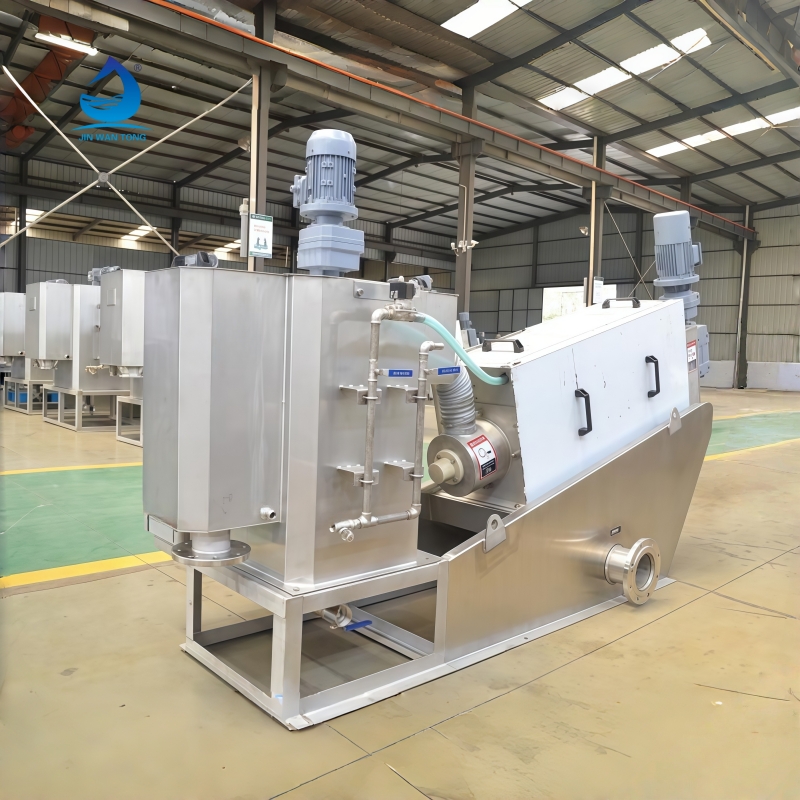
A dewatering screw press helps industrial ETPs run continuous sludge dewatering with fewer operators, stable cake discharge, and lower daily handling cost. This guide shows when a dewatering screw press is suitable, when a filter press is better, and what buyers should check before ordering sludge dewatering equipment.
Dewatering Screw Press: Best Fit for Continuous ETP Operation
A dewatering screw press is most suitable when an industrial ETP needs continuous feeding, continuous pressing, and continuous cake discharge. Unlike batch equipment, it does not require frequent opening, plate shifting, or manual cake removal, which makes it practical for factories that generate sludge throughout the day.
In many industrial wastewater plants, sludge comes from DAF units, clarifiers, biological treatment, or chemical coagulation. If sludge is not removed steadily, the sludge tank can become overloaded and upstream treatment may become unstable. For this reason, continuous sludge dewatering is often more important than achieving the absolute lowest cake moisture.
A sludge screw press works at low speed. It gradually thickens and compresses conditioned sludge through a screw shaft and filtration gaps. This makes it attractive for food processing, paper mills, textile wastewater, dairy plants, slaughterhouses, fermentation plants, and similar ETP applications.
| ETP Requirement | Why It Matters | Practical Benefit |
| Continuous sludge output | Sludge is produced during production shifts | Less storage pressure |
| Low labor demand | Operators are limited or expensive | Easier daily management |
| Stable discharge | ETP must avoid sludge backlog | Better process continuity |
| Low-speed operation | Reduces noise and energy use | Lower operating cost |
| Compact layout | Industrial sites may have limited space | Easier installation |
For buyers, the key point is simple: choose a dewatering screw press when stable operation and low labor are more valuable than maximum cake dryness.
Industrial ETP Sludge Dewatering: When This Equipment Works Well
A dewatering screw press works well when sludge can form strong flocs, the flow is relatively stable, and the target cake dryness is moderate. These three conditions decide whether the machine can operate continuously without frequent blockage or performance loss.
Good application cases include biological sludge, DAF sludge, food wastewater sludge, paper mill sludge, and municipal-like industrial sludge. These materials usually respond well to polymer conditioning, which supports smooth wastewater sludge dewatering.
For industrial ETP sludge dewatering, the feed sludge should not fluctuate too sharply. If solids concentration changes greatly from hour to hour, the outlet cake moisture may also change. A buffer tank and controlled feed pump can help keep the screw press dewatering machine stable.
A buyer should consider the following practical checks before selecting sludge dewatering equipment:
1. Confirm sludge source: DAF, biological, chemical, mixed, or process sludge.
2. Test feed solids concentration and daily dry solids load.
3. Define required operation time: one shift, two shifts, or 24-hour running.
4. Confirm target cake moisture based on transport, landfill, drying, or incineration.
5. Test polymer type, dosage, floc strength, and filtrate clarity.
6. Check whether the sludge contains sand, oil, fiber, salt, or corrosive chemicals.
7. Review maintenance access for screen cleaning, screw inspection, and spare parts.
If these points are clear, the supplier can size the dewatering screw press more accurately and avoid overpromising capacity.
Continuous Sludge Dewatering Reliability: What Can Go Wrong?
A dewatering screw press is reliable only when feeding, flocculation, washing, and maintenance are controlled together. Continuous operation does not mean maintenance-free operation.
The most common issue is poor flocculation. If polymer dosing is too low, flocs may be weak and solids may pass through the screen. If polymer dosing is too high, sludge can become sticky, increasing screen blockage and chemical cost. Good continuous sludge dewatering depends on stable polymer preparation, correct mixing time, and a suitable dosing point.
The second risk is screen clogging. Fine particles, oil, grease, fibers, or sticky organic solids may reduce drainage performance. When this happens, the sludge screw press may produce wetter cake and lower filtrate flow. Buyers should check whether automatic washing is included and whether wash water pressure is sufficient.
The third risk is wear. Sludge with high sand, mineral powder, or abrasive particles can wear the screw shaft and filtration parts faster. In this case, material selection is critical. Stainless steel, wear-resistant design, and easy replacement parts may be necessary.
| Problem | Likely Cause | Buyer Decision |
| Wet cake | Poor flocculation or low pressure | Recheck polymer and outlet setting |
| Cloudy filtrate | Weak flocs or wrong screen gap | Improve conditioning |
| Screen blockage | Oil, fine solids, sticky sludge | Add washing and pretreatment |
| Fast wear | Sand or abrasive particles | Upgrade materials |
| Unstable capacity | Feed solids fluctuation | Add buffer tank and control pump |
For difficult sludge, a pilot test or sludge sample evaluation is safer than choosing a screw press dewatering machine only from a catalog.
Dewatering Screw Press vs Filter Press: How Buyers Should Decide
A dewatering screw press is stronger in continuous operation and low labor, while a filter press is usually stronger when the buyer wants lower cake moisture and high-pressure separation. The right decision depends on operating priority, disposal cost, and sludge characteristics.
A filter press works in batches. It feeds sludge into closed chambers, filters under pressure, opens plates, and discharges cake. It often produces drier cake, but it may require more cycle management and more discharge time unless fully automated.
A dewatering screw press works continuously. It is easier to connect with an automatic sludge dewatering system, especially when an ETP wants steady sludge removal with limited operators.
| Selection Factor | Dewatering Screw Press | Filter Press |
| Operation mode | Continuous | Batch |
| Labor demand | Low | Medium to high |
| Cake dryness | Moderate to good | Often higher |
| Energy use | Usually low | Moderate |
| Maintenance focus | Screen, screw, dosing | Cloth, plates, hydraulics |
| Best use | Stable organic sludge | High dryness requirement |
If the plant mainly wants to reduce manpower and avoid sludge backlog, a dewatering screw press is often a practical choice. If disposal cost is very high and every percentage of cake moisture matters, compare with a filter press before final selection.
Sludge Dewatering Equipment Selection: Cost Beyond Purchase Price
The best sludge dewatering equipment should be judged by total operating cost, not only machine price. A low-cost unit may become expensive if it consumes too much polymer, clogs often, creates wet cake, or requires constant cleaning.
For industrial ETP sludge dewatering, total cost includes power consumption, polymer dosage, operator hours, spare parts, wash water, downtime, cake transport, and disposal fee. In many projects, sludge disposal is the largest long-term cost, so cake moisture and reliability directly affect annual spending.
Buyers should also compare quotation scopes carefully. One offer may include the main machine only. Another may include feed pump, polymer preparation unit, flocculation tank, control panel, spray washing, installation guidance, and commissioning. These are not equal sludge dewatering equipment packages.
Qingdao Jinwantong Environmental Science And Technology Co., Ltd. provides integrated ETP solutions and wastewater sludge dewatering systems. For projects that need a dewatering screw press, the company can help match machine capacity with sludge type, dosing system, site layout, and downstream disposal method without turning the recommendation into a one-size-fits-all offer.
Automatic Sludge Dewatering System: How to Keep Operation Stable
An automatic sludge dewatering system performs best when the machine, dosing unit, feed pump, and control logic are designed together. A dewatering screw press should not be treated as an isolated machine if the ETP sludge quality changes with production.
Operators should monitor floc size, filtrate clarity, cake texture, feed flow, screw speed, outlet pressure, wash system, and polymer consumption. When performance drops, the cause is often upstream: unstable sludge concentration, incorrect chemical dosing, damaged flocs, or insufficient mixing.
Routine maintenance should include checking the screen, screw shaft, bearings, seals, spray nozzles, drive system, polymer tank, mixer, and control cabinet. For continuous sludge dewatering, small preventive checks are better than emergency shutdowns.
A well-planned screw press dewatering machine can reduce manual handling, but it still needs trained operators and reliable spare parts support. This is especially important for plants running daily or under strict discharge requirements.
Conclusion
A dewatering screw press is a strong option for industrial ETPs that need continuous sludge dewatering, low labor demand, compact installation, and stable automatic discharge. It is most suitable for sludge that can be well conditioned and does not require the driest possible cake.
If you are comparing sludge dewatering equipment for industrial ETP sludge dewatering, share your sludge source, daily volume, solids content, operating hours, and disposal route with Qingdao Jinwantong. Our team can help evaluate whether a dewatering screw press or a filter press is the better fit for your project.
Table of Contents
- Dewatering Screw Press: Best Fit for Continuous ETP Operation
- Industrial ETP Sludge Dewatering: When This Equipment Works Well
- Continuous Sludge Dewatering Reliability: What Can Go Wrong?
- Dewatering Screw Press vs Filter Press: How Buyers Should Decide
- Sludge Dewatering Equipment Selection: Cost Beyond Purchase Price
- Automatic Sludge Dewatering System: How to Keep Operation Stable
- Conclusion