 EN
EN
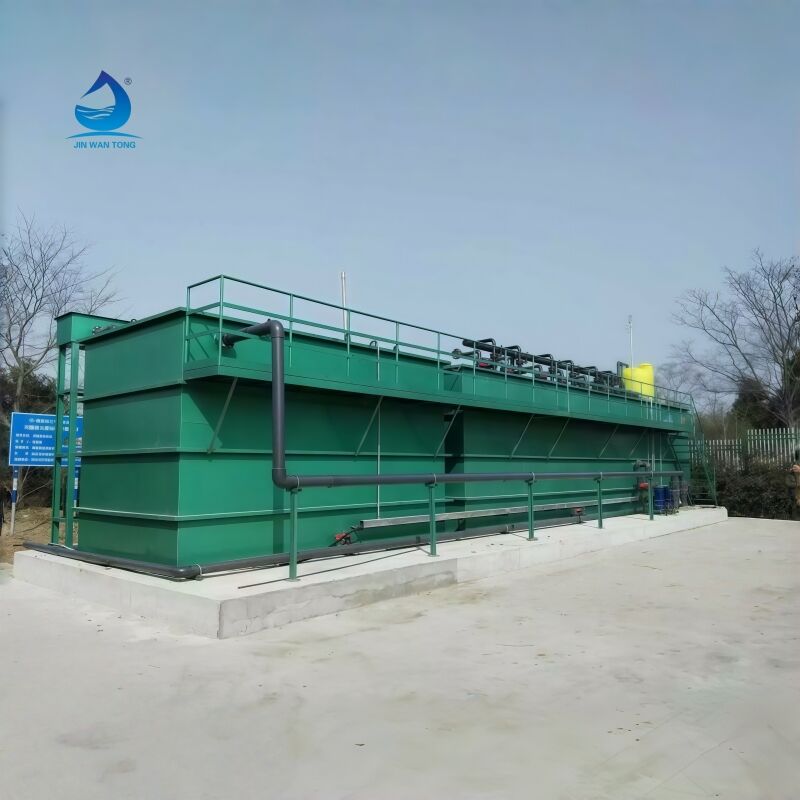
CPI technology is widely used in industrial wastewater treatment to separate free and dispersed oil from water before discharge. As environmental regulations become increasingly strict, many facility operators ask a critical question: can CPI technology genuinely meet tight effluent oil content standards, or does it fall short under demanding conditions? The answer depends on several operational and design factors that every engineer and plant manager should understand before selecting or relying on CPI technology as part of a compliance strategy.
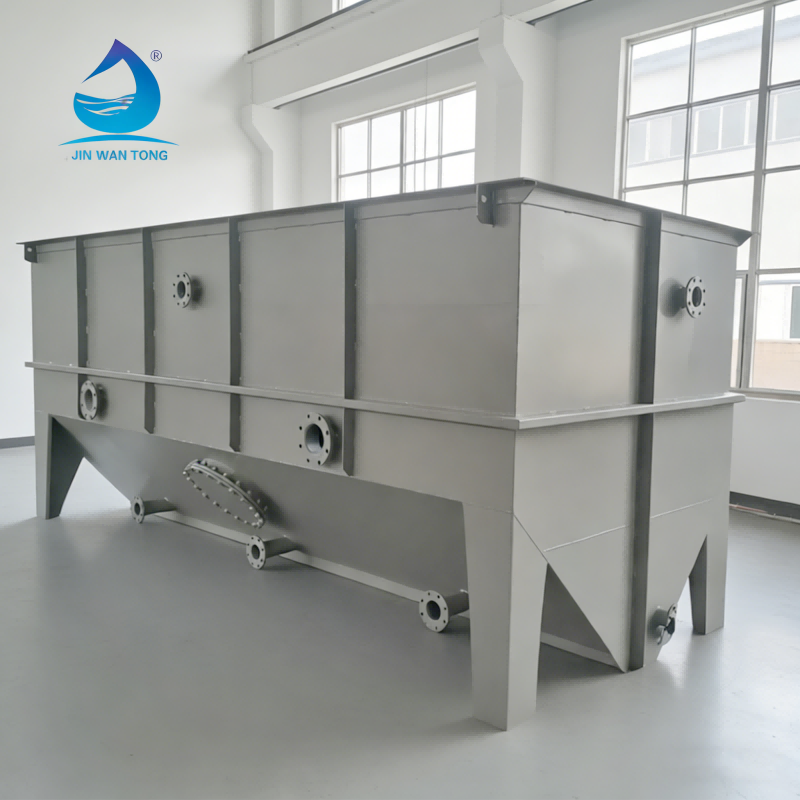
Understanding the capabilities and limits of CPI technology is essential for any operation that must meet regulatory discharge thresholds for oil content. CPI technology works by passing oily wastewater through a series of inclined, corrugated plates that dramatically increase the effective settling surface area. Oil droplets coalesce on these plates, rise, and are collected, while separated water exits through the outlet. When properly designed, CPI technology can achieve effluent oil concentrations well within common regulatory limits — but the conditions under which it operates matter enormously.
How CPI Technology Performs Against Effluent Standards
Removal Efficiency Under Ideal Conditions
Under well-controlled operating conditions, CPI technology demonstrates strong performance in reducing free oil content. CPI technology is engineered to remove oil droplets typically larger than 60 microns with high efficiency. In many industrial applications, CPI technology can reduce influent oil concentrations from several hundred parts per million down to levels below 20 to 30 mg/L — a range that satisfies many regional and international discharge standards. CPI technology achieves this by leveraging the laminar flow regime created between the inclined corrugated plates, which allows consistent gravitational separation without turbulence disrupting the process. When inlet oil loading remains within the design envelope, CPI technology reliably supports compliance with standard effluent limits.
Factors That Influence CPI Technology Output Quality
The effluent quality produced by CPI technology is sensitive to several operational variables. Flow rate is one of the most critical: if the flow through CPI technology exceeds the design hydraulic loading rate, residence time inside the plate pack decreases, and fine oil droplets may pass through without fully coalescing. CPI technology also performs best when the incoming oil is predominantly in a free or lightly dispersed state, rather than emulsified. Emulsified oils present a challenge for CPI technology because chemical emulsification breaks the natural surface tension that allows droplets to coalesce on the plates. Temperature, inlet oil droplet size distribution, and the presence of suspended solids all affect how consistently CPI technology can hold effluent quality within compliance thresholds. Monitoring these variables is part of using CPI technology responsibly in a regulated environment.
Where CPI Technology Meets and Exceeds Standards
Industrial Applications Where CPI Technology Excels
CPI technology is well-suited to several industries where free oil in wastewater is the primary separation challenge. In oil and gas production facilities, CPI technology is a proven first-stage treatment unit capable of meeting upstream separation requirements. Petrochemical plants, refineries, and metal processing workshops rely on CPI technology to handle high-volume oily effluents efficiently. CPI technology integrated with PLC controls and automated pump systems — such as modern packaged oil-water separation systems — can maintain consistent hydraulic conditions that support stable, compliant discharge. In stormwater runoff applications from industrial yards, CPI technology provides a practical and cost-effective method of meeting discharge standards for oil content. These real-world deployments confirm that CPI technology can meet strict effluent standards when the application conditions are appropriate.
System Design Choices That Support Compliance
The ability of CPI technology to meet strict effluent standards is not purely a function of the plates themselves — it also depends on overall system design. A well-designed CPI technology installation includes an upstream inlet zone that calms flow before it enters the plate pack, reducing turbulence that could re-emulsify separated oil. Proper sludge and oil collection systems integrated with CPI technology prevent accumulated material from fouling the plates and degrading separation performance over time. CPI technology systems that incorporate automated monitoring, level sensors, and PLC-controlled pumps can respond dynamically to flow variations, helping maintain effluent quality during surge conditions. These design elements transform CPI technology from a passive separator into a managed treatment process capable of consistent regulatory compliance.
When CPI Technology Alone Is Not Enough
Limitations Facing CPI Technology With Emulsified Effluents
Despite its strengths, CPI technology has recognized limitations when effluent contains a high proportion of chemically emulsified or mechanically sheared oil. CPI technology cannot break stable emulsions through physical separation alone. In such cases, relying on CPI technology as the sole treatment step would likely result in effluent oil concentrations above the permitted limit. CPI technology works on the principle of gravity-driven coalescence, which requires that oil droplets be free or only loosely dispersed. Where emulsified oil is present, upstream chemical treatment such as coagulation and flocculation should be used to break the emulsion before the wastewater enters the CPI technology stage. Recognizing this boundary is critical to designing a compliant treatment system around CPI technology.
Polishing Steps After CPI Technology
For operations facing ultra-strict effluent standards — such as those requiring oil content below 5 mg/L — CPI technology is best positioned as a primary treatment stage rather than the final step. Following CPI technology with a dissolved air flotation unit, media filtration, or an oil-absorbing coalescing filter can bridge the gap between what CPI technology achieves and what ultra-low discharge limits demand. CPI technology in this configuration handles the bulk of the oil load, reducing the burden on downstream polishing units and extending their service life. This layered approach makes CPI technology an indispensable part of a multi-stage compliance strategy even when it cannot single-handedly achieve the most stringent limits.
FAQ
What effluent oil concentration can CPI technology typically achieve?
CPI technology can typically reduce effluent oil content to between 10 and 30 mg/L under stable operating conditions with free or lightly dispersed oil. The exact output depends on the inlet oil concentration, droplet size, flow rate, and system design. CPI technology is generally capable of meeting standard discharge limits in most industrial jurisdictions when these conditions are controlled.
Does CPI technology require chemical dosing to meet effluent standards?
CPI technology itself does not require chemical dosing for standard free-oil separation. However, when the influent contains chemically emulsified oil, upstream chemical treatment is recommended before the wastewater enters CPI technology. Adding coagulants or demulsifiers before the CPI technology stage breaks emulsions and allows the plate separation mechanism to function at its intended efficiency.
How often does CPI technology need maintenance to stay compliant?
CPI technology requires regular inspection and cleaning of the plate pack to prevent oil and solids accumulation that can reduce separation efficiency. The frequency depends on influent loading, but most CPI technology installations are serviced quarterly or semi-annually. Automated CPI technology systems with PLC controls and oil level sensors help operators detect performance degradation early, reducing the risk of non-compliant discharge between scheduled maintenance intervals.