
 EN
EN
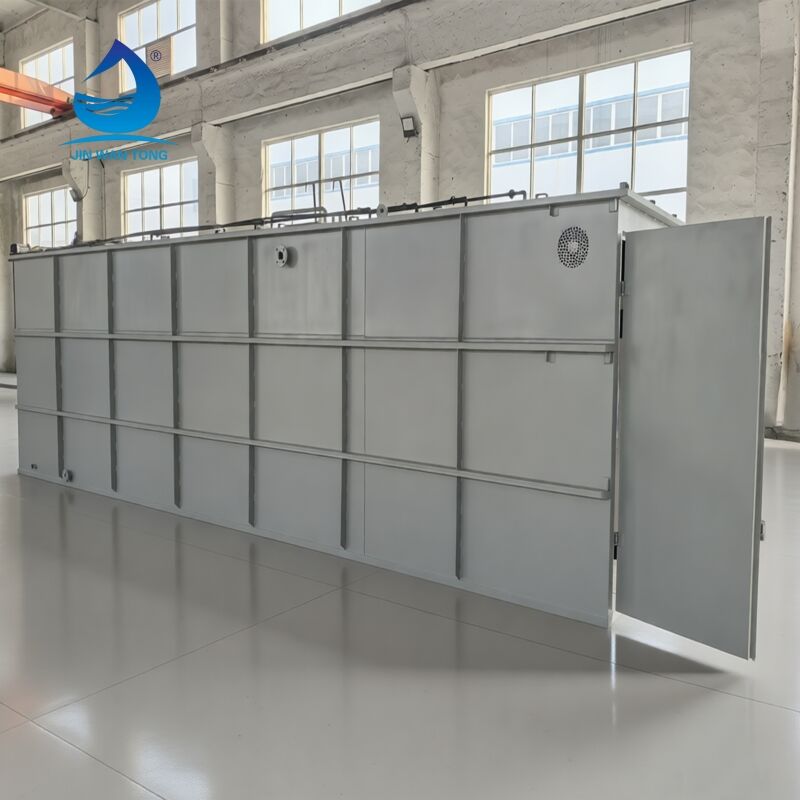
Industrial facilities managing oily wastewater face a critical decision when selecting separation technology that balances treatment performance with spatial constraints and operational costs. The comparison between CPI separator systems and traditional gravity separators reveals fundamental differences in design philosophy, treatment efficiency, and space utilization that directly impact both capital expenditure and long-term operational sustainability. Understanding these distinctions enables facility managers, environmental engineers, and project planners to align technology selection with specific discharge requirements, site limitations, and throughput demands across petrochemical refineries, manufacturing plants, and heavy industrial operations.
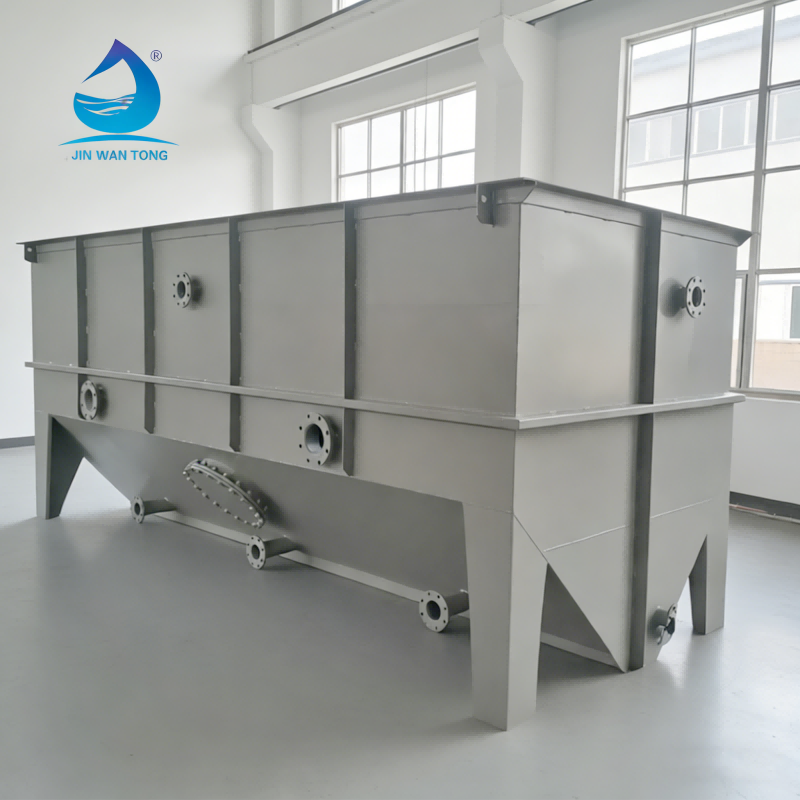
Traditional gravity separators have served industrial water treatment for decades, relying on density differential and extended retention time to achieve oil-water separation through natural buoyancy forces. However, the enhanced plate technology integrated into CPI separator designs fundamentally transforms separation mechanics by introducing parallel inclined plates that dramatically reduce the vertical distance oil droplets must travel to coalesce and rise. This architectural innovation translates into measurable advantages in treatment velocity, footprint efficiency, and effluent quality consistency that merit detailed technical and economic comparison for informed technology selection in modern wastewater management infrastructure.
Fundamental Design Architecture and Separation Mechanics
Traditional Gravity Separator Operating Principles
Conventional gravity separators function as large retention tanks where wastewater flow velocity decreases sufficiently to allow oil droplets to rise naturally through the water column based on buoyancy differential. These systems typically require extensive horizontal length to provide adequate residence time, with separation efficiency directly proportional to the vertical distance available for droplet rise and the horizontal flow path length. The basic design incorporates inlet baffling to dissipate turbulence, a quiescent separation zone where density stratification occurs, and outlet weirs positioned to capture separated oil while allowing clarified water discharge. Performance depends heavily on maintaining laminar flow conditions and preventing hydraulic short-circuiting that can compromise separation effectiveness.
The separation efficiency in traditional systems follows Stokes' Law principles, where larger oil droplets separate more readily than smaller dispersed particles. This creates inherent limitations when treating emulsified oils or fine droplet suspensions common in industrial process waters. Temperature fluctuations, viscosity variations, and surfactant presence further complicate separation performance, often requiring chemical pretreatment or extended detention times to achieve regulatory discharge standards. The volumetric footprint required for traditional gravity separators becomes particularly problematic in retrofit applications or facilities with limited available land area for treatment infrastructure expansion.
CPI Separator Enhanced Plate Technology
The CPI separator revolutionizes gravity separation through the strategic integration of closely-spaced parallel inclined plates within the separation chamber. These corrugated or flat plates create multiple shallow separation channels that drastically reduce the vertical rise distance oil droplets must traverse before contacting a collection surface. As wastewater flows upward through the plate pack, oil droplets rise along the underside of each inclined plate, coalescing into larger masses that migrate to collection troughs. This multiplication of effective separation surface area within a compact vertical configuration fundamentally alters the relationship between treatment capacity and physical footprint.
The geometric advantage of CPI separator plate technology becomes evident when analyzing separation dynamics. Where traditional separators might require several meters of vertical depth for effective droplet rise, a CPI separator achieves equivalent separation with plate spacing measured in centimeters. This spacing reduction correlates directly with decreased residence time requirements, enabling identical treatment capacity within dramatically smaller tank volumes. The plate angle, spacing, and surface characteristics are engineered to optimize both separation velocity and self-cleaning properties, preventing oil accumulation that would degrade performance over extended operation cycles. Modern CPI separator designs incorporate materials and coatings that enhance oil coalescence while resisting fouling from suspended solids and biological growth.
Hydraulic Flow Pattern Optimization
Flow distribution represents a critical performance differentiator between traditional and CPI separator configurations. Conventional gravity separators struggle with maintaining uniform flow distribution across wide separation zones, creating preferential flow paths that reduce effective treatment volume and compromise separation efficiency. Inlet design complexity increases proportionally with separator width as engineers attempt to distribute flow evenly across the entire cross-section. Even minor hydraulic imbalances can create dead zones or high-velocity channels that allow oil carryover to the effluent stream.
CPI separator systems address flow distribution challenges through inherent design geometry. The vertical plate pack configuration naturally distributes flow across multiple parallel channels, with each plate spacing functioning as an independent separation unit. This modular hydraulic architecture minimizes the impact of inlet flow variations and reduces sensitivity to uneven loading conditions. The compact footprint of CPI separator installations also simplifies inlet and outlet piping configurations, reducing construction costs while improving hydraulic performance predictability. Flow velocity through the plate channels can be precisely controlled through plate spacing and angle adjustments, optimizing separation for specific oil characteristics and droplet size distributions present in different industrial wastewater streams.
Separation Efficiency Performance Comparison
Droplet Size Removal Capabilities
The fundamental efficiency advantage of CPI separator technology manifests most clearly in the treatment of fine oil droplets that challenge conventional gravity systems. Traditional separators typically achieve effective removal of droplets larger than 150 microns under ideal conditions, with removal efficiency declining sharply for smaller particle sizes. This limitation stems from the extended rise time required for fine droplets to traverse the full depth of conventional separation chambers, often exceeding practical residence time constraints for industrial flow rates. Emulsified oils and mechanically dispersed droplets below 60 microns frequently pass through traditional separators without adequate separation, requiring downstream polishing treatments to meet discharge specifications.
CPI separator systems demonstrate superior removal of droplets in the 40-150 micron range due to reduced rise distance requirements and enhanced coalescence opportunities provided by plate surfaces. The shortened vertical travel distance allows smaller droplets with lower rise velocities to reach collection surfaces within achievable residence times. Additionally, the increased surface area contact between wastewater and plate materials promotes coalescence of fine droplets into larger masses with higher buoyancy characteristics. Field performance data from petrochemical facilities indicates CPI separator installations consistently achieve effluent oil concentrations below 15 mg/L when treating streams with inlet concentrations of 500-1000 mg/L, representing removal efficiencies exceeding 98% under normal operating conditions. Comparable performance from traditional gravity separators typically requires significantly longer residence times or larger treatment volumes.
Hydraulic Loading Rate Tolerance
Industrial wastewater flows rarely maintain constant rates, with production variations, storm events, and operational upsets creating hydraulic surges that challenge treatment system stability. Traditional gravity separators exhibit pronounced sensitivity to hydraulic loading variations, with separation efficiency degrading rapidly when flow rates exceed design parameters. The large cross-sectional area of conventional separators means that even modest flow increases translate into proportional velocity increases that disrupt the quiescent conditions necessary for effective density separation. Recovery from hydraulic shock loads requires extended periods for flow stabilization and re-establishment of proper density stratification within the separation zone.
CPI separator configurations demonstrate superior tolerance to hydraulic variability through their channelized flow architecture. The vertical plate arrangement maintains separation effectiveness across broader flow ranges because velocity increases distribute uniformly across multiple parallel channels rather than creating turbulent conditions in a single large chamber. This hydraulic buffering capacity allows CPI separator systems to maintain acceptable effluent quality during transient flow events that would cause significant performance degradation in traditional separators. The practical implication for facility operators involves reduced need for upstream flow equalization and greater operational flexibility during production variations. Testing protocols at industrial sites demonstrate CPI separator systems maintaining effluent quality within 10% of baseline performance at hydraulic loading rates 150% above nominal design capacity, whereas traditional separators typically experience 30-40% efficiency losses under equivalent surge conditions.
Solids Handling and Maintenance Requirements
Suspended solids management represents an often-overlooked aspect of oil-water separator performance comparison. Traditional gravity separators provide inherent solids settling capacity due to their large bottom surface area and low velocity zones, allowing heavier particles to settle for periodic removal. However, this same characteristic creates challenges when solids accumulation reaches levels that reduce effective separation volume or create anaerobic conditions promoting bacterial growth and odor generation. Cleaning traditional separators requires confined space entry, specialized equipment, and extended system downtime that impacts treatment capacity during maintenance periods.
CPI separator systems incorporate design features that facilitate solids management while minimizing maintenance intensity. Many CPI separator configurations include inclined bottom hoppers or dedicated solids collection zones positioned below the plate pack assembly, concentrating settled materials for automated or semi-automated removal without disrupting oil separation operations. The vertical plate orientation in CPI separator designs naturally sheds accumulated solids through gravity, reducing fouling potential compared to horizontal surfaces where particulates can bridge between structural elements. Regular maintenance intervals for CPI separator plate packs typically extend to quarterly or semi-annual schedules under normal industrial operating conditions, compared to monthly cleaning requirements common with heavily loaded traditional separators. The accessibility of plate pack assemblies in modern CPI separator designs allows removal and cleaning without confined space entry, significantly reducing maintenance labor requirements and associated safety risks.
Physical Footprint and Installation Considerations
Comparative Space Requirements
The spatial efficiency advantage of CPI separator technology becomes immediately apparent when comparing plan view dimensions required for equivalent treatment capacity. Traditional gravity separators typically require length-to-width ratios of 3:1 to 5:1 to provide adequate residence time and minimize hydraulic short-circuiting, with total plan areas often exceeding 200-300 square meters for facilities processing 50-100 cubic meters per hour. These extensive horizontal dimensions create significant challenges in congested industrial sites where available space commands premium value and existing infrastructure constrains expansion options. The depth requirements of traditional separators remain relatively modest, typically ranging from 2-4 meters, but the vast surface area dominates site planning considerations.
CPI separator installations achieve comparable treatment capacity within footprints reduced by 60-75% compared to traditional designs through vertical optimization of separation volume. A typical CPI separator handling 75 cubic meters per hour might occupy only 40-60 square meters of plan area while utilizing vertical height more effectively with depths of 4-6 meters including plate pack assemblies. This compact configuration proves especially valuable in retrofit applications where treatment capacity expansion must occur within existing facility boundaries. The reduced footprint of CPI separator systems also minimizes civil construction requirements, with smaller excavation volumes, reduced concrete consumption, and simplified foundation designs translating into measurable capital cost advantages that often offset the higher equipment costs associated with plate pack assemblies and specialized internal components.
Structural and Civil Engineering Implications
The physical configuration differences between traditional and CPI separator systems create distinct structural engineering requirements that impact overall project costs and construction schedules. Traditional gravity separators, with their broad shallow profiles, exert relatively uniform loading on foundation systems but require extensive formwork and concrete placement for large horizontal slabs and perimeter walls. Soil bearing capacity considerations become critical for traditional separator installations in areas with marginal geotechnical conditions, potentially necessitating deep foundations or ground improvement measures that add significant costs. The large surface area also increases vulnerability to groundwater intrusion in high water table locations, requiring enhanced waterproofing and potential dewatering systems during construction.
CPI separator structures concentrate loading into smaller footprints, potentially increasing point loads but reducing total foundation extent and excavation volume. The taller profile of CPI separator tanks requires careful attention to structural stability and wind loading considerations, particularly for above-grade installations in coastal or exposed locations. However, the compact geometry simplifies weather protection provisions and enables more feasible indoor installations where climate control or odor containment becomes necessary. Prefabricated CPI separator modules offer additional construction advantages through factory assembly of plate packs and internal components, reducing field labor requirements and improving quality control compared to field-constructed traditional separator internals. Transportation and rigging considerations for modular CPI separator systems must be evaluated against site access constraints, but the overall construction duration advantage typically favors CPI separator installations for projects with aggressive commissioning schedules.
Integration with Existing Treatment Infrastructure
Facilities evaluating separator technology upgrades must consider integration complexity with existing upstream and downstream treatment processes. Traditional gravity separators typically interface simply with existing collection systems due to their low hydraulic head loss and flexible inlet configurations. However, their large footprint often necessitates extensive site reconfiguration and lengthy piping runs that increase installation costs and hydraulic pumping requirements. Existing process flows may require significant rerouting to accommodate traditional separator placement within available site areas, creating operational disruptions during construction and commissioning phases.
CPI separator systems offer superior integration flexibility through their compact footprint and adaptable orientation options. The smaller plan area enables placement in congested areas closer to wastewater generation sources, minimizing collection piping requirements and reducing pumping energy consumption. Some CPI separator designs accommodate both horizontal and vertical flow configurations, providing engineering flexibility to match site-specific hydraulic profiles and elevation constraints. The modular nature of CPI separator plate packs also facilitates phased capacity expansion, allowing initial installations sized for current loads with provisions for future plate additions as production volumes increase. This scalability advantage proves particularly valuable for facilities with uncertain future growth trajectories or evolving environmental regulations that may require enhanced treatment performance without complete system replacement.
Economic Analysis and Total Cost of Ownership
Capital Investment Comparison
Initial capital expenditure represents a primary decision factor when comparing separation technologies, with cost structures differing significantly between traditional and CPI separator approaches. Traditional gravity separators typically present lower equipment costs due to simpler internal construction without specialized plate assemblies or complex flow distribution systems. A traditional separator sized for 75 cubic meters per hour might require equipment investment of $80,000-$120,000 depending on materials of construction and ancillary components. However, the associated civil construction costs for excavation, concrete work, and extensive piping often equal or exceed equipment costs, bringing total installed investment to $180,000-$250,000 for typical industrial applications.
CPI separator equipment costs run 40-60% higher than comparable traditional separators due to specialized plate pack assemblies, precision manufacturing requirements, and proprietary design elements. A CPI separator system handling equivalent flow might require $140,000-$180,000 in equipment investment. However, the dramatically reduced civil construction requirements frequently offset higher equipment costs, with total installed investment ranging from $220,000-$280,000 including all site work and integration. The economic advantage shifts decisively toward CPI separator technology when land value, opportunity costs of occupied space, and construction schedule acceleration are factored into comprehensive project evaluations. Sites with space constraints or high land values often realize net capital savings with CPI separator installations despite higher equipment unit costs, particularly when avoiding expenses associated with property acquisition or major facility relocations to accommodate traditional separator footprints.
Operational Cost Factors
Long-term operational economics frequently prove more significant than initial capital costs when evaluating total cost of ownership over typical 20-25 year equipment life cycles. Traditional gravity separators consume minimal energy for operation beyond influent pumping requirements, with no moving parts in basic designs. However, the extensive footprint increases heat loss in cold climates where temperature maintenance prevents oil viscosity increases that impair separation. Heating costs for large traditional separators in northern facilities can reach $15,000-$25,000 annually depending on local energy prices and insulation provisions. Maintenance labor requirements for traditional separators average 150-200 hours annually including routine inspections, solids removal, and periodic confined space cleaning operations.
CPI separator operational costs reflect reduced heating requirements due to compact volume but include periodic plate pack cleaning or replacement over the system lifespan. Energy consumption remains modest, with well-designed CPI separator systems adding negligible pressure drop compared to traditional alternatives. The primary operational advantage of CPI separator technology emerges in maintenance labor efficiency, with annual requirements typically reduced to 80-120 hours due to improved access, reduced cleaning frequency, and elimination of confined space entry for routine maintenance. Over a 20-year operating period, the cumulative maintenance labor savings for CPI separator installations can exceed $100,000 at current industrial labor rates. Chemical consumption for periodic cleaning represents an incremental cost for CPI separator systems, averaging $3,000-$5,000 annually, but this expense often proves less than the differential heating costs saved through reduced vessel volume.
Performance Reliability and Regulatory Compliance
The economic impact of separation system reliability extends beyond direct operating costs to encompass regulatory compliance assurance and avoided penalties. Traditional gravity separators exhibit performance variability related to hydraulic loading, temperature fluctuations, and maintenance status, creating risk of intermittent discharge violations during upset conditions or deferred maintenance periods. Facilities operating under strict discharge permits face potential penalties ranging from $10,000 to $50,000 per violation, with repeat violations triggering escalating enforcement actions including production curtailment orders. The indirect costs of environmental compliance failures include management attention, legal expenses, and reputational damage that can impact customer relationships and community standing.
CPI separator technology delivers more consistent effluent quality across varying operating conditions, providing compliance security that translates into quantifiable economic value through avoided violations and reduced regulatory oversight intensity. The superior treatment of fine oil droplets inherent in CPI separator designs creates performance margin above minimum discharge requirements, accommodating operational variations without exceeding permitted concentrations. Facilities documenting consistent over-compliance through CPI separator installations often qualify for reduced monitoring frequencies and streamlined reporting requirements that lower ongoing environmental compliance costs. The insurance value of reliable separation performance justifies premium investment in CPI separator technology for facilities in environmentally sensitive locations or those operating under consent decrees requiring demonstrated treatment reliability.
Application Suitability and Selection Criteria
Industry-Specific Performance Requirements
The optimal separator technology varies significantly across industrial sectors based on wastewater characteristics, discharge limits, and operational priorities. Petrochemical refineries and upstream oil production facilities typically generate high-strength wastewater with free oil concentrations of 500-2000 mg/L requiring reduction to 15-30 mg/L for discharge or downstream treatment. The presence of emulsified oils and chemical additives in these streams favors CPI separator technology for its superior fine droplet removal and tolerance to surfactant contamination. Metal finishing and manufacturing operations produce lower oil concentrations but often include metalworking fluids and synthetic lubricants that resist conventional gravity separation, again indicating CPI separator suitability for enhanced treatment efficiency.
Food processing and vegetable oil extraction facilities encounter separation challenges dominated by biological oxygen demand and grease rather than petroleum hydrocarbons, with different density and viscosity characteristics affecting technology selection. Traditional gravity separators may prove adequate for these applications where larger fat globules separate readily and where the lower toxicity of biological oils reduces discharge standard stringency. Transportation maintenance facilities and vehicle wash operations generate intermittent wastewater flows with highly variable oil loading, creating conditions where the hydraulic surge tolerance of CPI separator systems provides operational advantages over traditional designs sensitive to flow fluctuations. Marina and shipyard applications face stringent discharge limits due to sensitive receiving waters, typically mandating CPI separator technology to achieve consistent compliance with 5-10 mg/L effluent standards.
Site-Specific Constraints and Priorities
Physical site limitations often dictate technology selection regardless of treatment performance considerations. Urban industrial facilities and brownfield redevelopment projects face severe space constraints that effectively eliminate traditional gravity separators from consideration, with CPI separator technology representing the only viable option for achieving required treatment capacity within available footprints. Conversely, rural facilities with abundant land area and minimal site development costs may find traditional separator economics attractive when capital budgets constrain equipment investment and where operational simplicity aligns with limited technical staffing capabilities. Coastal and seismic zone installations must evaluate structural requirements carefully, with traditional separator low-profile configurations offering advantages in extreme wind or earthquake regions where tall CPI separator structures require expensive seismic bracing.
Climate considerations influence technology selection through temperature effects on oil viscosity and separation efficiency. Cold climate facilities benefit from the reduced heating requirements of compact CPI separator volumes, particularly where maintaining elevated temperatures proves necessary for effective separation. Hot climate locations face fewer temperature-related performance issues but must consider the heat load of large traditional separator surface areas exposed to intense solar radiation. Indoor installation requirements for odor control or weather protection strongly favor CPI separator compact footprints that reduce building volumes and associated construction costs. Facilities planning future expansion must weigh the modular scalability advantages of CPI separator systems against the simpler capacity increases possible by extending traditional separator length.
Decision Framework Integration
Selecting between CPI separator and traditional gravity separator technologies requires structured evaluation incorporating technical performance requirements, economic constraints, site conditions, and operational capabilities. Facilities should develop weighted decision matrices assigning relative importance to factors including footprint availability, capital budget limits, effluent quality targets, maintenance resources, and regulatory compliance criticality. High-value priorities such as space efficiency, fine droplet removal, and treatment reliability typically favor CPI separator technology despite higher equipment costs. Scenarios prioritizing low capital investment, operational simplicity, and solids handling capacity may indicate traditional separator suitability where site conditions permit the extensive footprint.
Pilot testing provides valuable performance verification for critical applications or unusual wastewater characteristics, with mobile CPI separator units available for temporary installation to generate site-specific efficiency data. Vendor guarantees and performance warranties offer additional risk mitigation, with reputable CPI separator manufacturers typically providing contractual effluent quality assurances backed by design verification and startup support services. Facilities should request detailed lifecycle cost projections from competing technology vendors, including energy consumption, maintenance requirements, and consumable expenses over 20-year operating periods to enable valid economic comparison. The decision between CPI separator and traditional gravity separator technologies ultimately depends on the specific combination of technical requirements, economic constraints, and site conditions unique to each facility, with neither technology representing a universal optimal solution across all industrial wastewater treatment applications.
FAQ
What oil droplet sizes can CPI separator systems effectively remove compared to traditional gravity separators?
CPI separator technology effectively removes oil droplets as small as 40-60 microns under normal operating conditions, whereas traditional gravity separators typically achieve consistent removal only for droplets larger than 150 microns. This performance difference stems from the reduced vertical rise distance in CPI separator plate pack designs, allowing smaller droplets with lower buoyancy velocities to reach collection surfaces within practical residence times. The enhanced surface area and coalescence opportunities provided by inclined plates further improve fine droplet removal, making CPI separator systems the preferred choice for treating emulsified oils or mechanically dispersed petroleum products common in petrochemical and manufacturing wastewater streams.
How much smaller is the footprint of a CPI separator compared to a traditional gravity separator for the same treatment capacity?
CPI separator installations typically require 60-75% less plan area than traditional gravity separators for equivalent treatment capacity, with a system processing 75 cubic meters per hour occupying approximately 40-60 square meters compared to 200-300 square meters for a conventional design. This dramatic footprint reduction results from the vertical optimization of separation volume through parallel plate technology, which multiplies effective separation surface area within a compact configuration. The space savings prove especially valuable in congested industrial sites, retrofit applications, and locations where land costs justify premium investment in space-efficient treatment technology despite higher equipment unit costs.
What are the typical maintenance requirements and frequencies for CPI separator systems versus traditional separators?
CPI separator systems generally require maintenance interventions every 3-6 months under normal industrial operating conditions, primarily involving plate pack inspection and cleaning to maintain optimal coalescence performance. Traditional gravity separators typically need monthly to quarterly attention for solids removal and annual confined space entry for comprehensive cleaning. The annual maintenance labor for CPI separator installations averages 80-120 hours compared to 150-200 hours for traditional separators, with the primary advantage being eliminated confined space entry requirements and improved component accessibility. Plate pack assemblies in modern CPI separator designs can be removed for external cleaning without system drainage, significantly reducing maintenance downtime and associated safety risks compared to in-situ cleaning of traditional separator internals.
Can existing traditional gravity separators be retrofitted with CPI separator plate technology to improve performance?
Many existing traditional gravity separator tanks can be successfully retrofitted with CPI separator plate pack assemblies to enhance treatment efficiency and effective capacity without major structural modifications. Retrofit feasibility depends on adequate depth availability for plate installation, typically requiring minimum 3-4 meters of liquid depth, and structural capacity to support additional internal component weight. Engineering evaluations must confirm suitable inlet and outlet configurations, hydraulic distribution adequacy, and oil collection provisions compatible with plate pack operation. Successful retrofits can increase effective treatment capacity by 50-100% within the existing footprint or alternatively improve effluent quality by 40-60% at original design flows, providing cost-effective performance enhancement compared to complete system replacement for facilities facing capacity constraints or tightening discharge regulations.
Table of Contents
- Fundamental Design Architecture and Separation Mechanics
- Separation Efficiency Performance Comparison
- Physical Footprint and Installation Considerations
- Economic Analysis and Total Cost of Ownership
- Application Suitability and Selection Criteria
-
FAQ
- What oil droplet sizes can CPI separator systems effectively remove compared to traditional gravity separators?
- How much smaller is the footprint of a CPI separator compared to a traditional gravity separator for the same treatment capacity?
- What are the typical maintenance requirements and frequencies for CPI separator systems versus traditional separators?
- Can existing traditional gravity separators be retrofitted with CPI separator plate technology to improve performance?