 EN
EN
Industrial facilities worldwide face a persistent challenge: effectively removing oil and suspended solids from wastewater streams before discharge or reuse. Among the most proven and widely adopted technologies for this purpose is the corrugated plate interceptor, commonly known as a CPI separator. This gravity-based system leverages the natural density differences between oil, water, and solids to achieve efficient phase separation in a compact footprint. Understanding what a CPI separator is and how it functions is essential for engineers, facility managers, and environmental compliance professionals seeking reliable, cost-effective solutions for oily wastewater treatment in refineries, petrochemical plants, steel mills, and other heavy industries.
The CPI separator represents an evolution of traditional API separators, incorporating corrugated parallel plates to dramatically enhance separation efficiency while reducing the required surface area. This technology addresses the limitations of conventional gravity separators by creating a series of shallow settling channels that accelerate the rise of oil droplets and the settling of suspended solids. By examining the fundamental design principles, operational mechanics, and treatment capabilities of the CPI separator, facility operators can make informed decisions about integrating this system into their wastewater management infrastructure, optimizing both environmental performance and operational economics.
Fundamental Design and Components of a CPI Separator
Core Structural Elements and Configuration
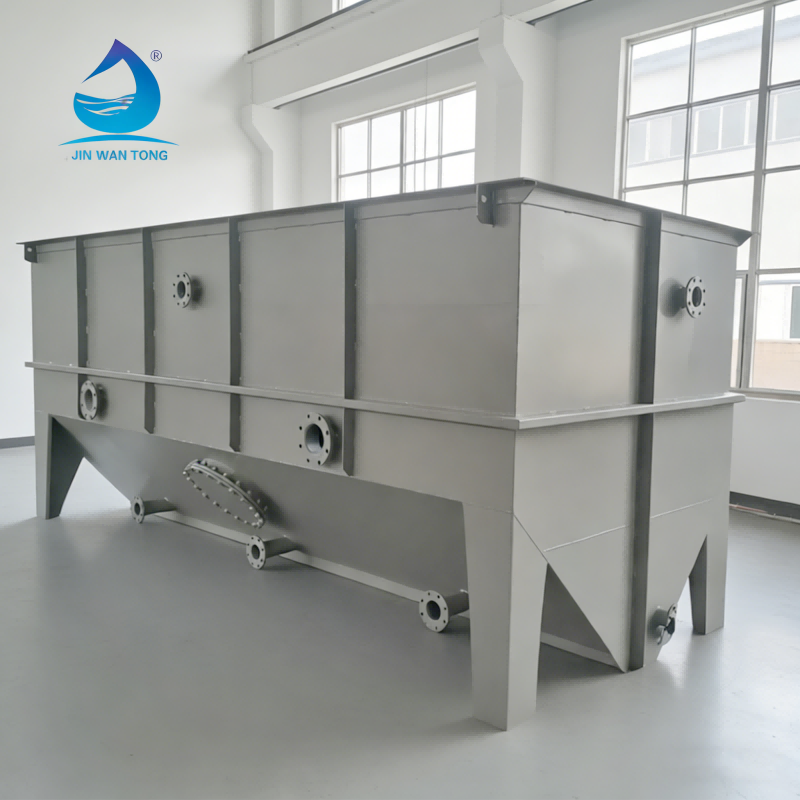
A CPI separator consists of several integrated components working in concert to achieve effective oil-water separation. The primary vessel is typically a rectangular or circular tank constructed from carbon steel, stainless steel, or fiberglass-reinforced plastic, depending on the chemical characteristics of the wastewater being treated. The defining feature of this system is the corrugated plate pack installed within the separator chamber, which comprises multiple inclined parallel plates with corrugated surfaces. These plates are typically spaced between 0.75 and 2 inches apart and installed at angles ranging from 45 to 60 degrees from horizontal, creating a large effective settling area within a compact physical footprint.
The inlet zone of the CPI separator incorporates flow distribution baffles designed to evenly spread the incoming wastewater across the width of the plate pack while reducing turbulence that could disrupt separation. This entrance chamber often includes a coarse solids settling area where heavier particles such as sand and grit can drop out before the wastewater enters the main separation zone. The outlet zone features an adjustable weir system that maintains the proper water level within the separator and allows clarified effluent to discharge uniformly. Oil collection troughs positioned at the top of the separator continuously skim accumulated oil and grease from the water surface, directing it to a recovery or disposal system.
Corrugated Plate Pack Technology
The corrugated plate pack represents the technological advancement that distinguishes the CPI separator from conventional gravity separators. Each corrugated plate features a series of parallel ridges and valleys running along its length, creating defined flow channels that guide the movement of oil droplets and water. The corrugations serve multiple functions: they increase the effective surface area available for coalescence, reduce the vertical distance oil droplets must travel to reach the underside of a plate, and create turbulence patterns that promote droplet collision and coalescence. The spacing between plates is carefully engineered to balance hydraulic capacity against separation efficiency, with tighter spacing improving oil removal at the cost of reduced flow capacity.
Materials used for plate pack construction vary based on application requirements and operating conditions. Polypropylene plates offer excellent chemical resistance and are commonly used in applications involving acidic or caustic wastewater streams. Stainless steel plates provide superior mechanical strength and temperature resistance for high-temperature applications or installations subject to mechanical stress. The plate pack assembly is typically modular, allowing for straightforward installation, maintenance, and replacement as needed. The inclined orientation of the plates creates a self-cleaning effect, as settled solids tend to slide down the lower surface toward the sludge collection zone rather than accumulating on the plates themselves.
Ancillary Systems and Controls
Modern CPI separator installations incorporate several supporting systems that enhance operational reliability and automation. A CPI separator oil-water separation system with PLC control integrates programmable logic controllers that monitor key parameters such as inlet flow rate, oil layer thickness, effluent quality, and differential pressure across the system. These controllers automatically adjust oil skimming rates, sludge removal frequency, and alarm conditions based on real-time operating data. Flow equalization capabilities may be incorporated upstream of the separator to dampen flow and load fluctuations that could compromise separation efficiency.
Oil recovery systems attached to CPI separators typically employ mechanical skimmers, such as belt skimmers or tube skimmers, that continuously remove accumulated oil from the water surface. Recovered oil is directed to a collection tank for recycling, disposal, or further processing. Sludge removal from the bottom of the separator may be accomplished through manual drain valves, automated sludge pumps triggered by level sensors, or continuous chain-and-flight collectors in larger installations. Heating systems may be incorporated in cold climates to prevent oil viscosity increases that would impair separation, while cooling systems may be necessary for hot process wastewater that would otherwise promote oil emulsification.
Treatment Mechanism and Separation Process
Gravity Separation Principles Applied in CPI Design
The CPI separator operates on fundamental physical principles governing the behavior of immiscible liquids and suspended particles in a gravity field. When oily wastewater enters the separator and velocity is reduced, buoyant oil droplets begin rising toward the surface while denser solid particles settle downward. The rate at which these phases separate depends on the density difference between the phases, the viscosity of the continuous water phase, and the size of the dispersed oil droplets or solid particles. Stokes' Law provides the theoretical foundation for predicting settling and rising velocities, though real-world performance must account for factors such as turbulence, short-circuiting, and variations in droplet size distribution.
The corrugated plate pack dramatically enhances separation efficiency by reducing the vertical distance oil droplets must travel before coalescing and being captured. In a conventional open tank separator, an oil droplet at the bottom of a deep tank must rise through the entire water column to reach the surface. In a CPI separator, droplets need only rise to the underside of the nearest inclined plate above them, a distance that may be less than one inch. Once contact is made, the droplet adheres to the plate surface and begins migrating upward along the plate toward the oil collection trough. This shortened rise distance allows the CPI separator to effectively capture much smaller oil droplets than would be removed in a conventional separator of similar hydraulic retention time.
Coalescence and Oil Droplet Capture
Coalescence, the process by which small oil droplets merge to form larger droplets, plays a critical role in the performance of a CPI separator. As oily wastewater flows through the narrow channels between corrugated plates, oil droplets repeatedly collide with each other and with the plate surfaces. These collisions provide opportunities for small droplets to combine into larger droplets with higher rise velocities and greater separation potential. The corrugated surface geometry promotes coalescence by creating localized turbulence patterns and flow disruptions that increase collision frequency. Additionally, the wettability characteristics of the plate material can be engineered to either promote or inhibit droplet adhesion depending on the specific application requirements.
Once oil droplets contact the underside of an inclined plate, they adhere to the surface and begin migrating upward driven by buoyancy forces. The corrugations guide this upward migration, channeling coalesced oil toward the upper edge of the plate pack where it emerges as a continuous oil layer on the water surface. The angle of plate inclination is optimized to balance several competing factors: steeper angles increase the driving force for upward oil migration but reduce the horizontal projection of the plate pack and therefore the effective settling area. The standard 60-degree inclination angle represents an empirically validated compromise that provides excellent separation performance across a wide range of industrial applications and wastewater characteristics.
Solids Settling and Sludge Management
While the primary function of a CPI separator is oil removal, these systems also provide effective removal of settleable solids suspended in the wastewater stream. Dense particles such as sand, metal fines, and other inorganic solids settle downward through the water column and accumulate in the sludge hopper at the bottom of the separator. The inclined corrugated plates facilitate solids removal by creating a self-scouring effect: particles that settle onto the upper surface of a plate tend to slide downward along the plate due to gravity, preventing long-term accumulation that could reduce separation efficiency. This design feature distinguishes the CPI separator from horizontal tube settlers and other parallel plate technologies where solids accumulation on plates can become problematic.
The configuration of the sludge collection zone significantly impacts overall system performance and maintenance requirements. Most CPI separator designs incorporate a pyramidal or wedge-shaped bottom section with sufficient slope to promote solids consolidation toward centralized discharge points. Periodic or continuous sludge removal prevents excessive accumulation that could reduce effective separator volume and potentially resuspend settled solids during flow surges. The frequency of sludge removal depends on the solids loading in the influent wastewater, with highly contaminated streams requiring more frequent attention. Automated sludge level monitoring and removal systems minimize operator intervention while maintaining optimal operating conditions.
Performance Capabilities and Treatment Efficiency
Oil Removal Effectiveness Across Droplet Size Ranges
The oil removal efficiency of a CPI separator is directly related to the size distribution of oil droplets present in the wastewater stream. Theoretical calculations and empirical testing demonstrate that properly designed CPI separator systems can effectively remove oil droplets larger than approximately 40 to 60 microns in diameter. For wastewater containing predominantly coarse oil dispersions with droplet diameters above 150 microns, removal efficiencies exceeding 95 percent are routinely achievable. However, performance degrades for streams containing significant concentrations of fine emulsified oils with droplet sizes below 20 microns, as these particles have insufficient buoyancy to separate effectively within practical retention times.
The relationship between oil droplet size and separator performance has important implications for system specification and pretreatment requirements. Wastewater streams that have been mechanically emulsified through pumping, mixing, or passage through high-shear equipment may contain oil primarily in the form of stable fine emulsions that a CPI separator cannot efficiently remove. In such cases, pretreatment with chemical demulsifiers, flotation systems, or coalescence enhancement technologies may be necessary to shift the droplet size distribution toward larger, more separable particles. Conversely, streams containing primarily free-floating or loosely dispersed oils are ideal candidates for CPI separator treatment, often requiring minimal preconditioning to achieve excellent results.
Suspended Solids Reduction and Water Clarity Improvement
In addition to oil removal, CPI separator systems provide significant reduction in suspended solids concentrations, particularly for particles with specific gravities substantially different from water. Dense inorganic solids such as sand, silt, metal oxides, and mineral particles settle readily in the quiescent environment within the separator, with removal efficiencies for particles larger than 50 microns typically exceeding 80 percent. The shallow settling depth created by the corrugated plate pack allows even relatively slow-settling particles to be captured within reasonable hydraulic retention times. This dual-function capability makes the CPI separator particularly valuable in applications where both oil and solids contamination must be addressed.
However, the CPI separator shows limited effectiveness for removing very fine colloidal solids, dissolved organics, or neutrally buoyant particles that do not readily settle or float. Wastewater constituents in this category, including dissolved hydrocarbons, soluble metals, and fine clay particles, require complementary treatment technologies such as filtration, chemical precipitation, or advanced oxidation to achieve removal. Understanding these performance limitations is essential when designing integrated treatment systems where the CPI separator functions as one component in a multi-stage treatment train. Proper system sequencing ensures that each unit operation is applied to the contaminant fractions it is best suited to remove, optimizing both technical performance and economic efficiency.
Hydraulic Loading Rates and Capacity Considerations
The treatment capacity of a CPI separator is typically expressed as a maximum hydraulic loading rate in gallons per minute per square foot of plan area, or alternatively as a surface overflow rate in gallons per day per square foot. Recommended design loading rates vary depending on the characteristics of the wastewater being treated and the target effluent quality, but typically fall in the range of 0.5 to 1.5 gpm per square foot of projected plate area. More conservative loading rates provide longer effective retention time and capture of smaller droplets, while higher loading rates maximize throughput at the cost of somewhat reduced removal efficiency. The corrugated plate design of the CPI separator allows approximately four to six times higher loading rates compared to conventional API separators of equivalent footprint, representing a substantial space and cost advantage.
Temperature significantly impacts CPI separator performance through its effect on oil and water viscosity and density. Higher temperatures generally improve separation by reducing oil viscosity and increasing density differences, though excessively high temperatures may promote emulsification and reduce effectiveness. Most CPI separator systems are designed for operating temperatures between 40°F and 150°F, with performance optimization typically occurring in the 70°F to 100°F range. Cold climate installations may require influent heating to prevent oil from becoming too viscous for effective separation, while hot process wastewater may benefit from cooling to prevent thermal currents that disrupt quiescent settling conditions. Proper thermal management is particularly important in applications involving heavy fuel oils, cutting oils, and other high-viscosity petroleum products.
Industrial Applications and Use Case Scenarios
Petroleum Refining and Petrochemical Operations
The petroleum refining industry represents one of the largest application areas for CPI separator technology, where these systems treat oily wastewater generated from process condensates, equipment washdown, storm water runoff, and cooling tower blowdown. Refineries typically generate wastewater streams containing crude oil, refined products, processing chemicals, and various contaminants that must be removed before discharge or recycling. A properly designed CPI separator serves as the primary treatment stage in refinery wastewater treatment systems, removing the bulk of free and dispersed oils before the water proceeds to subsequent biological treatment or advanced polishing steps. The robust construction and reliable performance of CPI separators make them well-suited to the demanding conditions and stringent environmental compliance requirements of refining operations.
Petrochemical facilities producing plastics, synthetic fibers, rubber, and chemical intermediates generate similar oily wastewater streams requiring effective treatment. The CPI separator handles process wastewater containing various petroleum-derived feedstocks, intermediates, and byproducts, providing reliable phase separation despite variations in oil composition and wastewater characteristics. The chemical resistance of modern plate pack materials and vessel coatings allows CPI separators to operate effectively even with aggressive chemical constituents that would damage less robust equipment. Integration with downstream treatment technologies such as dissolved air flotation, biological reactors, and advanced oxidation systems creates comprehensive treatment trains capable of meeting even the most stringent discharge requirements.
Steel Production and Metal Fabrication Facilities
Steel mills and metal fabrication operations generate large volumes of oily wastewater from cooling systems, hydraulic equipment, rolling operations, and parts cleaning processes. These streams typically contain a mixture of hydraulic oils, lubricating oils, cutting fluids, and suspended metal particles that must be removed to protect downstream equipment and meet discharge limits. The CPI separator effectively removes both the oil and heavy metal solids, functioning as a primary treatment stage that substantially reduces contaminant loads before additional treatment steps. The ability to simultaneously address multiple contaminant types makes the CPI separator particularly cost-effective in metal working applications where both oil and solids present treatment challenges.
The durability and low maintenance requirements of CPI separator systems align well with the operational demands of heavy industrial environments. These facilities typically operate continuously with limited opportunities for equipment shutdowns, making reliability and operational simplicity critical selection criteria. The passive gravity-based operation of a CPI separator requires minimal operator attention and generates consistent performance without the mechanical complexity and frequent maintenance demands of more sophisticated treatment technologies. Periodic oil skimming and sludge removal represent the primary maintenance requirements, activities that can usually be scheduled during planned production breaks without impacting ongoing operations.
Vehicle Maintenance and Transportation Facilities
Commercial vehicle maintenance facilities, bus depots, truck terminals, and railroad maintenance yards generate oily wastewater from vehicle washing, floor drainage, and equipment maintenance activities. These wastewaters contain motor oils, diesel fuel, hydraulic fluids, grease, and suspended solids that must be removed before discharge to municipal sewers or surface waters. Compact CPI separator systems designed specifically for transportation applications provide effective treatment in the space-constrained environments typical of urban maintenance facilities. Pre-engineered package systems incorporating the CPI separator along with oil recovery and control systems simplify installation and ensure regulatory compliance with minimal facility modifications.
The variable flow and load characteristics common in transportation applications require CPI separator designs with adequate surge capacity and operational flexibility. Vehicle washing activities create intermittent high-flow periods with elevated oil and solids concentrations, while overnight and weekend periods may see minimal or zero flow. The CPI separator accommodates these variations through conservative hydraulic design, upstream flow equalization, and operational controls that maintain treatment effectiveness despite fluctuating conditions. The recovered oils and solids can often be recycled or disposed of through waste oil collection programs, providing both environmental benefits and potential cost offsets that improve overall project economics.
System Design Considerations and Engineering Factors
Wastewater Characterization and Design Basis Development
Proper sizing and specification of a CPI separator begins with thorough characterization of the wastewater to be treated. Key parameters include flow rate and variation patterns, inlet oil and grease concentrations, suspended solids levels and particle size distribution, temperature ranges, and chemical characteristics that might affect materials selection. Representative sampling and analysis over extended periods provides the data foundation for accurate system design, capturing the full range of operating conditions the separator must accommodate. Characterization should include both average conditions and peak loading scenarios to ensure the system maintains adequate performance even during upset conditions or periods of maximum production.
The design basis must also consider site-specific constraints including available space, foundation conditions, climate factors, and integration requirements with upstream and downstream process equipment. Footprint limitations in existing facilities may dictate more compact CPI separator configurations operating at higher loading rates, accepting somewhat reduced removal efficiency as a trade-off for fitting within space constraints. Outdoor installations in cold climates require consideration of freeze protection measures, while hot climate installations may need cooling to maintain optimal separation conditions. The design process balances technical performance requirements against practical constraints and economic considerations to arrive at an optimized solution tailored to the specific application.
Hydraulic Design and Flow Distribution
Achieving uniform flow distribution across the corrugated plate pack represents a critical design challenge that significantly impacts separator performance. Uneven flow creates preferential flow paths where water moves through the plate pack at higher velocities, reducing effective retention time and allowing incompletely separated oil to short-circuit to the outlet. Well-designed CPI separator systems incorporate inlet diffusers, distribution weirs, and baffle arrangements that spread influent evenly across the full width of the separator and introduce it with minimal turbulence. Computational fluid dynamics modeling during the design phase can identify potential flow distribution problems and optimize baffle configurations before equipment fabrication.
Hydraulic loading calculations must account for the effective settling area provided by the corrugated plates rather than simply the plan area of the separator vessel. The inclined orientation and corrugated geometry of the plates creates substantially more effective settling area than the horizontal projection of the plate pack, with multiplication factors typically ranging from 10 to 20 depending on plate spacing, angle, and corrugation geometry. Accurate determination of effective area is essential for reliable performance prediction and proper system sizing. Conservative design practice applies safety factors to theoretical capacity calculations to account for real-world conditions including flow distribution non-uniformities, turbulence effects, and gradual performance degradation between maintenance intervals.
Materials Selection and Corrosion Management
The selection of construction materials for CPI separator vessels, internals, and plate packs must consider the chemical composition of the wastewater, operating temperature ranges, required service life, and budget constraints. Carbon steel with protective coatings represents the most economical choice for many applications, providing adequate corrosion resistance at moderate cost. Stainless steel construction offers superior durability and corrosion resistance for aggressive chemical environments, justifying higher initial investment through extended service life and reduced maintenance. Fiberglass-reinforced plastic provides excellent chemical resistance and lighter weight but may have limitations for high-temperature applications or installations subject to mechanical stress.
Coating systems applied to carbon steel separators must be selected based on the specific chemical exposure and temperature conditions. Epoxy coatings provide good general-purpose protection against water and mild chemicals, while more specialized coatings such as vinyl esters or polyurethane may be necessary for harsh chemical environments. Proper surface preparation before coating application proves critical for long-term coating performance, with abrasive blasting to bare metal being standard practice for critical applications. Regular inspection and maintenance of coating systems prevents localized corrosion that could eventually require major rehabilitation or premature equipment replacement, making proactive coating maintenance a cost-effective investment in system longevity.
FAQ
What is the difference between a CPI separator and an API separator?
A CPI separator and an API separator both use gravity to separate oil from water, but the CPI separator incorporates corrugated parallel plates that dramatically enhance separation efficiency. While an API separator is essentially an open rectangular tank where oil droplets must rise through the full water depth, a CPI separator uses inclined corrugated plates to reduce the vertical rise distance to less than two inches. This design allows the CPI separator to achieve similar or better oil removal performance in approximately one-sixth to one-quarter of the footprint required by an API separator, making it far more space-efficient for industrial installations with limited available area.
Can a CPI separator remove emulsified oils from wastewater?
A CPI separator has limited effectiveness for removing tightly emulsified oils where droplet sizes are below approximately 40 microns in diameter. The gravity separation mechanism relies on density differences and adequate droplet size for buoyancy forces to overcome viscous drag and move oil upward to the collection surface. Stable emulsions with very fine droplet sizes do not separate effectively within practical retention times. If the wastewater contains significant emulsified oil content, pretreatment with chemical demulsifiers, pH adjustment, or dissolved air flotation may be necessary to break the emulsion and create larger, more separable oil droplets that the CPI separator can then effectively remove.
How often does a CPI separator require maintenance and cleaning?
Maintenance frequency for a CPI separator depends primarily on the oil and solids loading in the influent wastewater and the effectiveness of upstream pretreatment. Routine maintenance includes daily or continuous oil skimming from the surface, periodic removal of accumulated sludge from the bottom collection zone, and periodic inspection and cleaning of the corrugated plate pack. In typical industrial applications, thorough cleaning of the plate pack may be required every three to twelve months, while sludge removal might occur weekly to monthly depending on solids loading. Automated oil skimming and sludge removal systems can extend the interval between manual maintenance interventions and ensure consistent performance between scheduled service events.
What effluent oil concentrations can be achieved with a CPI separator?
A properly designed and operated CPI separator can typically reduce oil and grease concentrations to between 10 and 50 milligrams per liter in the effluent, depending on influent characteristics, loading rates, and the size distribution of oil droplets present. Systems treating wastewater with predominantly free and dispersed oils larger than 60 microns can often achieve effluent concentrations below 20 mg/L. However, these performance levels assume the absence of stable emulsions, appropriate hydraulic loading rates, and proper system maintenance. Applications requiring lower effluent oil concentrations to meet stringent discharge limits typically use the CPI separator as primary treatment followed by polishing steps such as multimedia filtration, dissolved air flotation, or activated carbon adsorption to achieve final target levels.