
 EN
EN
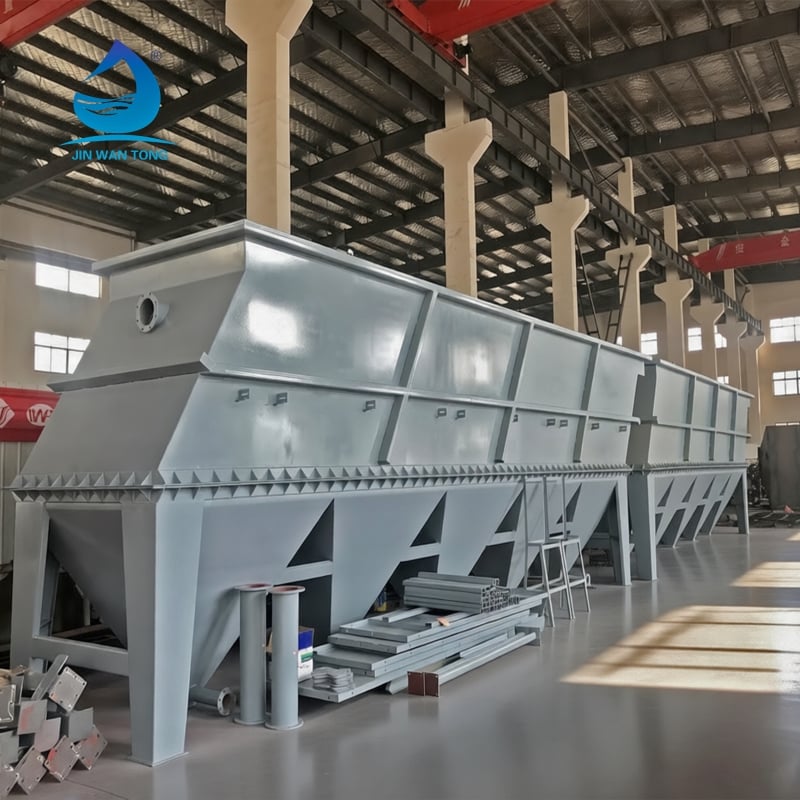
A lamella clarifier represents a significant advancement in solid-liquid separation technology, offering industrial facilities and water treatment plants a highly efficient solution for removing suspended solids from liquid streams. The lamella clarifier design incorporates inclined parallel plates that dramatically increase the effective settling area within a compact footprint, enabling faster particle sedimentation and superior liquid clarity. Understanding how a lamella clarifier works and why it has become the preferred choice for many applications requires examining its mechanical principles, operational advantages, and real-world performance in demanding industrial environments.
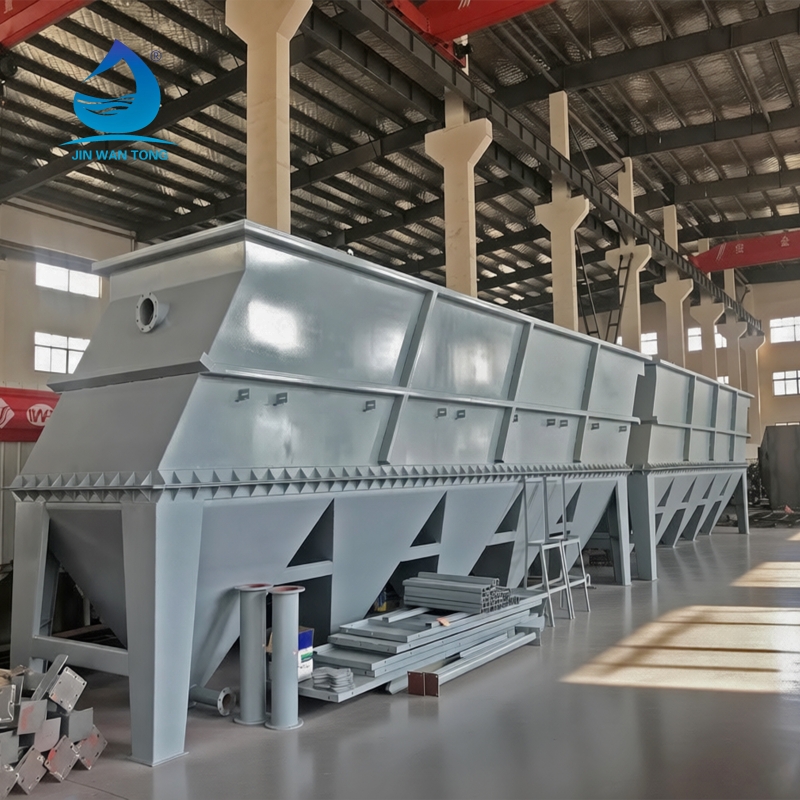
The fundamental value of a lamella clarifier lies in its ability to compress multiple settling stages into a single, space-efficient vessel. Traditional rectangular clarifiers require large horizontal surface areas to achieve adequate settling time, whereas a lamella clarifier achieves the same or superior results using significantly less floor space. This efficiency makes the lamella clarifier particularly valuable for facilities facing spatial constraints, retrofitting projects, or operations seeking to expand capacity without major infrastructure investments.
How the Lamella Clarifier Design Maximizes Settling Efficiency
Inclined Plate Technology in a Lamella Clarifier
The core innovation in a lamella clarifier is the use of closely spaced inclined plates, typically positioned at angles between 45 and 60 degrees. These plates create multiple shallow settling zones stacked vertically within the vessel, allowing particles to settle over much shorter distances compared to traditional clarification methods. When liquid enters a lamella clarifier, it flows upward through the narrow gaps between plates while suspended solids gradually separate and slide down toward the sludge collection zone. This counter-current flow pattern ensures that solids encounter minimal turbulence as they settle, dramatically reducing the settling time required and improving the quality of clarified liquid exiting the system.
Compact Footprint and Flow Distribution
A lamella clarifier achieves its space-saving benefits through intelligent flow distribution and multiple parallel settling paths. The effective settling area of a lamella clarifier can be 10 to 15 times larger than a conventional clarifier of similar volume, meaning a lamella clarifier handles significantly higher flow rates in the same physical space. Feed distribution systems ensure uniform liquid velocity across all parallel plates, preventing bypass and channeling that could reduce clarification performance. This balanced approach allows a lamella clarifier to process more liquid while maintaining excellent suspended solids removal rates and discharge water quality.
Performance Benefits and Operational Advantages
Superior Clarification Results with Lamella Clarifier Systems
Municipal sewage treatment plants, industrial process water facilities, and mining operations consistently report that a lamella clarifier delivers clearer effluent than traditional settling basins operating under the same conditions. The lamella clarifier achieves 95% or higher removal rates for suspended solids across a wide range of influent qualities and flow variations. This superior clarification translates directly into reduced downstream treatment requirements, lower chemical additive consumption, and improved final effluent compliance with environmental discharge standards. A lamella clarifier also maintains consistent performance even when influent turbidity or particle characteristics fluctuate, providing reliability that operational teams depend on.
Reduced Operational and Capital Costs
The economic advantage of selecting a lamella clarifier extends across multiple dimensions of facility operations. Because a lamella clarifier occupies substantially less space than conventional alternatives, capital costs for land acquisition, excavation, and construction materials decrease significantly. A lamella clarifier also reduces energy consumption since it operates on gentle gravity-driven principles without requiring mechanical mixing or high-power aeration in the clarification zone. Sludge handling becomes more efficient too, as a lamella clarifier concentrates settled solids in a smaller volume, reducing downstream dewatering demands and disposal costs. For facilities evaluating equipment upgrades or new installations, the lamella clarifier model offers compelling financial returns and faster payback periods compared to traditional clarification technology.
Applications and Industry-Specific Advantages
Diverse Industrial Applications of Lamella Clarifier Technology
A lamella clarifier serves critical roles across multiple industrial sectors where reliable solid-liquid separation is non-negotiable. In municipal wastewater treatment, a lamella clarifier efficiently removes primary solids during the first clarification stage, preparing the liquid for secondary biological treatment. Oil and gas operations employ a lamella clarifier to separate water and solids from drilling fluids and produced water streams. Food and beverage manufacturers use a lamella clarifier to clarify process water and recover valuable suspended materials. Mining and aggregate operations depend on a lamella clarifier to manage high-volume slurry streams and achieve regulatory compliance for discharge water quality. Environmental remediation projects frequently incorporate a lamella clarifier when addressing contaminated groundwater or industrial site runoff.
Retrofit and Capacity Expansion Scenarios
Existing treatment facilities often face the challenge of increasing throughput without major capital reconstruction, and a lamella clarifier provides an elegant solution to this constraint. Installing a lamella clarifier can often be accomplished within or adjacent to existing tank structures, avoiding expensive excavation and new foundation work. A lamella clarifier retrofit can triple or quadruple the processing capacity of an aging clarification system while maintaining or improving effluent quality standards. This flexibility makes a lamella clarifier the preferred choice for aging municipal infrastructure upgrades, industrial facility expansions, and emergency response installations where rapid deployment is critical. The modular nature of lamella clarifier design allows facilities to add or upgrade capacity in phases aligned with growth and budget cycles.
Technical Considerations and Design Factors
Material Selection and Durability in Lamella Clarifier Systems
The longevity and reliability of a lamella clarifier depend heavily on material composition and construction quality. Lamella clarifier plates are manufactured from fiberglass-reinforced plastic, polypropylene, or high-density polyethylene to resist chemical attack, biological growth, and physical wear from solids movement. The vessel itself typically uses concrete or epoxy-coated steel to handle internal stresses and external environmental exposure. A properly specified lamella clarifier with corrosion-resistant materials can deliver 15 to 20 years of reliable service with minimal maintenance intervention. Choosing appropriate materials for your specific influent chemistry and environmental conditions ensures that your lamella clarifier investment remains productive throughout its operational life.
Monitoring and Performance Optimization
Effective operation of a lamella clarifier requires understanding key performance indicators and adjustment parameters that maintain optimal separation efficiency. Operators monitor effluent turbidity, sludge blanket levels, and flow rate consistency to ensure the lamella clarifier functions within design specifications. Regular sludge removal prevents blanket rise that could reduce the effective settling distance within the lamella clarifier plates. Periodic cleaning of plate surfaces removes biofilm or scale accumulation that might restrict fluid flow through the lamella clarifier. Modern lamella clarifier systems often include automated level sensors and control systems that adjust feed flow rates and sludge removal to maintain peak performance. Investing in proper operator training and maintenance protocols ensures your lamella clarifier system continues delivering exceptional separation results year after year.
FAQ
What is the main advantage of using a lamella clarifier compared to traditional settling tanks?
The primary advantage of a lamella clarifier is that it achieves the same or superior clarification results in a fraction of the physical space. A lamella clarifier uses inclined plates to create multiple parallel settling zones, giving it 10 to 15 times more effective settling area than a conventional clarifier of equivalent volume. This compact design reduces capital costs for land and construction, lowers operational energy requirements, and allows for easier retrofitting into existing facilities. Many facilities find that a lamella clarifier enables capacity increases without major infrastructure expansion, making it the economically superior choice for most applications.
How does a lamella clarifier handle high-turbidity or variable feed conditions?
A lamella clarifier is specifically engineered to maintain consistent performance across changing influent conditions. The design of a lamella clarifier allows suspended solids to settle quickly regardless of inlet particle size or concentration variations, as the inclined plate configuration provides multiple opportunities for particle capture. Feed distribution systems in a lamella clarifier ensure uniform velocity and stress distribution, preventing channeling even when inlet conditions are poor. Many operators report that a lamella clarifier actually performs better than traditional clarifiers during upset conditions, recovering more quickly to normal discharge quality as influent stabilizes.
What maintenance does a lamella clarifier require to maintain peak efficiency?
Routine maintenance for a lamella clarifier is straightforward and minimally labor-intensive. The primary maintenance tasks involve regular sludge removal to prevent blanket rise within the lamella clarifier vessel, typically performed daily or weekly depending on sludge generation rates. Periodic inspections of the lamella clarifier plates should occur monthly to identify any biofilm growth or scale accumulation that might restrict flow. Annual cleaning of the lamella clarifier plates using gentle pressure washing or chemical treatment prevents long-term performance degradation. With consistent attention to these basic tasks, a lamella clarifier will continue delivering reliable separation results and exceptional clarification quality throughout its service life.