 EN
EN
High-strength effluents present some of the most demanding challenges in industrial wastewater treatment today. Unlike municipal sewage, these streams carry elevated concentrations of COD, suspended solids, oils, and toxic compounds that standard biological processes cannot handle alone. Facilities in food processing, metal finishing, chemical manufacturing, and similar sectors must approach industrial wastewater treatment with a carefully engineered strategy rather than a one-size-fits-all solution.
Understanding the specific composition of your effluent is the foundation of effective industrial wastewater treatment. Without thorough characterization, even sophisticated equipment will underperform and compliance targets will remain out of reach. This article outlines the key considerations that engineers, plant managers, and environmental professionals must address when designing or upgrading an industrial wastewater treatment system for high-strength applications.
Effluent Characterization and Load Assessment
Why Accurate Characterization Drives Treatment Design
Every successful industrial wastewater treatment project begins with a rigorous characterization of the wastewater stream. Parameters such as COD, BOD, total suspended solids, pH, temperature, heavy metals, and nutrient levels all influence which treatment technologies are appropriate. Skipping or underestimating this step leads to undersized equipment, chemical overdosing, and frequent process upsets that compromise the entire industrial wastewater treatment operation.
High-strength streams often exhibit significant variability across production shifts or seasonal cycles. Grab sampling alone is rarely sufficient for reliable industrial wastewater treatment design. Composite sampling over multiple days, combined with flow measurement, gives engineers the hydraulic and pollutant load data needed to size equalization tanks, select biological reactors, and specify downstream polishing units. Proper load assessment also prevents over-engineering, which unnecessarily inflates capital cost in any industrial wastewater treatment project.
Flow Equalization as a Foundation Step
High-strength facilities frequently experience surge flows and pollutant spikes that destabilize downstream industrial wastewater treatment processes. An equalization basin absorbs these variations, delivering a more consistent feed to biological or physical-chemical treatment stages. In industrial wastewater treatment, this single step can dramatically improve the stability of aerobic and anaerobic reactors, reduce chemical consumption, and protect sensitive membrane systems from shock loading.
Physical-Chemical Pre-Treatment Technologies
The Role of Dissolved Air Flotation in High-Strength Streams
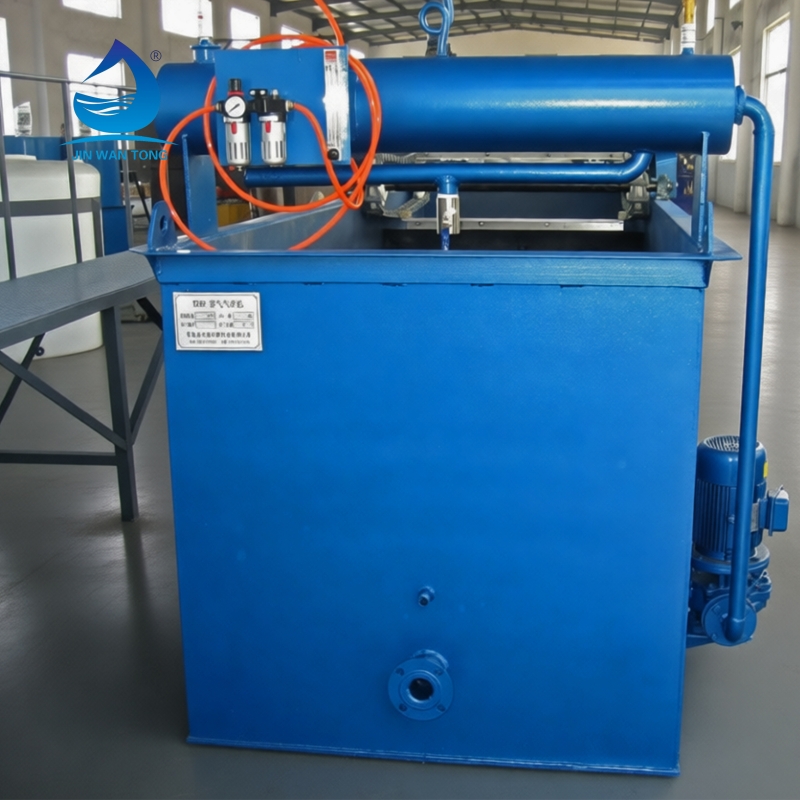
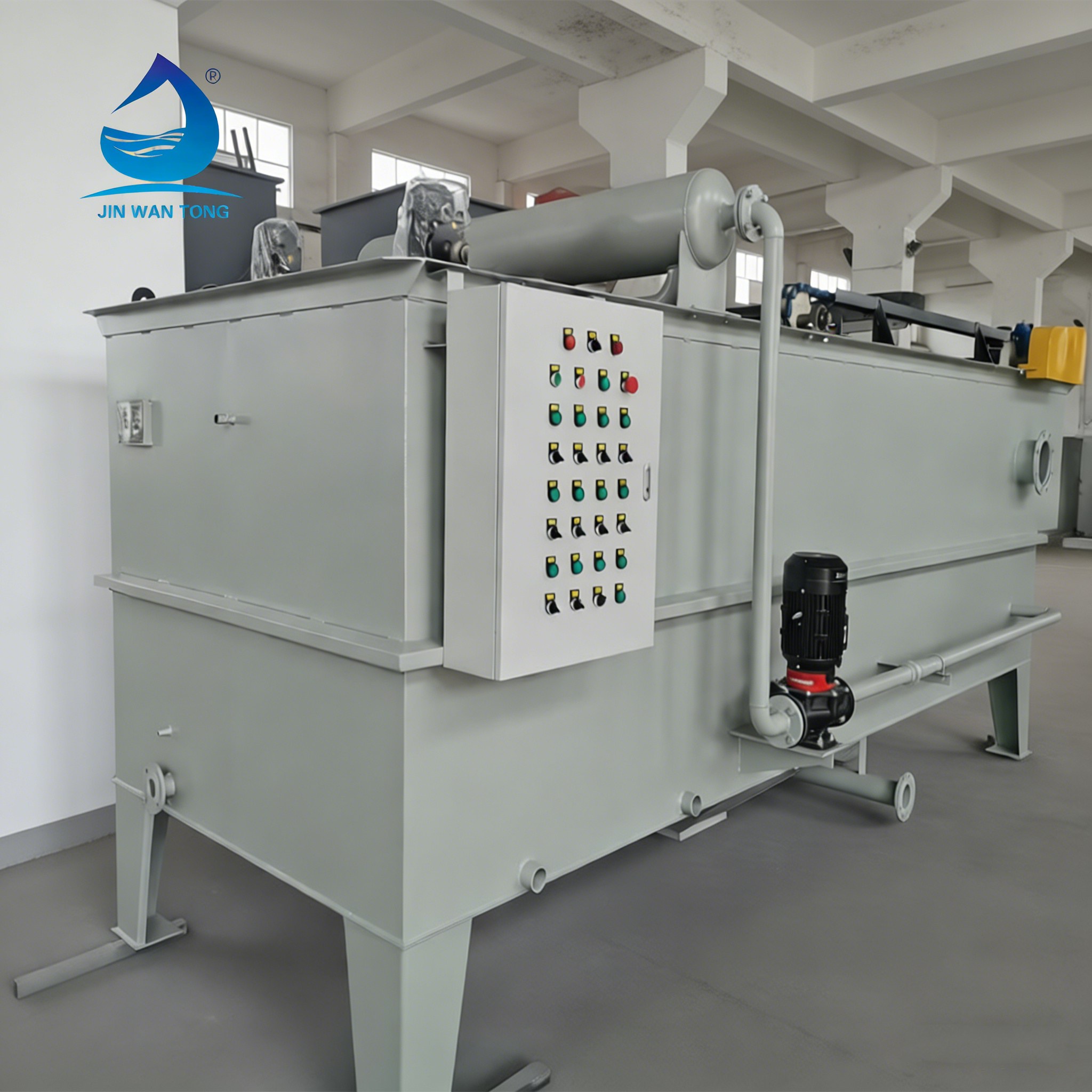
Physical-chemical pre-treatment is a critical component of industrial wastewater treatment when influent contains high levels of fats, oils, greases, and suspended solids. Dissolved air flotation, commonly known as DAF, is one of the most widely applied technologies in this context. A DAF unit introduces micro-bubbles into the wastewater, which attach to suspended particles and lift them to the surface for removal as a floating sludge layer. In industrial wastewater treatment for food processing, rendering, and mechanical machining effluents, DAF consistently achieves high COD and SS removal efficiencies before biological stages.
Selecting the right DAF configuration is essential for reliable industrial wastewater treatment outcomes. Key design variables include hydraulic loading rate, recycle ratio, coagulant and flocculant selection, and sludge handling capacity. A well-configured industrial wastewater treatment DAF system can reduce incoming TSS by over 90% and cut COD loads significantly, easing the burden on subsequent biological reactors. This pre-treatment step also protects downstream equipment from fouling and extends operational lifespan across the entire industrial wastewater treatment train.
Coagulation, Flocculation, and Chemical Dosing Optimization
Chemical coagulation and flocculation support industrial wastewater treatment by destabilizing colloidal particles and aggregating them into settleable or floatable flocs. The correct coagulant type and dose depend heavily on the wastewater chemistry, and jar testing is strongly recommended before full-scale implementation. Over-dosing wastes chemicals and increases sludge volume, while under-dosing leaves fine particles that burden biological industrial wastewater treatment stages downstream. Optimizing chemical dosing is therefore both a performance and cost management issue within any industrial wastewater treatment facility.
Biological Treatment and Polishing Strategies
Matching Biological Processes to Organic Strength
Once pre-treatment has reduced bulk solids and oils, biological processes handle the dissolved organic fraction in industrial wastewater treatment. For very high COD streams, anaerobic digestion is often the preferred first biological stage because it converts organic matter to biogas rather than requiring large aeration energy inputs. Anaerobic treatment can reduce COD by 60–80% in suitable industrial wastewater treatment applications, generating recoverable energy in the process. This makes it both an environmental and economic advantage in high-strength industrial wastewater treatment scenarios.
Aerobic processes, including activated sludge, membrane bioreactors, and moving bed biofilm reactors, are typically used as polishing stages following anaerobic pre-treatment in industrial wastewater treatment. They drive residual COD and ammonia to levels that meet discharge standards. Nutrient dosing may be required if the wastewater lacks sufficient nitrogen and phosphorus for healthy microbial growth, which is common in certain chemical and industrial industrial wastewater treatment streams. Sludge management also becomes a priority at this stage, as biological industrial wastewater treatment generates significant biomass that must be dewatered, stabilized, and disposed of responsibly.
Tertiary Polishing and Compliance Assurance
Tertiary polishing in industrial wastewater treatment includes filtration, advanced oxidation, activated carbon adsorption, and disinfection depending on discharge or reuse requirements. When treated effluent must meet stringent regulatory standards or be recycled within the facility, these final steps become non-negotiable. Advanced oxidation processes are particularly valuable in industrial wastewater treatment applications involving refractory organics, pharmaceuticals, or persistent chemicals that resist biological degradation. A complete industrial wastewater treatment system should be viewed as a multi-barrier approach rather than a single-stage solution.
FAQ
What makes high-strength wastewater more difficult to treat than standard industrial effluent?
High-strength wastewater contains elevated COD, suspended solids, and often toxic compounds that overwhelm standard biological systems. Effective industrial wastewater treatment for these streams requires pre-treatment stages such as DAF or chemical coagulation before biological processes can function efficiently. Without this staged approach, industrial wastewater treatment systems face frequent upsets, poor effluent quality, and non-compliance risks.
How does a DAF system contribute to industrial wastewater treatment performance?
A dissolved air flotation system enhances industrial wastewater treatment by removing fats, oils, greases, and suspended solids before they reach biological reactors. This pre-treatment step protects downstream equipment, reduces organic loading, and improves overall treatment efficiency. For high-strength streams in sectors such as food processing and machining, DAF is one of the most reliable tools in the industrial wastewater treatment toolkit.
When should anaerobic treatment be selected over aerobic processes in industrial wastewater treatment?
Anaerobic treatment is typically preferred in industrial wastewater treatment when COD concentrations are very high, generally above 2,000 mg/L, and when energy recovery from biogas is a project objective. It requires less aeration energy than aerobic systems and generates less sludge. However, industrial wastewater treatment designers usually combine anaerobic pre-treatment with aerobic polishing to achieve final discharge standards reliably.