
 EN
EN
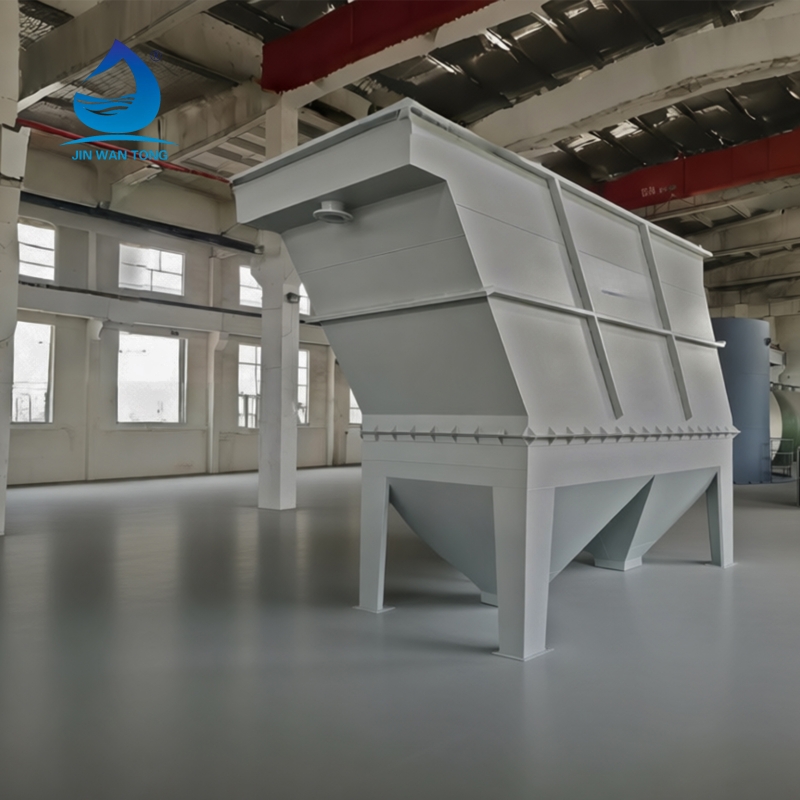
Wastewater treatment facilities face constant pressure to improve efficiency while managing limited space and capital budgets. The choice between a lamella clarifier and a conventional circular clarifier represents one of the most critical decisions in treatment plant design. Both technologies perform the solids separation function, yet they differ fundamentally in design philosophy, operational footprint, and performance characteristics. Understanding these distinctions helps operators and engineers select the technology that best aligns with their facility's constraints and treatment objectives.
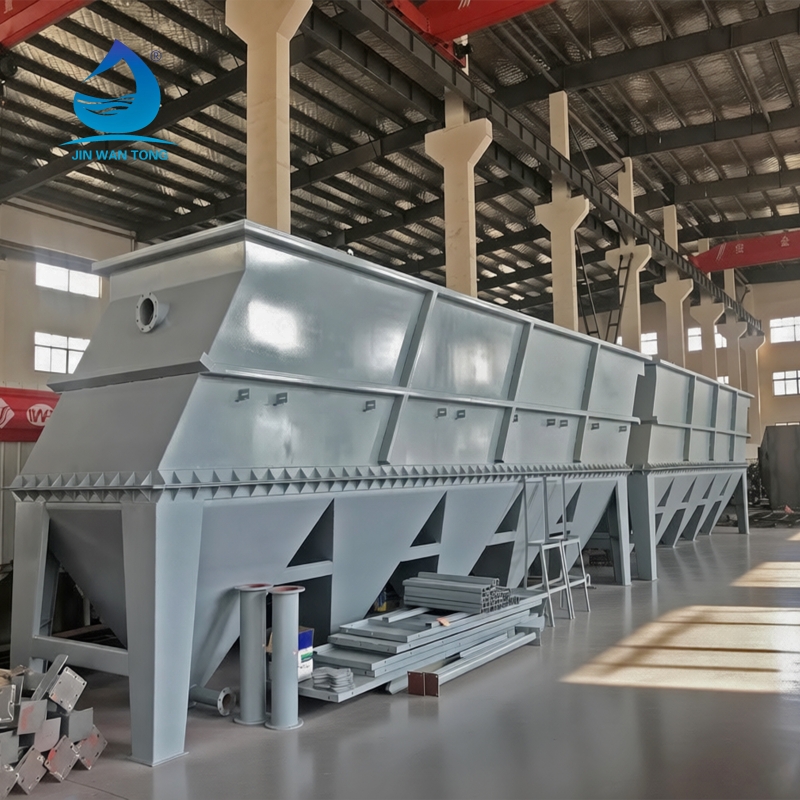
The lamella clarifier has emerged as a modern alternative to traditional circular clarifiers in municipal and industrial wastewater treatment. A lamella clarifier uses stacked inclined plates or tubes to accelerate particle settling, while a conventional circular clarifier relies on gravity-driven sedimentation in a large basin. This technical comparison examines how each technology operates, their practical advantages, limitations, and the specific scenarios where one technology outperforms the other in real-world applications.
Design Principles and Operational Mechanisms
How the Lamella Clarifier Works
A lamella clarifier functions through a principle called laminar flow separation. The system contains multiple parallel inclined plates, typically angled between 45 and 60 degrees, stacked vertically within a compact vessel. Wastewater enters the chamber and flows horizontally across these plates. Suspended solids settle onto the plate surfaces and slide downward into a collection hopper, while clarified water rises upward and exits the vessel. The lamella clarifier design dramatically increases the effective settling area without requiring a large horizontal footprint. Feed distribution is critical in a lamella clarifier; poorly designed inlet manifolds reduce performance significantly. The lamella clarifier typically achieves surface loading rates of 120 to 240 meters per hour, compared to 1 to 3 meters per hour in conventional units.
Conventional Circular Clarifier Operation
A conventional circular clarifier operates on fundamental gravitational settling principles within a large, typically circular basin. Raw wastewater enters near the center through a feed well, creating turbulence that dissipates as the water spreads radially outward. Solids settle to the bottom of the basin over time while clarified water flows toward the perimeter weirs. A rotating rake mechanism at the bottom collects settled solids and moves them toward a central sump for withdrawal. The conventional circular clarifier requires substantial floor space; a facility treating 10,000 cubic meters daily may need a 40-meter-diameter basin. The design is mechanically simple, with proven reliability spanning decades in municipal plants worldwide. Maintenance costs remain relatively predictable, and replacement parts are standardized across many manufacturers.
Footprint, Space Efficiency, and Installation Impact
Space Requirements and Facility Constraints
The most dramatic difference between these technologies emerges in space utilization. A lamella clarifier occupies 20 to 40 percent of the floor area required by an equivalent conventional circular clarifier, a critical advantage for retrofit projects or facilities with spatial limitations. Municipal plants in densely populated urban areas often cannot expand their treatment basins horizontally; the lamella clarifier enables capacity upgrades without land acquisition. A lamella clarifier treating 5,000 cubic meters daily may occupy only 30 square meters, while a conventional circular clarifier for the same flow would require approximately 80 to 100 square meters. Existing facilities retrofitting from lagoons or older clarifiers find the lamella clarifier particularly attractive. Height requirements for the lamella clarifier are greater than conventional units, but vertical expansion typically meets fewer zoning restrictions than horizontal expansion.
Installation Timeline and Civil Works
The lamella clarifier arrives as a prefabricated, self-contained unit, reducing on-site assembly and construction time dramatically. Installation typically requires only foundation preparation, utility connections, and minimal excavation. A lamella clarifier installation may be completed in 4 to 8 weeks from delivery to operation, compared to 12 to 20 weeks for conventional circular clarifier construction. Conventional circular clarifiers demand extensive concrete work, structural reinforcement, and mechanical installation. However, this prefabricated advantage of the lamella clarifier comes with reduced flexibility; the lamella clarifier cannot be easily reconfigured for different flow rates or treatment objectives after installation. Municipal engineers appreciate the faster commissioning timeline the lamella clarifier provides, especially in communities facing regulatory compliance deadlines.
Performance Metrics, Operational Reliability, and Maintenance Demands
Settling Efficiency and Treatment Quality
The lamella clarifier achieves higher removal efficiencies for suspended solids in shorter residence times. The inclined plate design forces particles to settle across a shorter distance; the lamella clarifier typically produces effluent with total suspended solids of 100 to 200 milligrams per liter from untreated wastewater. Conventional circular clarifiers under identical conditions typically yield 150 to 300 milligrams per liter. The lamella clarifier performs particularly well with industrial wastewaters containing easily settable particles. However, colloidal or biological solids present challenges; the lamella clarifier sometimes struggles with low-density, biologically active sludges that resist settling on plate surfaces. Conventional circular clarifiers, with their longer retention times, provide better performance for activated sludge secondary treatment. The lamella clarifier exhibits superior performance in primary clarification stages, while conventional circular clarifiers often prove superior in secondary applications.
Sludge Handling and Maintenance Operations
The lamella clarifier produces more concentrated sludge with solids content typically reaching 8 to 12 percent, reducing downstream dewatering demands. Sludge removal from a lamella clarifier occurs continuously or semi-continuously through gravity discharge or dedicated extraction pumps. Maintenance of the lamella clarifier focuses on plate inspection for clogging and biological film growth; periodic cleaning or chemical dosing addresses these issues. Conventional circular clarifiers require less frequent sludge handling but produce more dilute sludge at 3 to 5 percent solids. The rotating rake mechanism in conventional circular clarifiers demands bearing maintenance, seal replacements, and periodic gear inspections. A lamella clarifier with properly designed inlet distribution operates cleanly for 12 to 18 months before requiring mechanical cleaning. Conventional circular clarifiers typically operate 24 to 36 months between significant maintenance interventions, though minor adjustments occur more frequently.
Capital and Operating Costs
Equipment Investment and Construction Expenses
The lamella clarifier typically costs 30 to 50 percent more per unit volume treated than a conventional circular clarifier on initial equipment purchase. However, the lamella clarifier's reduced civil works and faster installation significantly narrow the total project cost difference. A lamella clarifier system retrofit costs approximately 15 to 25 percent more than conventional clarifier installation when considering all expenses. The lamella clarifier requires less excavation, smaller concrete foundations, and shorter scheduling timelines. For greenfield municipal plants or expansions, the lamella clarifier's capital premium approaches the conventional circular clarifier cost when installation advantages are factored comprehensively. Industries with tight financial constraints often choose the lamella clarifier despite higher equipment costs due to reduced installation complexity and faster return to revenue-generating operations.
Operating Expenses and Long-Term Economics
Operating costs for the lamella clarifier typically run 10 to 20 percent lower annually than conventional circular clarifiers. The lamella clarifier requires less water volume for flushing and produces concentrated sludge, reducing subsequent treatment costs significantly. Energy consumption for the lamella clarifier centers on occasional air scour and chemical dosing rather than continuous rake operation. Conventional circular clarifiers consume steady electrical power for rake motors and mechanisms; a 10,000-cubic-meter clarifier may require 5 to 10 kilowatts continuous operation. The lamella clarifier in the same application uses 1 to 3 kilowatts intermittently. Labor requirements for the lamella clarifier remain comparable to conventional units, though the nature of maintenance differs substantially. Facilities operating multiple lamella clarifiers achieve better economies of scale in spare parts inventory and operator training than facilities with mixed technologies.
Selection Criteria and Application Scenarios
When to Choose the Lamella Clarifier
Select a lamella clarifier when space constraints dominate project requirements. Urban municipal plants retrofitting aged facilities often encounter the lamella clarifier as the only viable solution. Industrial facilities treating primary sludge, mineral processing effluent, or food industry wastewaters with readily settable solids benefit significantly from the lamella clarifier's high-rate capability. Mining operations producing mineral-laden streams achieve excellent results with the lamella clarifier. Facilities prioritizing rapid commissioning and minimal construction disruption should strongly consider the lamella clarifier. Industries with variable flow patterns and modular expansion strategies gain flexibility advantages with multiple smaller lamella clarifiers rather than one large conventional clarifier.
When to Retain Conventional Circular Clarifiers
Retain conventional circular clarifiers for secondary clarification following activated sludge processes or biological treatment systems. The lamella clarifier's plate stacking creates biological film growth that interferes with secondary clarification performance. Municipal plants with dedicated operation and maintenance teams appreciate the mechanical simplicity and proven reliability of conventional circular clarifiers. Facilities requiring treatment flexibility or frequent parameter adjustments find the conventional circular clarifier's larger retention volume and adjustable rake mechanisms advantageous. Regions with established service networks and spare parts suppliers for conventional clarifiers reduce operational risks. Treatment protocols requiring extended retention times for chemical precipitation or biological polishing strongly favor conventional circular clarifiers over lamella alternatives.
FAQ
What is the typical lifespan of a lamella clarifier compared to a conventional circular clarifier?
A lamella clarifier typically lasts 10 to 15 years before major component replacement becomes necessary, while a conventional circular clarifier often operates 20 to 25 years with proper maintenance. The lamella clarifier's plate modules experience more frequent wear and biological growth than the concrete basin of a conventional circular clarifier. However, modular design of the lamella clarifier allows targeted component replacement without complete system replacement, extending operational life effectively through staged refurbishment.
Can a lamella clarifier be retrofitted into an existing conventional circular clarifier structure?
Direct retrofitting of a lamella clarifier into an existing conventional circular clarifier basin is generally not practical due to different depth requirements and internal configurations. However, the lamella clarifier can be installed as an independent parallel treatment stage, allowing operators to decommission conventional units gradually while bringing the lamella clarifier online. This hybrid approach provides operational flexibility during transition periods while maintaining treatment capacity throughout the upgrade process.
How does wastewater temperature affect lamella clarifier and conventional circular clarifier performance?
Temperature significantly impacts both systems, though differently. The lamella clarifier shows greater sensitivity to cold temperatures; solids settling velocity decreases more dramatically as viscosity increases, reducing treatment efficiency. A lamella clarifier in 5-degree Celsius wastewater may experience 15 to 25 percent efficiency loss. Conventional circular clarifiers with longer residence times buffer temperature effects better. In cold climates, the lamella clarifier may require heating systems or enhanced chemical treatment, while conventional circular clarifiers adapt more readily to seasonal temperature variations without intervention.
Table of Contents
- Design Principles and Operational Mechanisms
- Footprint, Space Efficiency, and Installation Impact
- Performance Metrics, Operational Reliability, and Maintenance Demands
- Capital and Operating Costs
- Selection Criteria and Application Scenarios
-
FAQ
- What is the typical lifespan of a lamella clarifier compared to a conventional circular clarifier?
- Can a lamella clarifier be retrofitted into an existing conventional circular clarifier structure?
- How does wastewater temperature affect lamella clarifier and conventional circular clarifier performance?