Sludge dewatering equipment is used to reduce the water content and volume of sludge produced during wastewater treatment. Sludge from municipal sewage plants, industrial effluent systems, DAF machines, clarifiers and biological treatment processes often contains a large amount of water. If it is discharged or transported without dewatering, operating costs can increase significantly due to high sludge weight, difficult storage and complicated disposal.
The basic purpose of sludge dewatering is solid-liquid separation. Before mechanical dewatering, sludge is usually conditioned with polymer or other chemicals. This conditioning process helps small particles gather into larger flocs, making water easier to separate from solids. After conditioning, the sludge enters the dewatering machine, where water is removed by pressing, filtration, screw compression or centrifugal force.
A common sludge dewatering process is:
Sludge Storage → Polymer Dosing → Flocculation → Mechanical Dewatering → Sludge Cake Discharge → Filtrate Return
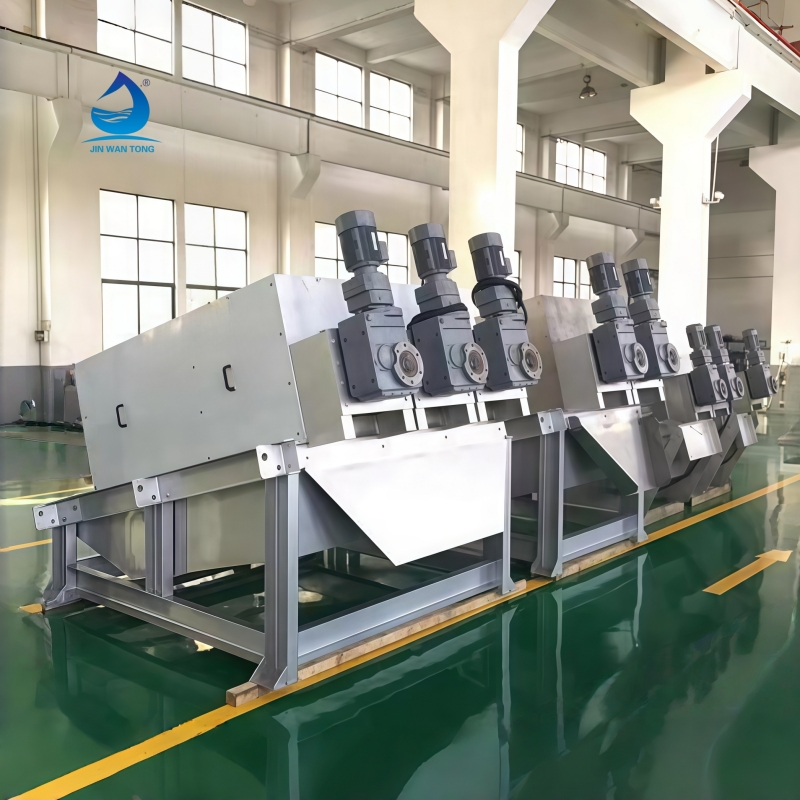
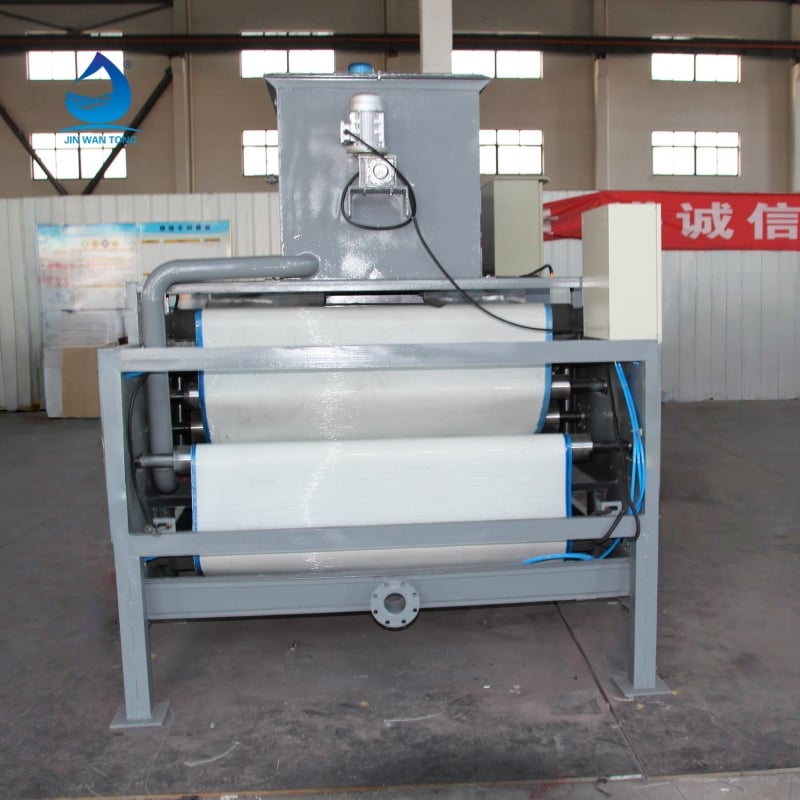
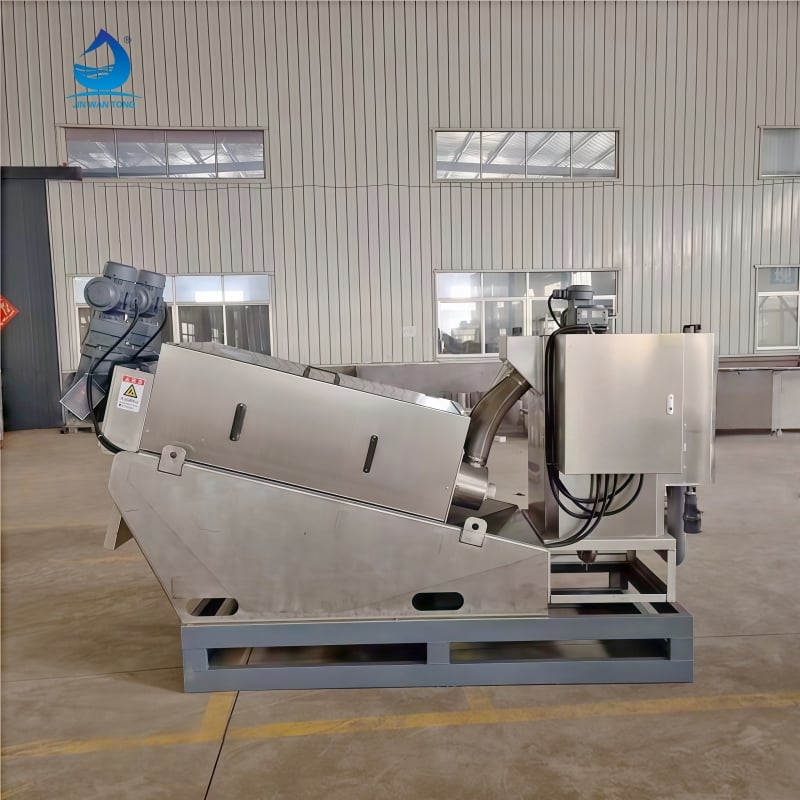
Common types of sludge dewatering equipment include screw press dewatering machines, belt filter presses, plate and frame filter presses, chamber filter presses and centrifuges. Each type has different advantages and limitations. Screw press machines are often selected for continuous operation, compact footprint, low noise and relatively simple maintenance. Belt filter presses can also operate continuously but usually require washing water and regular belt maintenance. Filter presses may achieve lower cake moisture in some applications, but they are often batch-operated. Centrifuges are suitable for high-capacity applications, although they may require higher power consumption and more precise maintenance.
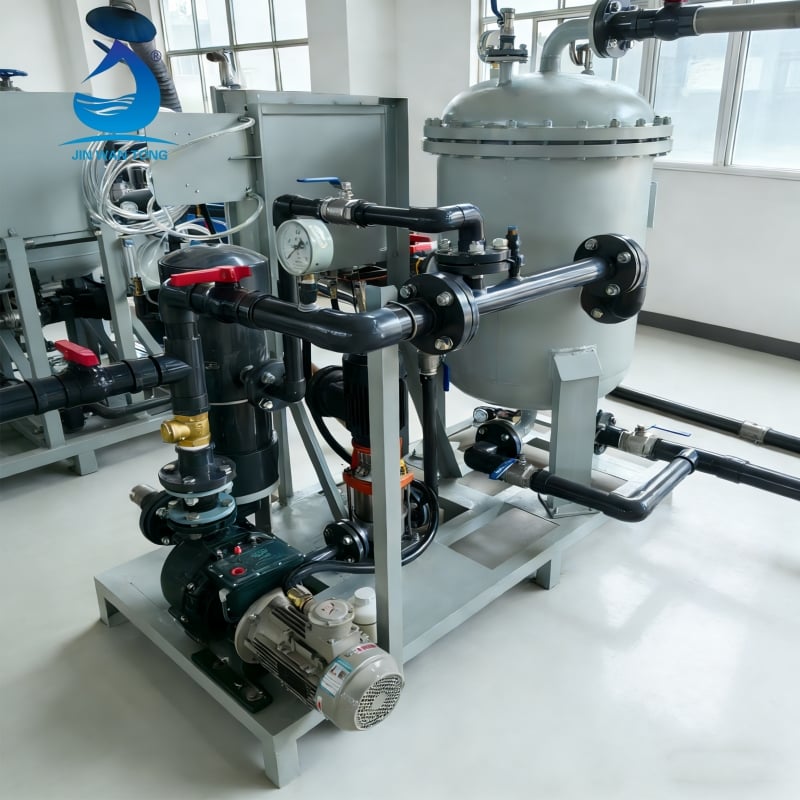
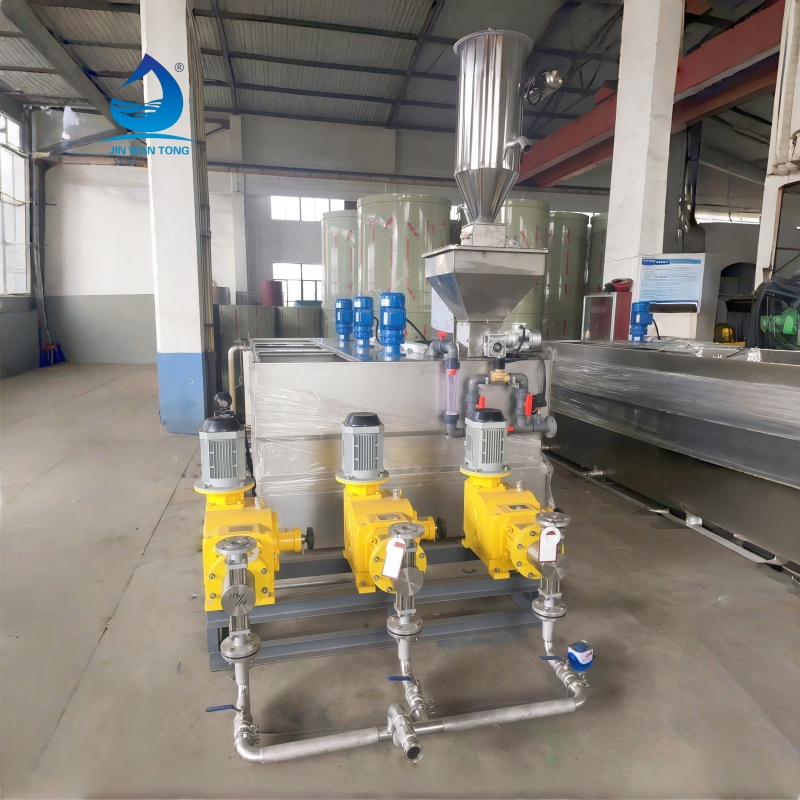
A complete sludge dewatering system may include a sludge feed pump, polymer preparation unit, dosing pump, flocculation tank, dewatering machine body, screw shaft or filter structure, filtrate collection system, sludge cake outlet, control cabinet, valves, sensors and optional sludge conveyor. For industrial wastewater projects, contact material selection is especially important because sludge may contain oil, salts, chemicals, corrosive substances or abrasive particles.
For B2B buyers, equipment selection should not be based only on price or nominal capacity. Key parameters include sludge source, daily sludge quantity, inlet solids concentration, current moisture content, target cake moisture, pH value, viscosity, oil content, organic or inorganic composition, operating hours, available installation space, polymer consumption and final disposal method. If the system is not matched to the actual sludge properties, problems such as wet sludge cake, high chemical usage, unstable feed, clogging or frequent maintenance may occur.
Sludge dewatering equipment is commonly installed after DAF dissolved air flotation units, lamella clarifiers, sedimentation tanks, MBR/MBBR biological treatment systems and chemical precipitation processes. The filtrate is usually returned to the wastewater treatment line, while the sludge cake is collected for landfill, incineration, composting or further processing according to local regulations.
It is important to note that dewatering reduces sludge volume but does not eliminate hazardous pollutants. If sludge contains heavy metals, toxic chemicals or regulated substances, final disposal must comply with local environmental standards.
Qingdao Jinwantong provides customized sludge dewatering equipment and supporting wastewater treatment systems. Buyers can send sludge source, sludge volume, solids content, target moisture, site layout and project location for model selection and quotation.
 EN