A filter press should be selected according to sludge characteristics, not only capacity or price. This guide helps B2B buyers choose the right industrial filter press, reduce cake moisture, prevent cloth clogging, improve filtrate clarity, and control long-term sludge disposal cost.
Start Filter Press Selection With Sludge Characteristics
The right filter press starts with sludge analysis because industrial sludge is rarely uniform. Chemical sludge, textile sludge, food sludge, electroplating sludge, mining slurry, and stone wastewater sludge all behave differently during dewatering.
Before asking for a quotation, buyers should confirm solids concentration, particle size, viscosity, oil content, pH, corrosiveness, abrasiveness, organic content, and target cake moisture. These details affect chamber volume, filter cloth type, feeding pressure, plate material, hydraulic system, chemical conditioning, and automation level.
A common procurement mistake is choosing a filter press machine based only on wet sludge volume. For example, 20 m³/day of low-solids sludge and 20 m³/day of high-solids sludge require different chamber capacities and cycle arrangements. The buyer should calculate the dry solids load, not just the liquid volume.
|
|
|
| Industrial Sludge Type |
Common Problem |
Selection Priority |
| Chemical sludge |
Corrosion, viscosity, unstable composition |
Anti-corrosion design, suitable filter cloth |
| Food sludge |
High organic matter, odor, sticky cake |
Fast discharge, easy cleaning |
| Textile sludge |
Fine particles, color, chemical residues |
Cloth precision, proper conditioning |
| Electroplating sludge |
Heavy metals, chemical precipitation |
Clear filtrate, corrosion resistance |
| Mining sludge |
Abrasive particles, high solids |
Strong frame, wear-resistant parts |
| Stone wastewater sludge |
Fine mineral particles |
Anti-clogging cloth, high pressure |
If the supplier recommends a standard sludge filter press without asking about sludge properties, the selection risk is high.
Calculate Filter Press Capacity by Dry Solids and Cycle Time
A filter press capacity should be calculated by dry solids, chamber volume, cycle time, and operating hours. Hourly flow alone does not tell the full story because filtration is a batch process.
For industrial sludge dewatering, one cycle usually includes feeding, pressure filtration, holding, plate opening, cake discharge, cloth cleaning, and closing. If sludge is difficult to filter, the cycle may become longer than expected, reducing daily capacity.
B2B buyers can use this practical selection process:
1. Confirm daily wet sludge volume and feed solids concentration.
2. Calculate approximate dry solids per day.
3. Define available working hours per day.
4. Estimate filtration cycle time based on sludge type.
5. Select chamber volume with a reasonable safety margin.
6. Check cake discharge time and labor arrangement.
7. Confirm whether future production expansion is expected.
A dewatering filter press that is too small causes overtime operation, frequent cleaning, delayed sludge handling, and production pressure. Oversizing too much also increases investment cost, footprint, and sometimes chemical consumption. The best decision is to match real daily load with practical cycle time.
Choose the Right Filter Press Cloth and Plate Configuration
The filter cloth is one of the most important parts of a filter press because it directly affects filtration speed, filtrate clarity, cake release, and maintenance frequency. For industrial wastewater sludge, wrong cloth selection often causes clogging, cloudy filtrate, sticky cake, or short cloth life.
Fine particles usually need tighter cloth, but too tight a cloth may slow filtration. Sticky or oily sludge may require better cake release performance. Corrosive sludge needs chemically resistant material. Abrasive sludge requires stronger cloth and more attention to wear.
Plate configuration is also important. Chamber plates are common for many sludge applications. Membrane plates may be considered when the buyer needs lower cake moisture and is willing to invest more. Plate material should match temperature, chemical environment, pressure, and cleaning requirements.
|
|
|
| Selection Item |
Practical Question |
Buyer Decision |
| Filter cloth |
Is the sludge fine, oily, sticky, or abrasive? |
Choose cloth material and permeability |
| Plate type |
Is higher cake dryness required? |
Chamber plate or membrane plate |
| Feeding pump |
Is pressure stable enough? |
Match pump with filtration pressure |
| Frame material |
Is the sludge corrosive? |
Add anti-corrosion protection |
| Cloth washing |
Does clogging happen frequently? |
Manual or automatic washing |
For difficult sludge, the industrial filter press should be tested with real samples when possible. A small test can prevent expensive mistakes in full-scale procurement.
Match Chemical Conditioning With the Filter Press
A filter press works better when sludge conditioning is properly designed. Many industrial sludges contain fine particles, colloids, emulsified oil, or chemical residues that do not dewater well without pretreatment.
Conditioning chemicals may include polymer, PAC, lime, ferric salts, or other flocculants. The purpose is to form stronger flocs, improve water release, shorten filtration time, reduce cloth blinding, and create a firmer cake. However, overdosing can increase cost and sometimes make sludge sticky.
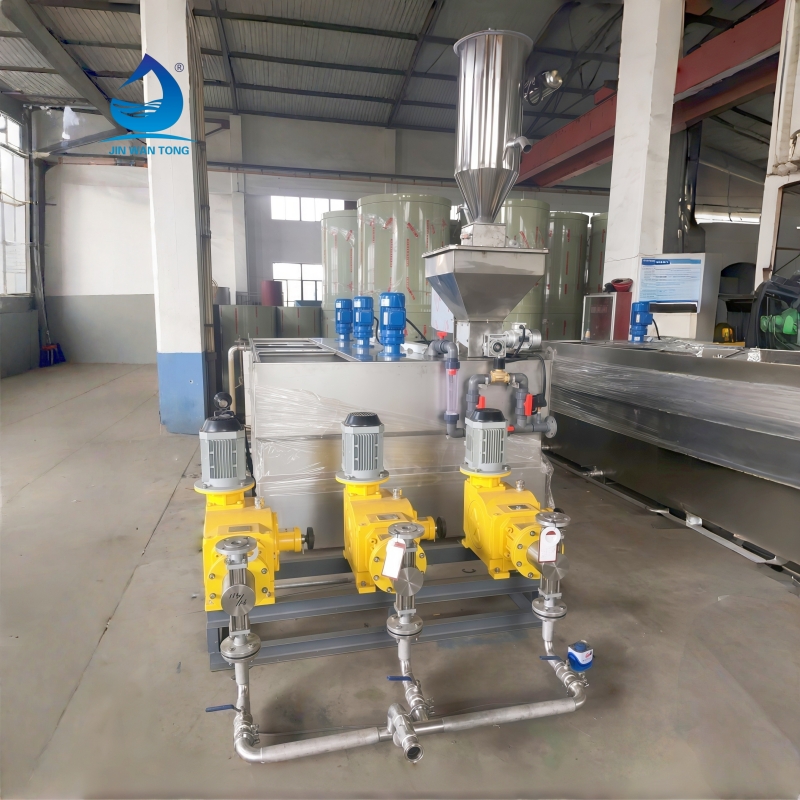
A sludge filter press should therefore be selected together with the dosing and mixing system. If the mixing tank is too small, the polymer is not fully activated. If the dosing point is wrong, flocs may break before entering the machine. If the feed pump shears the flocs too strongly, filtration performance can drop.
Qingdao
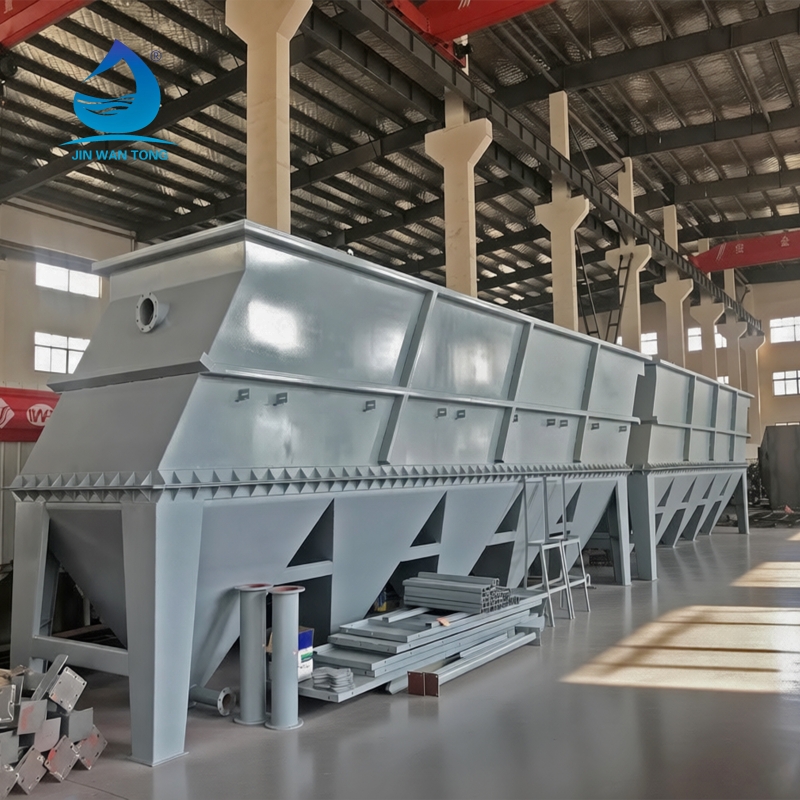
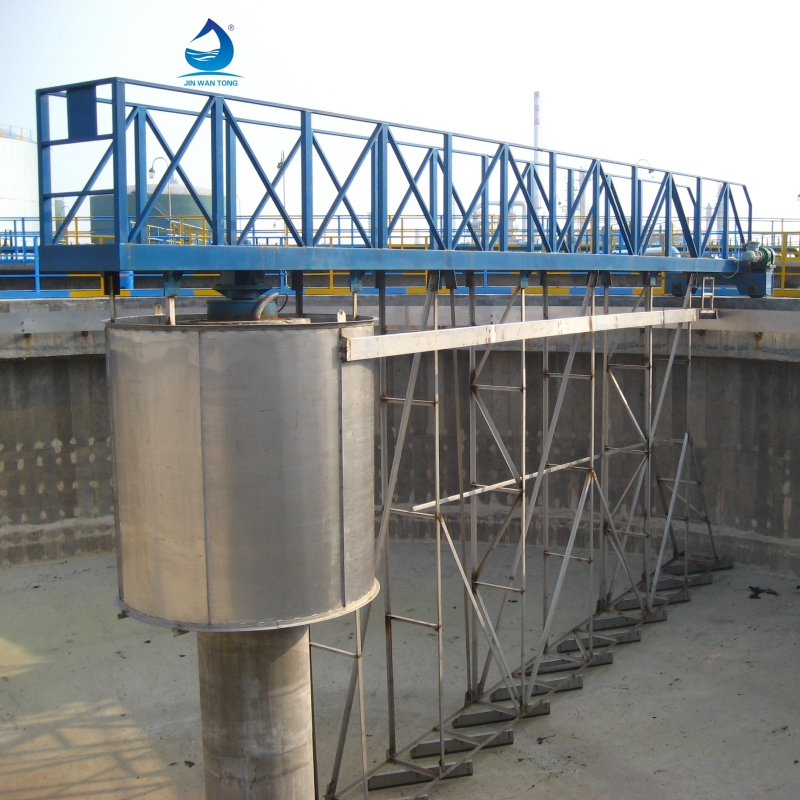
Jinwantong Environmental Science And Technology Co., Ltd. can help integrate sludge dewatering equipment with chemical dosing systems, DAF units, lamella clarifiers, and wastewater treatment lines. This project-based matching is useful when sludge quality changes with production batches.
Select Filter Press Automation According to Labor and Operation Needs
The automation level of a filter press should match sludge volume, labor cost, operating schedule, and site cleanliness requirements. Full automation is not always necessary, but under-automation can create high labor cost and unstable operation.
Small plants with limited sludge volume may use manual or semi-automatic plate shifting. Medium and large plants usually benefit from automatic plate shifting, PLC control, automatic drip trays, cloth washing systems, and assisted cake discharge. If the sludge is sticky or the plant operates daily, automation can reduce downtime and improve consistency.
For B2B buyers, automation should be evaluated as part of total cost. A cheaper manual filter press machine may require more operators and longer discharge time. An automatic system may cost more at purchase but reduce labor, improve safety, and support cleaner site management.
Consider Corrosion, Abrasion and Maintenance Cost
A filter press for industrial wastewater sludge must be durable enough for the actual chemical and physical conditions. Industrial sludge can be acidic, alkaline, salty, oily, abrasive, or mixed with chemical residues.
For electroplating and chemical sludge, corrosion resistance is critical. For mining and stone processing sludge, abrasion resistance matters more. For food and biological sludge, odor control, cleaning convenience, and hygienic handling may be more important.
Buyers should check frame coating, plate material, filter cloth life, hydraulic system quality, valve material, pipeline design, sealing performance, and spare parts availability. Long-term maintenance cost can easily exceed the price difference between two quotations.
A reliable solid liquid separation equipment supplier should explain wearing parts, replacement cycles, filter cloth cleaning, hydraulic maintenance, and commissioning support. If these details are missing, the buyer may face unexpected downtime later.
Avoid Common Filter Press Buying Mistakes
Most filter press failures come from poor selection rather than the basic dewatering principle. Industrial sludge requires more careful evaluation than municipal sludge because its composition often changes with production processes.
Common mistakes include buying by lowest price, ignoring dry solids load, selecting wrong filter cloth, underestimating cycle time, skipping chemical conditioning tests, choosing insufficient automation, and ignoring corrosion or abrasion risks. Another mistake is comparing quotations without checking whether the same accessories are included.
For example, one quotation may include automatic plate shifting, drip tray, control cabinet, feeding pump, and cloth washing, while another only includes the main machine. They are not equal solutions.
Qingdao Jinwantong provides customized wastewater sludge dewatering and solid-liquid separation solutions for industrial projects. Its team can adjust configuration according to sludge type, treatment capacity, site layout, automation requirements, and downstream disposal method.
Conclusion
The right filter press for industrial wastewater sludge is selected by matching sludge properties, dry solids load, filter cloth, chemical conditioning, automation level, and maintenance requirements. A well-matched industrial filter press can reduce cake moisture, lower disposal cost, improve filtrate quality, and make sludge handling more predictable.
If you are planning a new sludge treatment system or upgrading existing sludge dewatering equipment, share your sludge source, daily volume, solids concentration, and target cake dryness with Qingdao Jinwantong. Our team can help recommend a practical filter press configuration for stable industrial operation.
 EN
EN

 Hot News