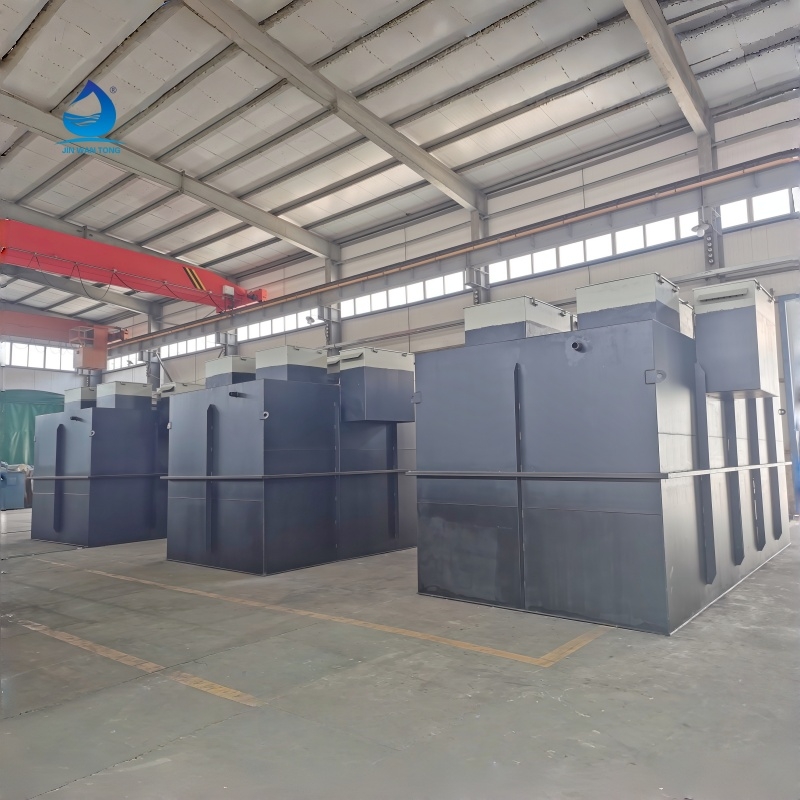
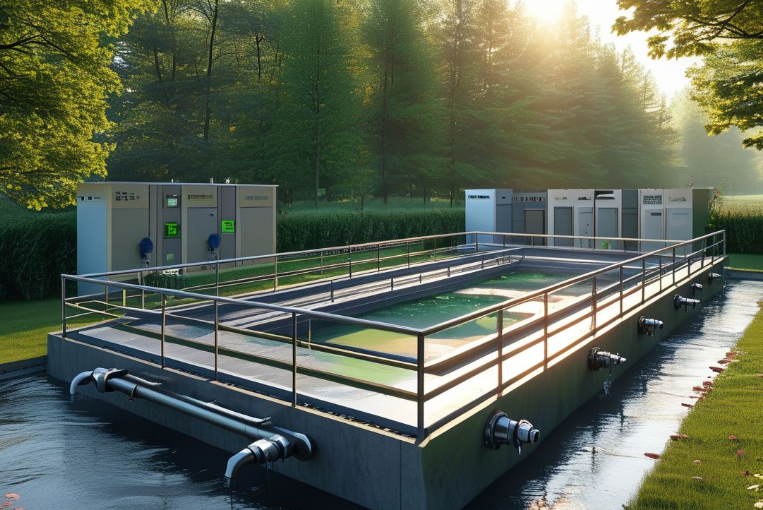
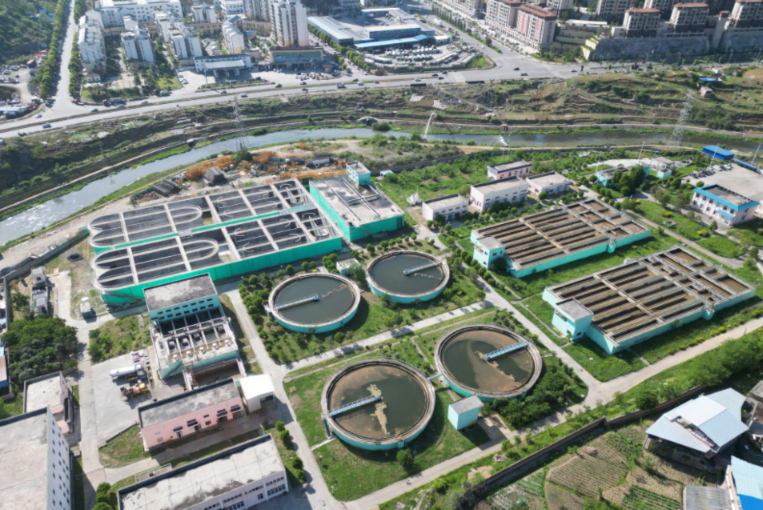
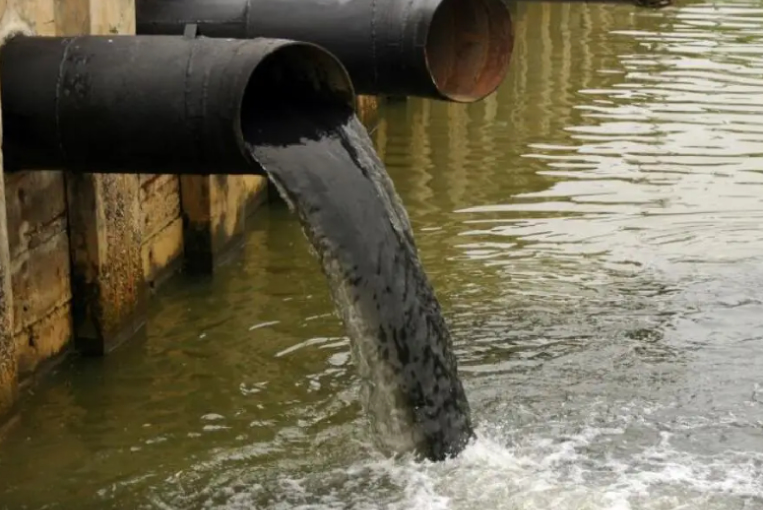
An underground sewage treatment plant is a sewage treatment system installed below ground level to save surface space and reduce visual impact. It is commonly used where above-ground equipment is difficult to arrange, such as residential communities, hotels, schools, hospitals, office parks, service areas, scenic areas and rural decentralized sewage treatment projects.
A typical process may include:
Sewage → Screening → Equalization → Biological Treatment → Sedimentation / Membrane → Disinfection → Discharge or ReuseThe first stage is pretreatment. Screens remove large solids, while an equalization tank balances flow and pollutant concentration. This is important because domestic sewage flow often changes during the day. For commercial buildings with kitchen wastewater, grease traps or oil-water separators may be needed before the main biological system.
Biological treatment is the core of most buried sewage systems. MBR technology combines activated sludge with membrane separation and is suitable for compact projects requiring better effluent quality. MBBR uses suspended biofilm carriers to increase biomass concentration and improve resistance to flow and load fluctuation. SBR completes filling, aeration, settling and decanting in one reactor through time-controlled operation. The best process depends on water quality, discharge target, footprint, budget and maintenance capability.
Because the plant is installed underground, structural design and operation access are especially important. Buyers should consider tank strength, anti-corrosion treatment, groundwater level, burial depth, ventilation, odor control, inspection covers, lifting points, sludge removal access, pump maintenance and control cabinet location. In many projects, the main tank is buried while the control cabinet, blowers or some mechanical equipment are arranged in an accessible above-ground room or protected cabinet for easier maintenance.
For correct selection, buyers should provide daily flow, peak flow, sewage source, COD, BOD, TSS, ammonia nitrogen, total nitrogen, phosphorus, oil content, pH, discharge standard, site layout, pipe elevation, soil conditions, groundwater level, installation location and automation requirements. These parameters affect tank volume, process choice, material selection, blower capacity, pump configuration, disinfection method and final quotation.
It is also important to understand the boundary of underground systems. Although they save surface land, they still require proper inspection, ventilation, sludge removal and maintenance space. They should not be treated as “install and forget” equipment. If industrial wastewater, high oil wastewater or toxic wastewater enters the system without pretreatment, biological performance may become unstable.
Qingdao Jinwantong provides customized underground sewage treatment equipment and related wastewater treatment systems. Buyers can send flow rate, water quality data, discharge target and site drawings for technical selection and quotation support.
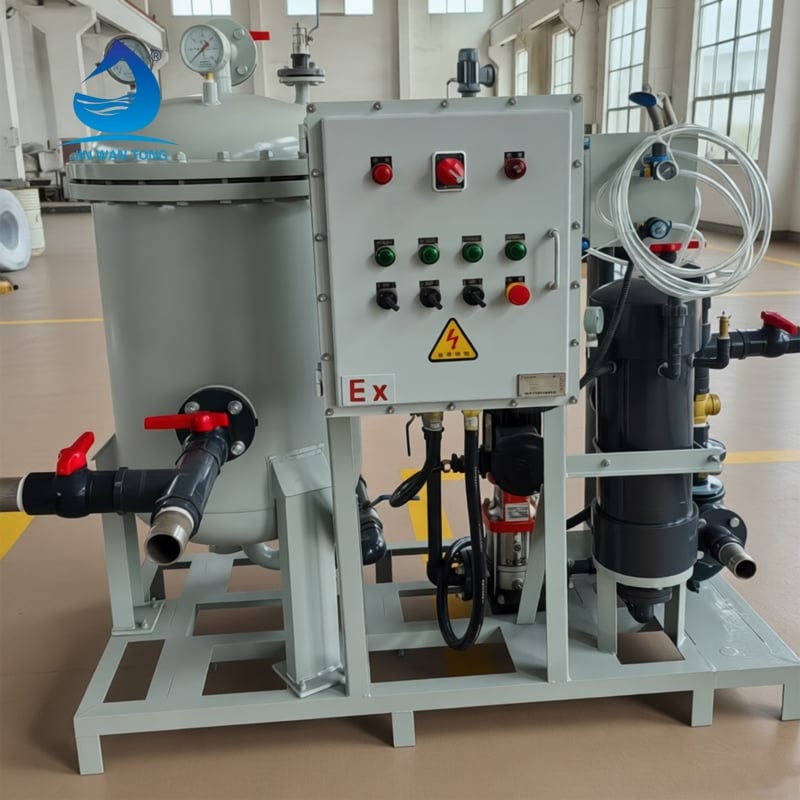
Qingdao Jinwantong provides industrial sewage treatment equipment for global clients. Our MBR, DAF, STP, and oil-water separation systems ensure compliance with national discharge standards. Trusted across 6 continents. Contact us today.
43,Cangnan Road, Cangma Town, Qingdao, Shandong, China
Copyright © 2026 Qingdao Jinwantong Environmental Science And Technology Co., Ltd. All rights reserved. Privacy Policy
 EN
EN