 EN
EN

100 TPD Non-Membrane MBBR Wastewater Treatment Plant for Metal Processing Wastewater — Indonesia Case Study
Project at a Glance
Item |
Detail |
Location |
West Java, Indonesia |
Industry |
Metal processing — electroplating & automotive parts manufacturing |
Design Capacity |
100 tons/day |
Wastewater Type |
Industrial wastewater with high-concentration heavy metals, organic pollutants, suspended solids (SS), and oil & grease |
Core Technology |
MBBR biological treatment — non-membrane system |
Main Units Supplied |
Sedimentation tank, Hydrolysis-Acidification tank, Denitrification tank, Biological Reaction (MBBR) tank |
Scope of Supply |
Process design, equipment manufacturing, factory testing, export packing, delivery & commissioning guidance |
Project Status |
Completed / Delivered 【2026.8.26】 |
When Heavy Metals, High COD and Fluctuating Loads Arrive at the Same Time
A metal processing plant in Indonesia approached us with a wastewater problem that could not be solved by a single treatment stage.
Their effluent was not simply "high COD" or "high metal content" — it was all of them at once:
High-concentration heavy metals
- from electroplating and surface treatment lines, requiring reliable removal to meet discharge requirements
Extremely high COD
- from organic pollutants and process chemicals
Oil & grease
- carried over from machining and parts washing
Suspended solids
- that increased sludge volume and interfered with biological treatment
Fluctuating flow and pollutant concentrations
- caused by batch production scheduling
Most importantly, two operational realities shaped the entire design brief:
The system had to be reliable enough for continuous electroplating & automotive production wastewater.
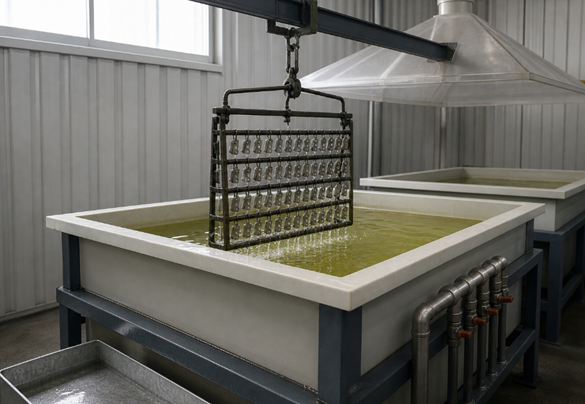 Our Solution: A Non-Membrane MBBR Process Built for Shock Loads
We designed a compact, non-membrane biological treatment train that combines physical settling, hydrolysis-acidification, anoxic denitrification and MBBR aerobic treatment — a configuration chosen specifically because it tolerates variable loads, requires far less maintenance than a membrane system, and keeps chemical and energy consumption under control.
What Each Unit Does in This Project
Why the MBBR Configuration Was the Right Choice
1. Reliable under fluctuating loadBiofilm carriers keep active biomass in the tank even when flow and pollutant concentrations swing. Unlike suspended-growth-only systems, the process is not easily washed out by a shock load — critical for batch-driven electroplating production.
2. Simple to operate and maintainThe treatment train is built around durable, low-mechanism tanks. Operators can run it with routine checks rather than continuous expert supervision.
3. Efficient in chemical and energy consumptionHydrolysis-acidification improves biodegradability biologically instead of through heavy chemical dosing, which reduces both reagent cost and the resulting sludge volume.
4. Manageable hazardous sludgeBy combining solids settling with biological treatment and minimizing chemical-assisted precipitation, the plant produces a manageable sludge volume that can be dewatered and handled by the client's existing waste contractor.
Treated effluent sample from the 100 TPD MBBR industrial wastewater treatment system:
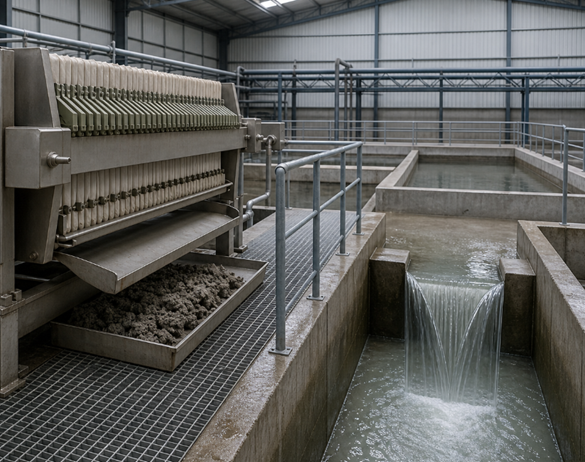
Treated effluent after MBBR biological treatment.
Manufacturing: Built in Our Own Workshop
Every tank and major component in this project was fabricated, fit-checked and pressure-tested in our own manufacturing facility in Qingdao before shipment. Prefabricated modular construction allowed the plant to be assembled on site quickly, with minimal welding and civil work at the client's location.
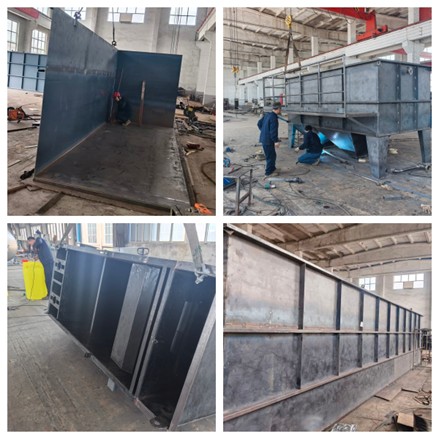
Fabrication of MBBR wastewater treatment tanks in our manufacturing workshop in Qingdao, China
Sedimentation and hydrolysis-acidification tanks under fabrication in our workshop.
Finished MBBR and denitrification tanks completed and inspected before export shipment.
Export Packing & Delivery
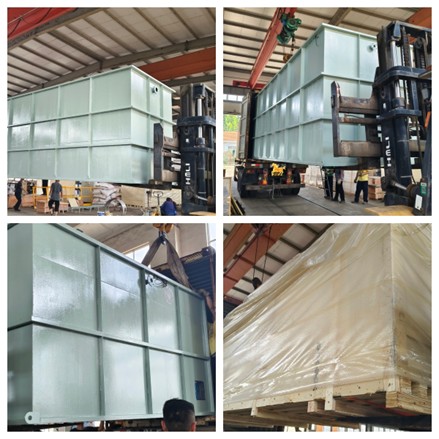
Loading the 100 TPD MBBR wastewater treatment equipment into containers for shipment to Indonesia
Installation and commissioning support on site.
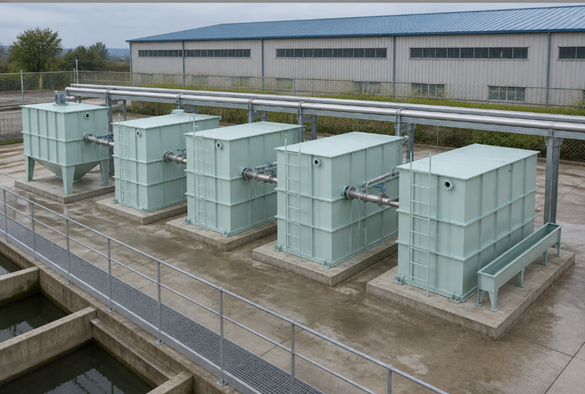
Looking for a Similar Solution?
If your factory faces the same combination — heavy metals, high COD, oil & grease and fluctuating flow — and you would prefer a treatment system that is reliable, simple to operate and free of membrane maintenance, we can prepare a design proposal and quotation for your specific water quality data.
Send us your wastewater analysis report (COD / metals / SS / oil & grease / daily flow) and we will return a process layout and equipment configuration.